After Jensen Huang’s fall, Nvidia learns the price of an irreplaceable boss
In one week, Nvidia lost its founder and nearly 13% of its market value. Academic studies and precedents from Intel to Tesla show what a chief executive’s private life, or public pronouncements, can do to a company, and why Nvidia’s board found itself without a fallback. The lesson also applies to African groups built around one man.
Why it mattersIf you own shares, directly or through a fund, the sudden exit of a leader can cost more than a bad quarter. Knowing who would take over is part of the analysis, in Lagos as in New York.
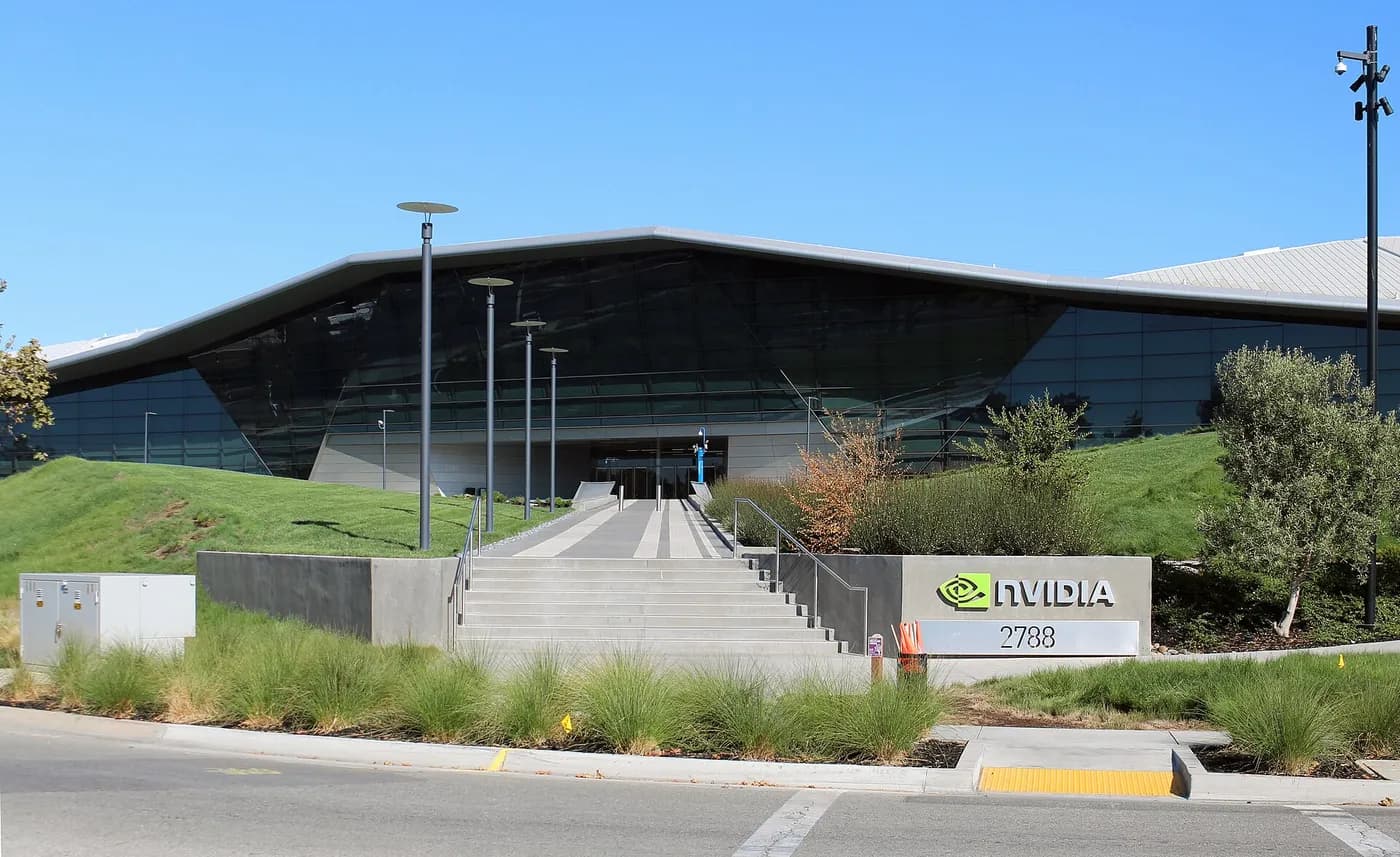
- From November 6 to 13, Nvidia shares fell 12.75% and its market value dropped below $4 trillion, after the board’s investigation and then Jensen Huang’s resignation.
- The company’s annual report acknowledged a heavy dependence on a longstanding executive team, with no public succession plan; Harvey C. Jones, the board’s first chair, is leading the search.
- Research puts the average share-price drop at 4.1% when a CEO is caught up in personal misconduct, and shows that markets attach growing weight to chief executives.
- Precedents from Intel to OpenAI, by way of McDonald’s and Tesla, show that the bill depends on succession planning, contracts and the founder’s grip on the company.
- The question matters in Africa too, from Dangote, whose refinery drew nearly 3.8 million applicants for its share sale, to Safaricom and Jumia.
On Monday, November 9, the Nasdaq rose 2.74% and almost every chipmaker gained. One stock bucked the trend: Nvidia, down 4.27% at $178.67. That day investors were not passing judgment on chips or on demand for artificial intelligence. They were repricing a man. The day before, the board had opened an independent investigation into its chief executive, Jensen Huang, after press reports that he had been “the target of a foreign intelligence effort.” Three days later, the co-founder was gone.
Over the week the shares fell 12.75%, a sixth straight weekly decline and the longest such streak since 2012, CNBC noted. They closed on Friday, November 13, at $162.85, and the company’s slipped below $4 trillion for the first time since July 2025. Roughly $570 billion evaporated in five sessions, by NovoTech’s calculation, and the stock is now worth about a third less than at its record close of $239.24 on October 6.
The slide began before the scandal: on November 5 the stock had lost 9.3% in a broad sell-off in AI chip names. But the November 9 session, when Nvidia fell alone in a rising market, isolates fairly clearly what financiers call key-person risk.
Nvidia closing price, from October’s record to the week of the resignation
Source: Nasdaq closing prices, via FourWeekMBA, CNBC, Bloomberg and Yahoo Finance
What the market can no longer price
Analysts split. Bernstein’s Stacy Rasgon downgraded the stock and halved his price target to $200: “We’ve had enough, and prefer to watch from the sidelines,” he wrote, according to Bloomberg. HSBC, now at hold, said investor confidence had been “shaken,” and at least ten analysts have dropped their buy ratings, according to Yahoo Finance. Others, such as Wedbush’s Matthew Bryson, wrote that “Nothing has changed” and still expect strong results. Retail investors bought: on Thursday, November 12, Robinhood customers bought twice as much Nvidia as all the other stocks they traded combined, according to Sherwood.
The economist Mohamed El-Erian summed up the stakes in two sentences, quoted by Yahoo Finance: “This is no ordinary CEO. This is no ordinary company.” Huang did not just run the world’s largest seller of AI chips. He had used the company’s finances to back dozens of players in the industry, from OpenAI to Anthropic and the compute provider CoreWeave, Bloomberg noted. Thomas Ferguson, an investor at Blue Bear Capital, told the agency he didn’t know “if there’s ever been such a key man holding so much of this industry up.”
Third-quarter results, released on the evening of Tuesday, November 17, do not settle that question, but they were reassuring about the business. Revenue reached $115.8 billion, more than double a year earlier (up 103%), including $107.6 billion from , against analyst expectations of about $109.3 billion, according to Yahoo Finance. For the current quarter, Nvidia expects $130 billion, assuming no data center compute sales in China. Colette Kress, presenting her first results as interim chief executive, told CNBC that “customers continue to be with us,” and the stock rose about 4% to 5% in after-hours trading. But those sales were already largely locked in, Yahoo Finance had noted before the release. The unknown is what comes after, and part of it is being played out in Washington. Members of the House of Representatives have asked Huang to explain himself before their committees and threatened a subpoena, and the Justice Department is examining whether entities linked to the woman suspected by U.S. intelligence helped smuggle computer equipment into China, according to Bloomberg. Beijing denies any espionage. A shareholder class action already accuses Nvidia of concealing the relationship from investors, TechCrunch reported.
A risk spelled out in black and white
Yet the risk was hardly hidden. In its 10-K annual report, filed on February 25, 2026, Nvidia states in its risk factors that “we are highly dependent on the services of our longstanding executive team,” and that “failure to ensure effective succession planning, transfer of knowledge, and smooth transitions” could hinder its strategy and long-term success. Huang is not named there, and the word “succession” appears nowhere else in the document.

The way the company was organized made succession even harder. Huang disliked layers of management: he had 36 direct reports according to Business Insider, cited by Fortune, and as many as 60 according to Bloomberg, in a group of about 42,000 employees. Nvidia had no chief operating officer and, until November 12, no board chair separate from the CEO. As early as November 10, Ann Lipton, a corporate governance professor at the University of Colorado, told TechCrunch that the apparent lack of a succession plan was “a danger for any company.”
The paradox fits in one number. Huang did not control his company: Nvidia has a single class of shares and he owned about 3.6%, which made him, in Lipton’s words, “easier to dislodge” than a founder with super-voting stock. The board therefore had the power, and did not use it to prepare for the day after. On Yahoo Finance, Bill George, the former CEO of medical device maker Medtronic, gave it “About an F.”
Harvey C. Jones, 73, a former chief executive of Synopsys, is leading the search for a successor, open to internal and external candidates, while chief financial officer Colette Kress serves as interim CEO. Names circulating in the press range from Ian Buck, who created the CUDA platform, to Rene Haas of Arm and Lisa Su of AMD; Donald Trump has suggested Tim Cook. None of these has been confirmed.
From Intel to OpenAI: what the precedents show
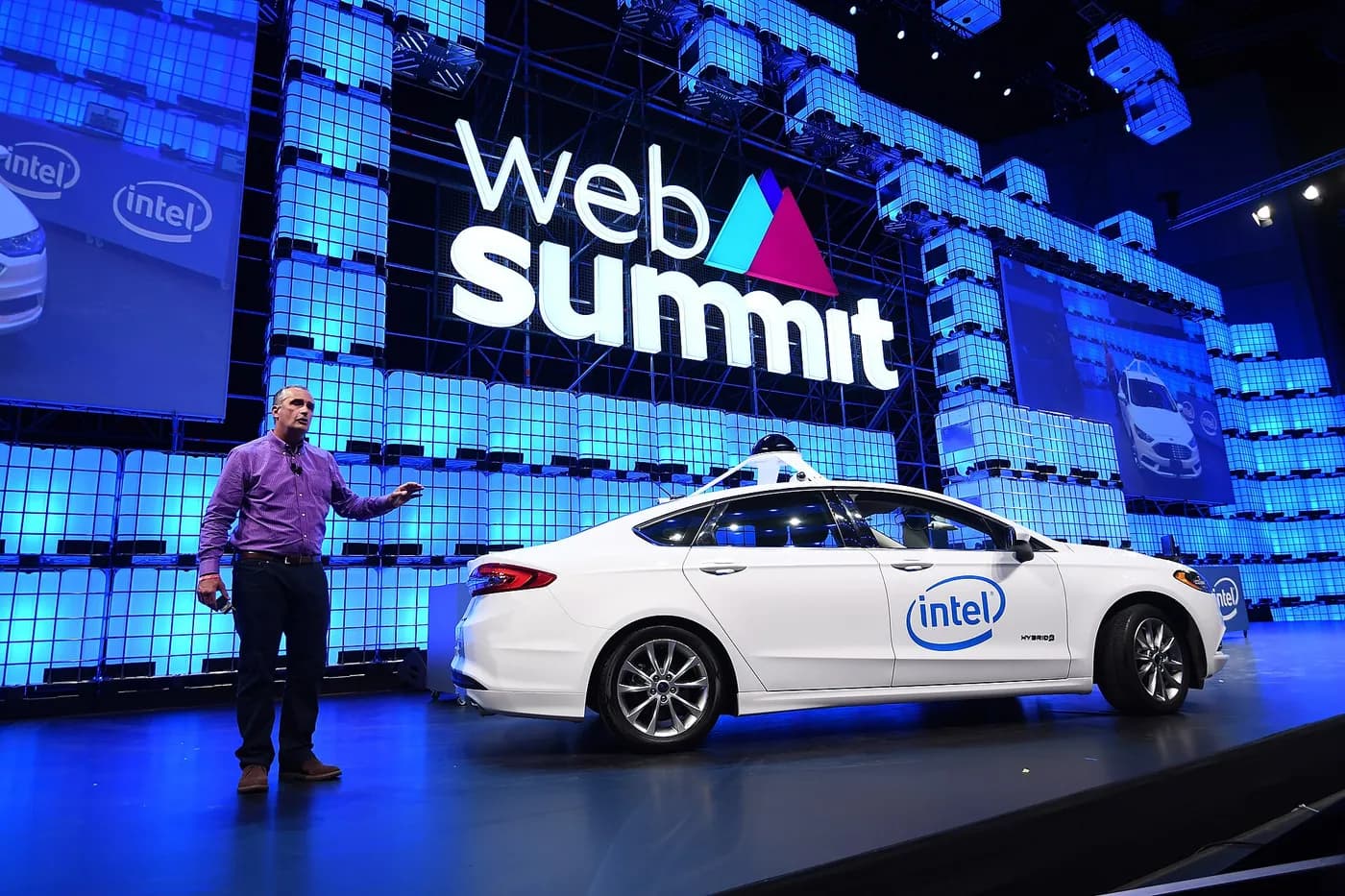
The closest case dates from June 2018. Brian Krzanich, Intel’s chief executive, resigned after an internal investigation found a past consensual relationship with an employee, in breach of a policy barring such relationships for managers. As at Nvidia, the chief financial officer, Robert Swan, stepped in as interim CEO. The shares lost only about 2% in morning trading, on the same day Intel reported a better-than-expected quarter.
McDonald’s showed that the story does not end on the day of departure. Steve Easterbrook was fired in early November 2019 over a consensual relationship with an employee; the stock fell 2% to 3% the following Monday. Terminated “without cause,” he kept a severance package valued at $42 million by Equilar. In August 2020 the company sued him, alleging he had lied during the investigation and concealed other relationships; in December 2021 he returned more than $105 million. The line between leaving with or without cause, set by the contract, was worth more than $100 million.
For private start-ups, the penalty shows up in valuations. Travis Kalanick stepped down as Uber’s chief executive in June 2017 under pressure from five major investors; seven months later SoftBank bought shares from existing holders at a $48 billion valuation, 30% below the previous one, and secured a larger board in the process. WeWork, valued at $47 billion in January 2019, pulled its a week after Adam Neumann’s exit in late September, and SoftBank then rescued it at a valuation of about $8 billion. It filed for bankruptcy in November 2023.
Tesla is the opposite case: the boss stays, and it is his public voice that costs money. In 2018, a post by Elon Musk claiming he had secured funding to take Tesla private earned him and the company a $20 million SEC penalty each, and forced him to give up the board chairmanship for three years. On June 5, 2025, his public feud with Donald Trump sent the shares down 14% in a single session, wiping out about $150 billion, Reuters reported. Four Yale economists estimate in a working paper that his partisan activities cost Tesla between 1 million and 1.26 million U.S. sales since October 2022. The study has not been peer-reviewed and has been challenged, but one of its authors, Kenneth Gillingham, says it “highlights the dangers of CEO activism.”

The balance of power can also turn against the board. On November 17, 2023, OpenAI’s board fired Sam Altman; nearly all of the company’s roughly 770 employees demanded his return, Microsoft offered to take them in, and Altman came back four days later with a new board. At Apple, Steve Jobs’s health long served as a barometer: on January 18, 2011, the day after he announced a medical leave, the stock fell 6.5% early in New York trading before closing down 2.25%. And the Astronomer affair in July 2025 showed how fast it can all happen: caught on a Coldplay concert “kiss cam,” chief executive Andy Byron resigned three days later.
What the research measures
Academics have put numbers on these reactions. Brandon Cline (Mississippi State), Ralph Walkling (Drexel) and Adam Yore (University of Missouri) studied 325 cases of executive misconduct, from substance abuse and violence to affairs and dishonesty, in a paper published in 2018 in the Journal of Financial Economics. The news knocks 1.6% off the share price on average. When the CEO is involved, the drop reaches 4.1%, or $226 million, and the company subsequently wins fewer major customers. Dishonesty is the costliest offense. Over the longer run, Cline told NPR, firms lose 10% to 15% of their value.
Stanford’s David Larcker and Brian Tayan found a similar order of magnitude across 38 CEO scandals between 2000 and 2015: a market-adjusted decline of 3.1% on average over three days, and 1.1% at the median. In 58% of cases the CEO was dismissed. The most frequent issue, in a third of cases: lying to the board or shareholders about personal matters.
A third study explains why the bill keeps growing. Timothy Quigley, Craig Crossland and Robert Campbell examined, in the Strategic Management Journal, 240 sudden deaths of U.S. chief executives between 1950 and 2009: market reactions grew markedly over the decades. For Crossland, a professor at the University of Notre Dame, CEOs really have become more influential, and “succession planning is increasingly important.”
Measured against this work, the 4.27% drop on November 9 was unremarkable: it is roughly the average found for a CEO. What breaks the pattern is the cumulative loss over the week, and the nature of the case. Lipton says she knows of affair and harassment cases, but none involving potential national security compromises.
Dangote, Safaricom, Jumia: the same question in Africa
This is no distant issue for African savers. From September 14 to October 27, the Dangote refinery offered 4.1 billion shares to the public at 525 naira each, and nearly 3.8 million applicants responded, according to Nairametrics. Aliko Dangote, 69, is expected to keep more than 80% of the company, according to Bloomberg. In February he handed new responsibilities to his three daughters, but no decision has been made on his succession. “He has no plans to step down,” one of them, Mariya Dangote, told the agency.

Safaricom shows what an announced handover changes. When its chief executive, Bob Collymore, died of cancer on July 1, 2019, the shares opened 2.7% lower in Nairobi, then pared the loss to 1.4% by mid-morning, Reuters reported. His departure had already been scheduled for August, and a former CEO, Michael Joseph, immediately took over on an interim basis. Jumia shows, conversely, that an exit without scandal can be costly: on November 7, 2022, the departure of its two co-founders and co-CEOs, Jeremy Hodara and Sacha Poignonnec, sent the stock down 14% in New York that day. The Motley Fool read it as an admission that the promised profitability was slow in coming.
At private companies such as Wave in Senegal, still run by co-founder Drew Durbin, this risk is borne by the funds that invested. It becomes public the day the company lists. Annual reports rarely say much, but three things deserve every shareholder’s attention: who chairs the board, whether that person is separate from the CEO, and whether a succession plan is mentioned.
At Nvidia, the answers to all three questions changed in a week. Harvey C. Jones has sat on the board since 1993, the year the company was founded: one of the directors who left Nvidia without an heir apparent is now in charge of finding one.
- NVIDIA Corp., rapport annuel 10-K de l’exercice 2026 (25 février 2026), Nvidia / SEC.
- Nvidia closes below $4T market cap for first time since July 2025 in Huang fallout, CNBC.
- Nvidia’s Huang ousted by board in move that roils AI economy, Bloomberg (Fulton Sun).
- Nvidia live updates: Following Jensen Huang’s resignation as CEO, Yahoo Finance.
- Nvidia’s crisis has corporate governance experts reaching for the popcorn, TechCrunch.
- 36 direct reports, no heir apparent: How Jensen Huang’s ‘flat’ org may have hampered Nvidia’s succession planning, Fortune.
- Sex, lies and firm value: indiscretions by executives (Cline, Walkling, Yore), Université du Missouri / EurekAlert.
- Scoundrels in the C-Suite, Harvard Law School Forum on Corporate Governance.
- McDonald’s claws back $105 million from fired CEO Easterbrook, CNBC.
- Elon Musk’s partisan political activities resulted in over 1 million fewer Tesla sales, Yale School of the Environment.
- Dangote refinery IPO attracts N5.85 trillion in bids from nearly 3.8m applicants, Nairametrics.
Spotted an error? Write to infos@novotech.blog. Corrections are flagged at the end of the article.