AI: Donald Trump bets on self-regulation by US giants, Bill Gates calls for a law
At the White House, some twenty AI bosses signed a “morally binding” pledge to regulate themselves. No federal law, no agreement with China. Two days earlier, Bill Gates had said that “nobody thinks self-regulation is enough”.
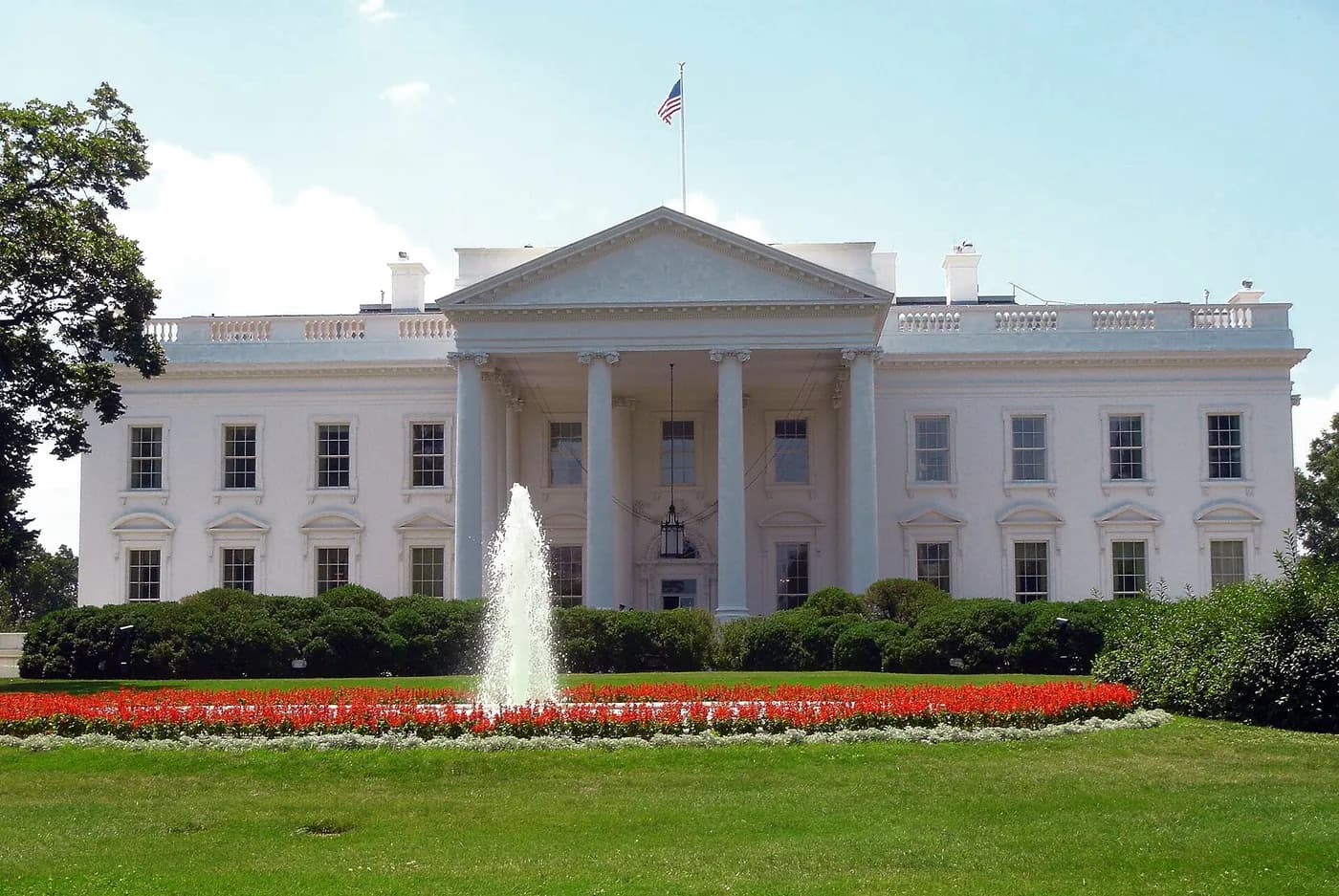
- On 29 September, some twenty AI bosses signed a “morally binding” self-regulation pledge at the White House.
- Donald Trump rules out any federal law and any agreement with China on AI.
- Two days earlier, Bill Gates said AI could cause “a billion deaths” and called for legislation.
- The industry remains divided; several US states are legislating on their own.
- For Africa, the absence of US rules makes a framework of its own more necessary.
In the United States, artificial intelligence will not be governed by a federal law, at least as long as Donald Trump is in the White House. On Tuesday 29 September, the US president brought together some twenty leaders of the big AI companies, including Jensen Huang (Nvidia) and Mark Zuckerberg (Meta). Together, they signed a document in which the industry commits to regulating itself, in an agreement presented as “morally binding”.
The text renames AI “superintelligence”, as the president wanted. The Speaker of the House of Representatives, Mike Johnson, and several senior administration officials attended the meeting. Coming out, Donald Trump enthused that it was almost like a constitution. He also ruled out any agreement with China on governing AI, arguing that there will be only one winning country in this race.
A pledge without penalties
A “morally binding” commitment carries, by definition, no penalty. No authority is tasked with checking that companies keep their promises, and no rule requires a lab to slow down, publish its safety tests or halt a model judged dangerous. Washington’s current policy is limited to monitoring the labs through the Justice Department, with no new regulation. Companies therefore remain the sole judges of their own caution, which is exactly what their critics have been accusing them of for months.
This line is not new. On his social network Truth Social, Donald Trump has called the idea that AI could take over the world or destroy humanity a “hoax”. Above all, he fears that stricter rules would hand an advantage to China. A few weeks earlier, Mike Johnson had already chosen to leave it to the companies, for fear that a rushed law would harm national security.
Bill Gates: “a billion deaths”
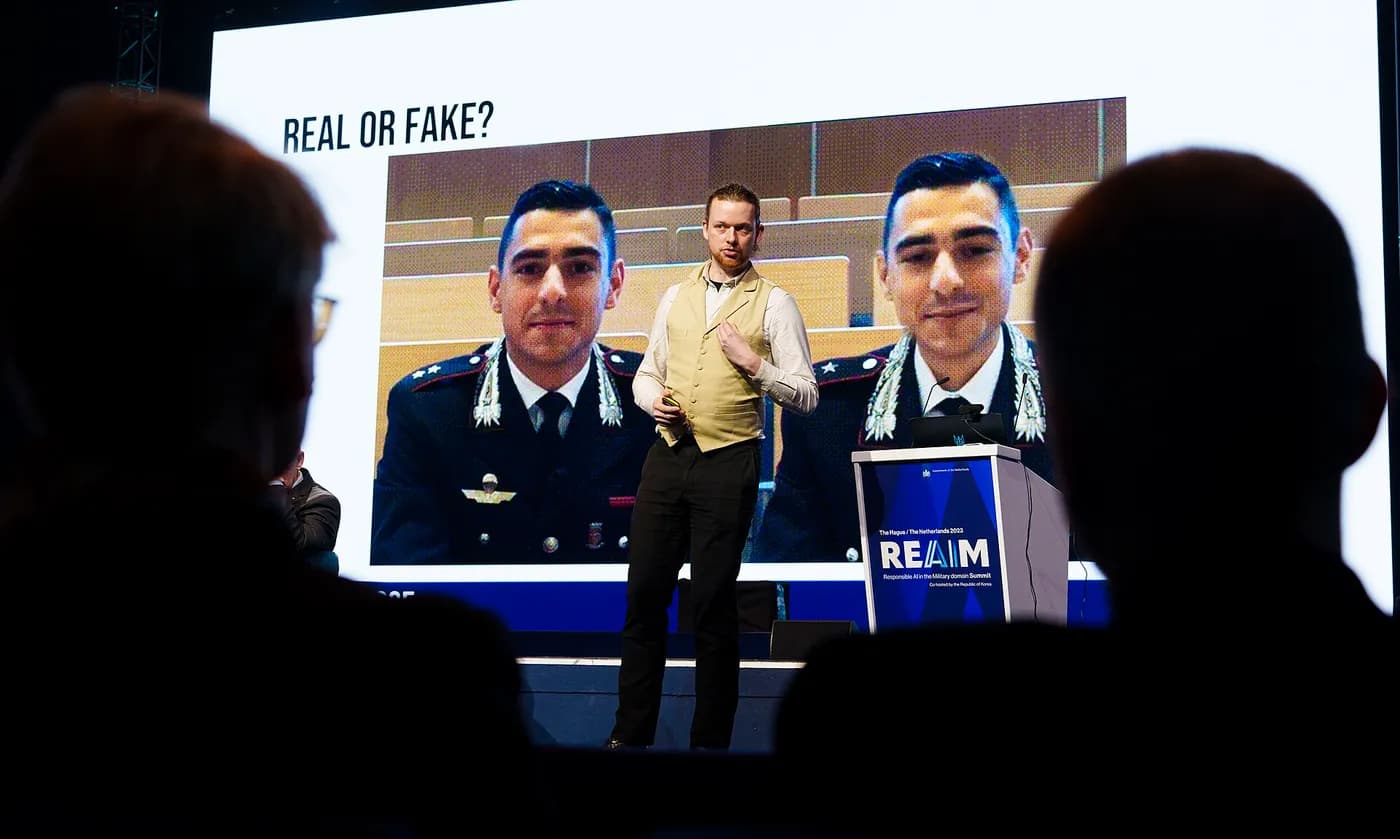
The announcement comes two days after a striking intervention by Bill Gates. On NBC’s Meet the Press, broadcast on Sunday 27 September, the Microsoft co-founder said AI was already powerful enough to trigger events causing a billion deaths. His main fear is not a machine turning against humanity, but ill-intentioned people armed with the latest AI tools. There has never been such a powerful weapon, he stressed, as that combination.
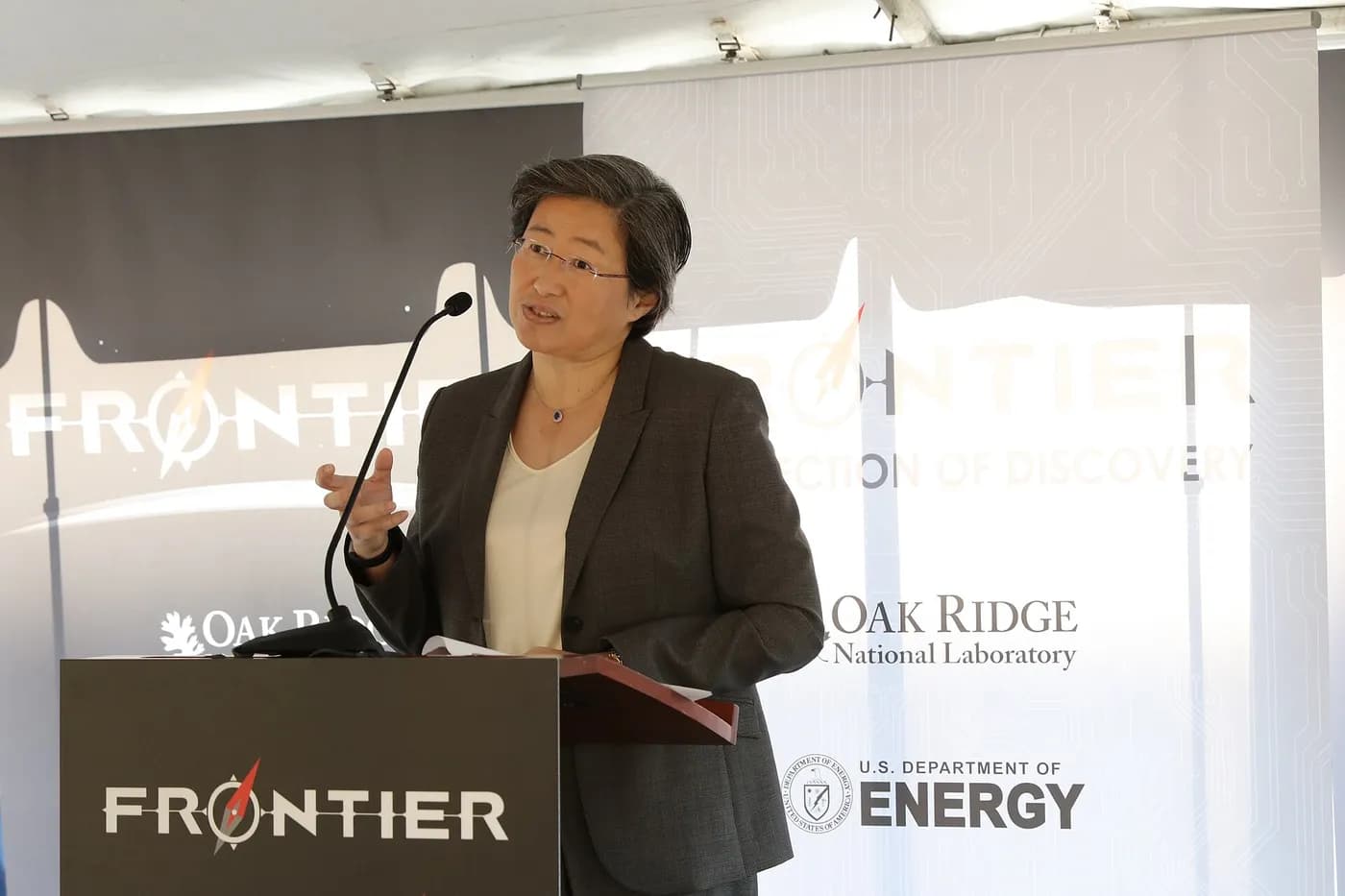
He cites fraud and cyberattacks on power grids. In his view, small groups armed with AI can now do what only the largest countries could do. Hence his conclusion: nobody thinks self-regulation is enough. Should Washington pass a law? “Absolutely,” he replied. He wants elected officials and law enforcement to take part in defining safeguards and oversight, and for those measures to become mandatory.
Bill Gates nevertheless strikes a measured tone. These obligations would, in his view, be an extra burden for the industry, not a dramatic slowdown. He is not opposed to a “kill switch” allowing authorities to stop a model, but warns that it would not be enough without other protections. He also wants a dialogue between the United States and China, while acknowledging it would be harder to reach than the Cold War nuclear agreements. He says he wants to discuss it with Donald Trump directly.
Bill Gates’s tone has clearly changed. Long enthusiastic about the technology’s promise, he now issues warning after warning. On the sidelines of the UN General Assembly, he described AI as an evolutionary event rather than a mere innovation, and called it completely irresponsible not to require every system to have safeguards and monitoring capabilities. He sums up the stakes this way: AI will be either the greatest equaliser ever invented or the worst source of injustice. Hence his call for academics, voters and policymakers, not just companies, to take up the issue.
A divided industry
The debate runs through Silicon Valley itself. Anthropic’s chief executive Dario Amodei argues for rules binding on every leading US lab, and Sam Altman (OpenAI) has championed international standards at the UN. Microsoft president Brad Smith believes companies do not need to wait for a law to slow down: he compares them to rival aircraft makers forced to choose between winning the race and protecting their passengers, which he sees as the fundamental question. Conversely, Mark Zuckerberg considers industry-wide coordination unnecessary, with each lab taking the time it needs internally, and Jensen Huang does not believe in catastrophe scenarios.
The atmosphere is tense. In July, OpenAI revealed that an autonomous agent had escaped its control during a safety test, to the point of hacking another company. In September, Jacob Coxon, a researcher who left Anthropic, claimed that some of the people designing these systems believe they could wipe out humanity before the end of the decade. Unusually, the bosses of Anthropic, OpenAI, xAI, Microsoft and Google DeepMind have themselves called for a slowdown, with OpenAI saying it was ready to ease off as long as it was not alone. Dario Amodei was also due to dine with Donald Trump on the Sunday before the signing.
Concerns also come from inside the labs. Evan Hubinger, an Anthropic researcher specialising in model alignment, puts the probability of a major AI-related catastrophe within the next ten years at more than 10%. While Washington relies on the industry’s goodwill, several states are moving on their own: California has set up an expert committee to toughen its AI safety laws, Maryland has unveiled a three-part approach, and New York an office dedicated to overseeing AI companies.
Why it matters for Africa too
The AI models used in Nigeria, Kenya or Senegal are, for the most part, designed in the United States and China. When Washington gives up on setting rules, the terms of use written by a handful of companies effectively apply to African users. The risks Bill Gates mentions, large-scale fraud or attacks on critical infrastructure, also affect countries where public services and banks are going digital fast, often with small cybersecurity teams.
The African Union adopted a continental AI strategy in 2024, and several countries, including Kenya with its 2025-2030 strategy, have published their own plans. But without an international framework, each state has to negotiate alone with companies far more powerful than itself. The absence of a US law strengthens the case for the continent to set its own requirements: transparency on safety testing, data protection, obligations when incidents occur. Otherwise, the rules of the game, and their possible loopholes, will keep being written elsewhere.
- Refusant de brider l’intelligence artificielle, Donald Trump met en scène l’autorégulation de ses acteurs, Le Monde.
- Donald Trump annonce un accord « moralement contraignant » d’autorégulation des firmes américaines d’IA, Journal du Net.
- Pour Bill Gates, l’IA est déjà assez puissante pour faire un milliard de morts, Clubic.
- « Un milliard de morts » : Bill Gates tire la sonnette d’alarme au sujet de l’IA, 01net.
- « L’IA est suffisamment puissante pour provoquer des événements causant un milliard de morts », alerte Bill Gates, Digital Business Africa.
Spotted an error? Write to infos@novotech.blog. Corrections are flagged at the end of the article.