Dakar 2026 Youth Olympics: Senegal tests its defences against cyberattacks
A few weeks before the Dakar 2026 Youth Olympic Games, Senegal is also preparing on another front: cybersecurity. Since 28 September, a series of exercises has been testing the country’s ability to detect, manage and coordinate a response to a cyber crisis.
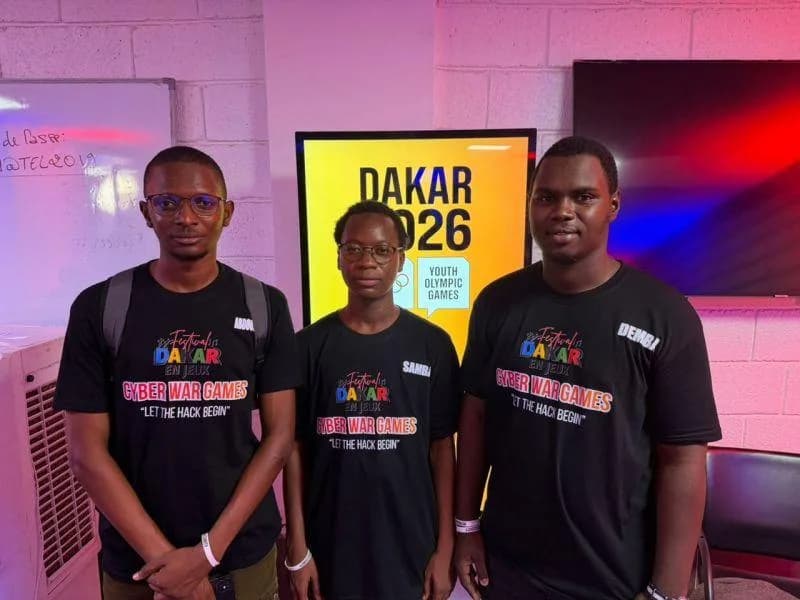
- Digital preparations for the Youth Olympic Games are gathering pace. From 28 September to 4 October, the Cybersecurity and Digital Infrastructure Commission of the Games’ National Security Committee, chaired by the DCSSI, is running a Cyberdrill and tabletop exercises on managing cyber crises.
The Youth Olympics also have a digital front
At an international sporting event, the risks are not limited to the physical safety of athletes and spectators. Ticketing, communications, transport systems, video surveillance, websites, mobile apps, internal networks and management systems can all depend on digital infrastructure. A successful cyberattack could therefore disrupt some services, cause a data leak or complicate the handling of an emergency. That is precisely why the Senegalese authorities are stepping up exercises before the Games begin.
A Cyberdrill until 4 October
From 28 September to 4 October 2026, the Cybersecurity and Digital Infrastructure Commission of the Games’ National Security Committee is running a Cyberdrill, together with Tabletop Exercises (TTX). The aim is to strengthen coordination between the various players and to test how well they can respond when an incident hits the Games’ digital ecosystem. In practice, this kind of exercise makes it possible to work through different scenarios: a compromised system, a service outage, an attack on infrastructure or the need to coordinate several teams quickly. The point is therefore not only to find out whether an attack can be detected. It is also to establish who makes the decision, who communicates, who intervenes and how essential services are restored.
Saint-Louis at the heart of the Cyber War Games
On Saturday 3 October, while the national Cyberdrill was still under way, Saint-Louis hosted the third edition of the Cyber War Games – Flame Tour. The event featured a Cyber Park and a Cyber Range, two spaces devoted to training, hands-on practice and cybersecurity awareness. According to the organisers, around 200 competitors split into several teams were expected, with nearly 2,000 people announced around the event. The Dakar 2026 Youth Olympic Games were also among the issues at stake in this edition. Beyond the competition, initiatives like this bring students, professionals and institutional cybersecurity players closer together.
Senegal also has a national system in place
These preparations build on bodies already responsible for national cybersecurity. CSIRT-SN, part of the DCSSI’s set-up, is in charge of monitoring, detecting, analysing and responding to cybersecurity incidents at national level. Its role becomes particularly important when an attack goes beyond a single organisation and requires coordination between several players. For an event on the scale of the Youth Olympics, this ability to coordinate is essential.
A new framework for critical infrastructure
The exercises also come as Senegal tightens its regulatory framework. The new cybersecurity system sets out more obligations for critical infrastructure: risk analysis, protection measures, backups, encryption, business continuity and recovery plans, audits and notification of major incidents. The aim is to move gradually from an approach where cybersecurity relies mainly on recommendations to one that is more structured and mandatory. This shift affects essential sectors such as telecommunications, energy, water, health, finance and some public services.
The real test will come during the Games
Simulations help prepare teams, but they never fully reproduce the conditions of a real crisis. During the Youth Olympics, the volume of connections, the concentration of visitors, the data exchanged and the reliance on digital services will all be much greater. The challenge will therefore be to keep up constant monitoring and, above all, to react quickly if an incident occurs. For Senegal, the exercises held over the past few days are a dress rehearsal. Cybersecurity is becoming a fully fledged part of preparations for Dakar 2026. And beyond the Games, the skills and mechanisms being tested today could help strengthen the country’s digital resilience for the long term.
- CSSI CYBERDRILL JOJ DAKAR, DCSSI.
- Cyber war games 2026, Cyber War Games.
- Assemble Nationale, AN.
Spotted an error? Write to infos@novotech.blog. Corrections are flagged at the end of the article.