ContiSX Phone: the gamble of a $400 Nigerian “blockchain” smartphone with no Android or WhatsApp
Ndubuisi Ekekwe, a Nigerian engineer who once helped design sensors for the first iPhones, is launching a closed, encrypted phone linked to his future stock exchange. A niche product in a market where more than 60% of phones sell for under $150.
- The ContiSX Phone, sold for 550,000 naira (about $400), runs neither Android nor iOS and does not support WhatsApp.
- It promises end-to-end encryption, but no independent security audit has been published.
- It comes with a year of free data to the future ContiSX exchange, which so far only has approval in principle from the SEC.
- In Nigeria, more than 60% of smartphones sold cost under $150: the device targets institutions, not the general public.
In Nigeria, a phone on which you cannot install WhatsApp, Instagram or Facebook is bound to raise eyebrows. Yet that is Ndubuisi Ekekwe’s gamble. His company, ContiSX Securities Exchange Plc, has opened pre-orders for the ContiSX Phone, billed as Africa’s first blockchain phone. Announced price: 550,000 naira, about $400 at the current rate. Deliveries are due to start on 19 October 2026, the day the entrepreneur plans a ceremony in the banquet hall of State House, the Nigerian presidency, in Abuja.
The device runs neither Android nor iOS. It is a closed world, a “walled garden” as the saying goes, and Ekekwe is betting that Nigerian institutions will be willing to pay to live in it. The product says a lot about its creator’s ambition, and just as much about the difficulties of the market it targets.
An engineer who long worked for others
Ndubuisi Ekekwe is a well-known figure in the Nigerian tech ecosystem. According to WeeTracker, which traced his career, he worked at the American company Analog Devices on the design of the accelerometer built into the first iPhones. He is also credited with doctoral work on wafer-level chip packaging, which still earns him royalties, two doctorates, four master’s degrees and a patent on microcircuits for medical robotics. He also runs Tekedia, an online learning platform known for its “Mini-MBA”.
For years, his components ended up in products sold under other brands. This time, it is his name on the box. And the phone is not an end in itself: it is the gateway to a bigger project, a stock exchange.
What the phone promises
The core of the pitch is security. Messaging, voice calls and video conferencing are end-to-end encrypted, with cryptographic keys isolated in a dedicated secure enclave and biometric authentication on the device. ContiSX claims this encryption is guaranteed against eavesdropping and tampering. Several outlets, including Legit.ng and WeeTracker, point out, however, that the company has not published any independent security audit. For a product whose main promise is privacy, that matters.
The phone also comes with tools for businesses: ContiSX Shield for security alerts, Boardroom for board governance, and a management suite covering accounting, payroll and inventory. Ekekwe also highlights an interface available in English, Yoruba, Igbo, Hausa and Nigerian Pidgin, as well as a built-in artificial intelligence assistant. Some technical specifications are circulating, such as a 6.7-inch AMOLED screen, 5G, 8 GB of RAM and 256 GB of storage, but no complete spec sheet has been published, nor has the identity of the device’s manufacturer.
- Price: 550,000 naira, about $400.
- System: proprietary, neither Android nor iOS; no WhatsApp, Instagram or Facebook.
- Security: end-to-end encryption, secure enclave, biometrics; no independent audit published.
- Pre-order perk: a year of free data to the ContiSX exchange and central securities depository.
- Announced deliveries: 19 October 2026, after an initial date of 1 October.
The real product: a stock exchange
The phone’s main appeal is what it connects to. In April 2026, ContiSX obtained approval in principle from Nigeria’s Securities and Exchange Commission (SEC) to set up a full exchange for equities, bonds, exchange-traded funds and commercial paper. This approval is a preliminary step: it does not yet allow full operation. ContiSX was aiming for a September 2026 launch, since pushed back to October.
For a year after purchase, pre-order customers get “zero-rated” access to the ContiSX exchange and central securities depository: the data they use is not deducted from their plan. Ekekwe says he has prepaid the participating telecom operators to cover these costs. Writing on LinkedIn, he explained that once the ContiSX exchange launches, users will not need data to buy shares, government bonds and other investment products in its ecosystem, summing up his philosophy as “inclusion through investment” (paraphrased).

A market that is ruthless on price
Nigeria’s smartphone market is one of the most price-sensitive in the world. According to figures cited by WeeTracker, the average selling price of a smartphone in the first quarter of 2026 was $134, up only 2% year on year. Devices under $150 account for more than 60% of volumes, and about 90% of the phones sold in the country are imported. Research firm Omdia even forecasts a decline in smartphone shipments in Africa in 2026, driven by rising memory prices and currency instability.
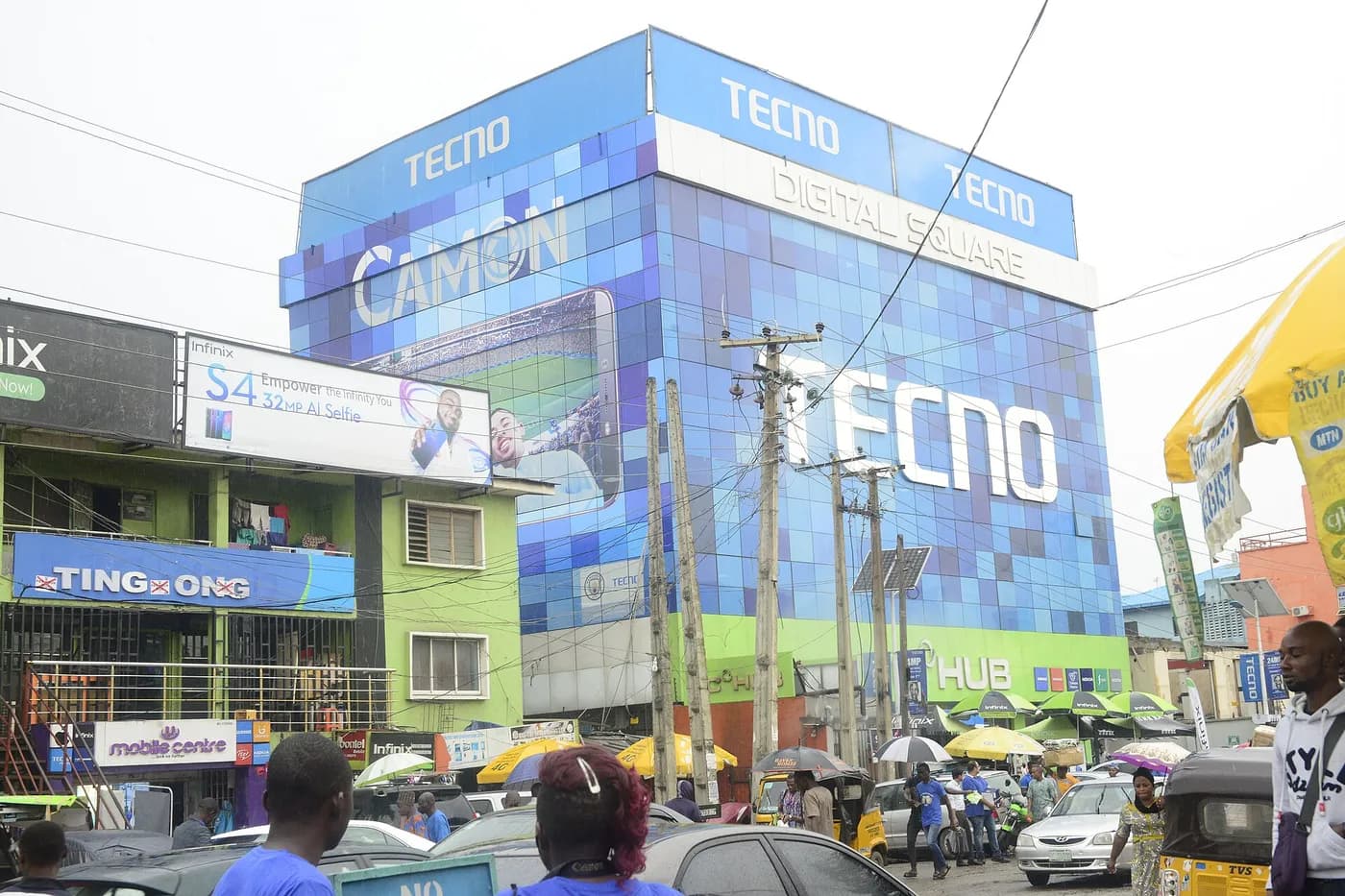
At 550,000 naira, the ContiSX Phone costs about four times the average price. So it does not compete with Tecno and Infinix, the brands of the Chinese group Transsion that dominate the low end, but with mid-range models from Samsung and Apple. And without the apps Nigerians use every day, starting with WhatsApp, it can hardly hope to become anyone’s main phone.
The target: institutions and businesses
Ekekwe is not in fact aiming at the general public. His target is Nigerian institutions, government agencies and businesses that put digital sovereignty and privacy ahead of cost. In a country where data leaks and messaging scams are common, a closed phone that can only run approved apps may appeal to departments that handle sensitive information. The challenge is to convince these buyers that a proprietary, unaudited system designed by a young company is safer than well-configured off-the-shelf phones.
The model recalls other attempts at “blockchain phones”, such as those launched in recent years by cryptocurrency players elsewhere in the world. None has achieved lasting commercial success: the public did not see the point of paying more for a less versatile device. The difference here lies in the direct link to a regulated marketplace and the free data, a real argument in a country where the cost of mobile internet still holds back usage.
A more favourable regulatory context
The timing tends to work in the entrepreneur’s favour. In July 2026, President Bola Tinubu signed an order creating a Virtual Assets Council chaired by the Central Bank of Nigeria (CBN), with the SEC as vice-chair. The text explicitly aims to close the loopholes exploited by unregistered operators, while encouraging responsible innovation through a CBN regulatory sandbox. After years of official distrust of cryptocurrencies, Nigeria is seeking to regulate rather than ban.
A test for local manufacturing
Beyond the product, the initiative raises a recurring question in Africa: whether the continent can design its own devices rather than import them. Others have tried before ContiSX, with mixed fortunes, from Mara Phones in Rwanda and South Africa to tablets designed in Nigeria or Congo. Most ran into the same reality: against the Asian giants, small-batch production is expensive, and consumers decide first on price.
By targeting an institutional niche and tying his device to a financial service, Ndubuisi Ekekwe is trying to escape that trap. Whether he turns this ambition into a working exchange, with real issuers, investors and financial institutions, remains the big unknown. If his phone finds buyers, it will at least have shown that a Nigerian engineer can put his name on a product instead of slipping it into other people’s.
- A Nigerian Entrepreneur’s Unusual Bet On A Blockchain Phone No One Knows They Need, WeeTracker.
- Ekekwe’s Nigerian-Made Contisx Smartphone Launches With Encrypted Calls, Messaging, and Free Data, Legit.ng.
- Meet the ContiSX Phone: Built for Privacy, Security, and Investment Inclusion, Tekedia.
Spotted an error? Write to infos@novotech.blog. Corrections are flagged at the end of the article.