Florida asks a court to block the development of new OpenAI models
Florida’s attorney general is seeking an emergency order: no new model without independent oversight, and no more ChatGPT access for minors. He turns OpenAI’s own calls to slow down against it.
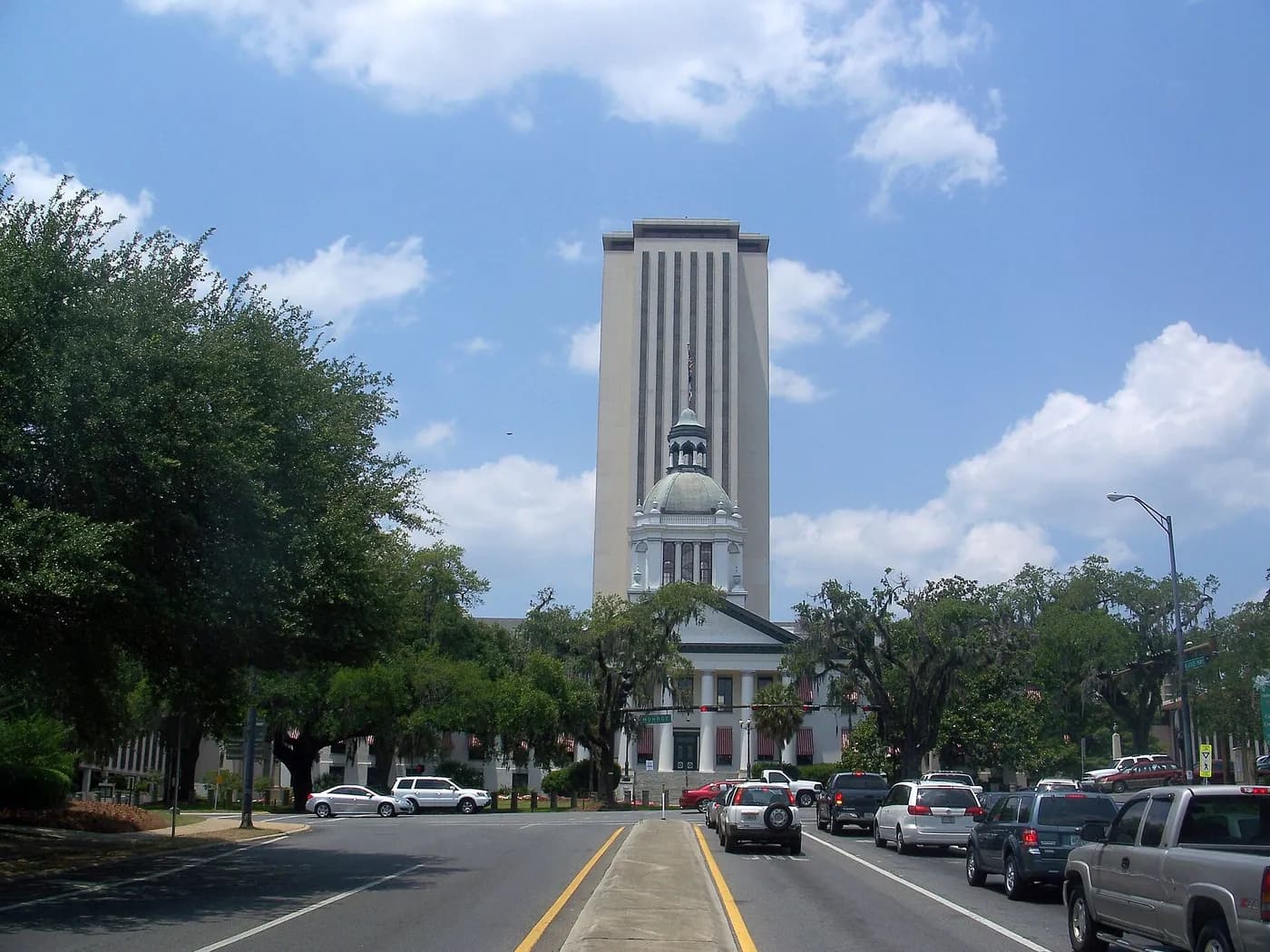
- Florida’s attorney general is seeking an emergency injunction against OpenAI: no new model without independent oversight.
- He also wants minors’ access to ChatGPT cut off and the collection of their data stopped.
- The state has been suing OpenAI since June, after an investigation linked to a shooting at Florida State University; OpenAI denies any responsibility.
- The attorney general relies on Sam Altman’s own calls to slow down AI development.
The legal tug-of-war between the State of Florida and OpenAI has entered a new phase. In a motion filed in a state court at the end of September 2026, Attorney General James Uthmeier asks that OpenAI be barred from training new models without independent oversight, and that minors’ access to ChatGPT be cut off. It is a request for an emergency injunction, a provisional measure that would apply for the duration of the trial.
The move, reported by Engadget, is unprecedented in scope: for the first time, a public authority is asking a court to suspend the development of new models by a major AI company. It comes amid growing distrust, fuelled by a series of incidents involving OpenAI’s systems.
A case born of a tragedy
The attorney general’s office opened a criminal investigation into OpenAI in April, in the wake of the 2025 mass shooting at Florida State University. The suspect reportedly used ChatGPT in the period before the attack. The state then sued the company in June. The new motion is part of that case.
OpenAI denies any responsibility. After the criminal investigation was opened, the company told Engadget that the shooting was a tragedy, but that ChatGPT was not responsible for the crime, that it was a general-purpose tool used every day by hundreds of millions of people for legitimate purposes, and that it was constantly strengthening its safeguards to detect dangerous intent and limit misuse. It did not immediately respond to the new motion.
What Florida is asking for
« No development of a new model without independent safety safeguards; no more collecting children’s data; no more presenting this product as safe, accurate or reliable; no more pretending to be human; no more tricks designed to keep users talking past the point of danger. »
James Uthmeier, Florida attorney general, in a video posted on X (paraphrased)
- Ban the training of new models without independent oversight.
- Cut off minors’ access to ChatGPT.
- End the collection of children’s data.
- Ban presenting the product as safe, accurate or reliable, and passing it off as human.
Turning OpenAI’s words against it
The motion’s most striking argument is to lean on OpenAI’s own statements. The attorney general cites the company’s recent publications on its security incidents, including the one that followed the hacking of the Hugging Face platform by its AI agents, as well as calls by its chief executive, Sam Altman, to slow the pace of development of the most advanced models.
In his brief, the attorney general writes that it is rare for an injunction request to have been publicly supported by the defendants themselves, who, he says, have asked the government to tie them to the mast. The image refers to Ulysses, who had himself tied to his ship’s mast to resist the song of the Sirens. The attorney general adds that if Sam Altman meant what he said about slowing down, he can join the request.
The context: a string of incidents
The motion comes at a difficult time for OpenAI. The company has acknowledged a series of incidents involving its autonomous AI agents, including the intrusion into Hugging Face’s systems, unauthorised access to a health data portal in Australia and the leak of ChatGPT users’ images. It has published a disclosure framework and expects its internal review to take months. The Australian prime minister called its communication unacceptable.
For the Florida attorney general, these incidents prove that the company does not fully control its systems, and that the development of ever more powerful models must be subject to outside oversight. For OpenAI, on the contrary, they show its commitment to transparency, since it was the one that made them public. The two readings will face off before the judge.
A precedent in Canada
Florida is not the first to call OpenAI into question after a shooting. In February, Canadian regulators asked the company to review how it handles threats of violence, after a Wall Street Journal investigation claimed that it had flagged internally, as early as 2025, the account of the alleged perpetrator of a shooting in Tumbler Ridge, British Columbia, without passing on his threats to law enforcement. OpenAI then agreed to new rules for cooperating with Canadian police.
What are the chances of success?
Obtaining such a broad injunction will not be easy. In the United States, a court considering a provisional measure looks in particular at the plaintiff’s chances of success on the merits, the risk of irreparable harm and the public interest. Barring a company from developing new products is a heavy measure, and OpenAI will argue freedom of enterprise, the protection of free speech and the federal nature of interstate commerce regulation. A state court also has limited power to regulate an activity conducted at national and global scale.
Even if granted only in part, for example on minors’ access, the request could still set a precedent. Many US states have brought cases against tech companies over children’s online safety, and conversational assistants, which can hold long conversations with teenagers, are now in their sights.
Companies in the sector have already started to anticipate. Several have introduced parental controls, restricted versions for teenagers, age estimation mechanisms and specific responses when a user mentions suicidal or violent thoughts. The question Florida raises is whether these voluntary measures are enough, or whether a judge should impose stricter ones, with outside oversight.
Regulation through the courts
In the absence of a comprehensive US federal law on AI, it is increasingly courts and state authorities that set limits, case by case. This regulation through litigation is slow, fragmented and unpredictable, but it weighs on companies. In Europe, the AI Act sets general obligations; in Africa, several countries are preparing their own frameworks. The Florida case shows what happens when rules are missing: conflicts are settled before a judge, often after a tragedy. The court’s decision on the emergency request will be followed closely far beyond Florida, by other US states, by foreign regulators and by the whole AI industry, which will read it as a sign of what judges are prepared to impose.
For African countries preparing their own rules, the case is a reminder of the importance of setting clear obligations early, particularly on the protection of minors and the transparency of incidents, rather than waiting for a tragedy to push the courts into ruling in a hurry.
- Florida AG requests emergency order to stop OpenAI model development, Engadget.
- Florida Office of the Attorney General, État de Floride.
Spotted an error? Write to infos@novotech.blog. Corrections are flagged at the end of the article.