Google makes “magic states” 40 times more reliable on its Willow quantum chip
In a paper in Science, Google Quantum AI has shown on real hardware, for the first time, a technique called “magic state cultivation” that cheapens the most expensive ingredient in quantum computing. A separate preprint with DeepMind and MIT promises to slash the number of qubits needed. A useful quantum computer still does not exist.
Why it mattersThe promises of quantum computing, from new drugs and materials to breaking today’s encryption, hinge on this bottleneck. Every step forward brings closer a deadline that banks, governments and telecom operators need to plan for.
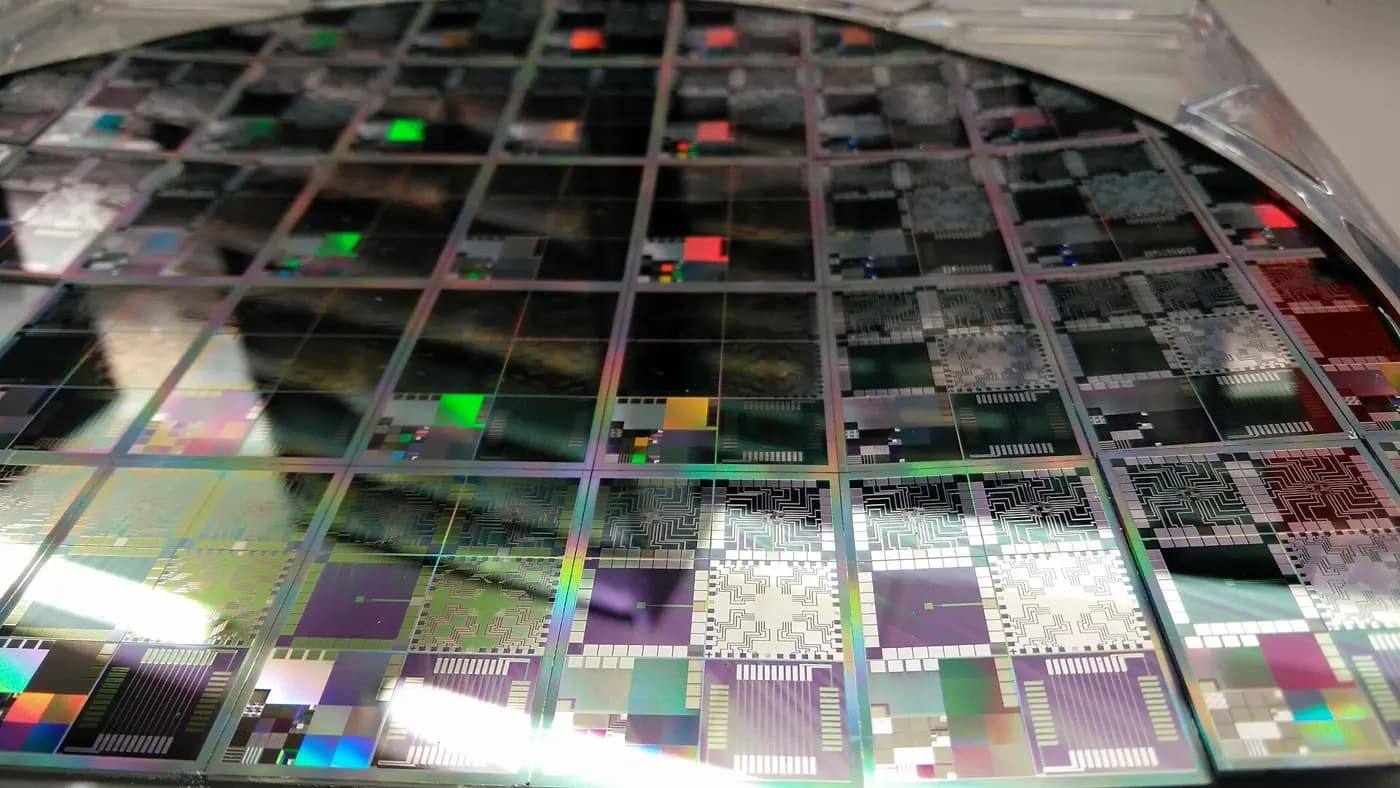
- Google Quantum AI published in Science on October 15, 2026 the first hardware demonstration of “magic state cultivation”, on its 105-qubit Willow chip.
- The resulting T-states reached 99.99% logical fidelity, with roughly 40 times fewer errors than without the technique; only 8% of attempts are kept.
- Magic states are essential to universal quantum computing and can be used only once; by some estimates, producing them could take up to 95% of a machine’s capacity.
- A preprint from Google, DeepMind and MIT proposes hyperbolic codes on flat modules: at least 10 times fewer qubits in simulation, more than 30 times in projection.
- The authors acknowledge storage errors seven times higher than simulated and say the technique must still be shown at larger scale.
Eight attempts in a hundred. That is the share Google’s Willow chip keeps at the end of the process; the other 92 are thrown away. The waste is deliberate, and it is the price of a result Google Quantum AI published in Science on Thursday, October 15: “T-states” with a logical fidelity of 99.99%, meaning at most one error in 10,000, and roughly 40 times fewer errors than without the technique. It is called magic state cultivation.
The same day, Alphabet chief executive Sundar Pichai posted on X: “Some magical progress towards ‘magic state’ in quantum!” The pun hides a real engineering problem, identified as far back as 2004, that researchers have been chipping away at for some twenty years.
An essential ingredient that can be used only once
A quantum computer cannot compute with just any operations. Some of them are easy to shield from errors, the curse of these machines, where the slightest temperature shift or electrical interference knocks qubits off course. But those “easy” operations are not enough. A classical computer can readily simulate a program built only from them, which means they offer no advantage on their own.
The missing piece is the so-called T gate. It cannot be carried out reliably in a direct way; instead, it is performed by consuming a quantum state prepared separately, the magic state. Each one works only once. A machine running a serious algorithm would therefore have to churn them out continuously, like a factory feeding an assembly line. By some estimates cited by Google, as much as 95% of a quantum computer’s capacity could go to that production alone.
The standard approach, “distillation”, takes several imperfect states and extracts a single purer one, at the cost of a large number of qubits. Cultivation, proposed in 2024 by Google researchers Craig Gidney, Noah Shutty and Cody Jones, works more like a sieve. A noisy state is injected into a small region of the chip and put through a series of coordinated measurements that catch defects; failed attempts are discarded, and the survivor is “grown” into a larger error-correcting code. Until now, the idea had only been tested in theory and simulation.
Months lost to a measuring tool
The result did not come easily. In a post on Google’s blog, Emma Rosenfeld, a research scientist at Google Quantum AI, and Craig Gidney recount that early data seemed to contradict physics. It took months to trace the cause to a wrong assumption in the benchmarking method itself. Drift in electrical equipment and temperature swings in the lab produced slow noise that skewed comparisons and could make the states look better than they were.
The team tightened control of the chip and devised a benchmarking technique that uses cultivation to measure itself, yielding a lower bound on fidelity rather than a flattering figure. It also handed the final tuning step to a reinforcement-learning algorithm, which improved both the circuit’s error probability and the share of retained attempts by about an order of magnitude, according to The Quantum Insider.
« We still need to demonstrate magic state cultivation at a larger scale. »
Emma Rosenfeld and Craig Gidney, Google Quantum AI, on Google’s blog
The authors are open about the limits. When states were held through long rounds of error correction, the logical error rate came out about seven times higher than simulations predicted. The likely culprit is “leakage”, when a qubit slips out of the two states it is meant to occupy, a phenomenon the simulations left out and the tested circuits did not correct. And an 8% yield is low: on a large machine, the sieve will have to run fast and in parallel.
Fewer qubits per useful qubit: a preprint’s promise
The other bill in quantum computing is for qubits. Getting a single reliable “logical” qubit requires many imperfect physical ones that keep watch on each other. With the surface code, the most widely used method and the one Google runs on Willow, that ratio runs into the hundreds, even the thousands, at high levels of protection.
A preprint posted to arXiv on October 2 by 14 researchers from Google Quantum AI, Google DeepMind and MIT, including Oscar Higgott, Craig Gidney, Pushmeet Kohli and Hartmut Neven, takes another route. Instead of one huge chip, the processor would be split into small flat modules of about a hundred qubits, joined by a few fixed links along their edges. On that architecture, the authors build so-called “hyperbolic” codes, whose geometry packs more logical qubits into the same number of physical ones.
The numbers need careful reading. Simulations using two decoders, including DeepMind’s AlphaQubit neural network, show at least a tenfold cut in physical qubits compared with the surface code, even when links between modules are ten times noisier than operations on the chip. The “more than 30 times” highlighted by Quantum Computing Report is an extrapolation to larger systems, with a code encoding one logical qubit for every 16 physical ones. Nothing has been built: this is theory and simulation, not yet peer-reviewed.
What this changes, and what it doesn’t
Taken together, the two papers go after the two cost centres that make a useful quantum computer so enormous on paper: memory, with denser codes, and magic-state production, with a method that would take up a small slice of the chip rather than most of it. Flat modules also make an industrial case, since they keep the manufacturing advantages of planar chips and avoid long wire crossings on the chip.
But Willow is still a 105-qubit machine, and the experiment in Science uses about fifty of them to produce one state at a time. Google has announced no timeline, customers or revenue for its quantum business. The Quantum Insider puts it cautiously: the work does not establish that the resource problem has been solved at a practical scale. The next test is the one the authors themselves call for: running cultivation on a bigger chip, for longer, without leakage driving errors back up.
- Bringing the magic: Google breaks open a bottleneck in quantum computing, Google.
- Google Demonstrates Method to Cut Errors in Quantum Computing’s ‘Magic States’, The Quantum Insider.
- Google Quantum AI Demonstrates Magic State Cultivation on Willow Processor in Science Milestone, Quantum Computing Report.
- Low-Overhead Quantum Error Correction with Boundary-Connected Planar Modules, arXiv.
- Google Quantum AI, DeepMind demonstrate modular hyperbolic codes for over 30x QEC overhead reduction, Quantum Computing Report.
- Google just cut a major quantum computing error rate by 40 times, 24/7 Wall St..
Spotted an error? Write to infos@novotech.blog. Corrections are flagged at the end of the article.