A papyrus burned by Vesuvius read from end to end thanks to AI, without ever being opened
Carbonised in AD 79 and too fragile to unroll, scroll PHerc. 1667 reveals a treatise of Stoic philosophy. Synchrotron X-rays, virtual unrolling and machine learning: a method that could give a voice back to hundreds of ancient texts.
- Researchers have read from end to end the surviving part of scroll PHerc. 1667, carbonised by Vesuvius in AD 79.
- Method: X-rays at the ESRF synchrotron in Grenoble, virtual unrolling, then AI to detect the invisible ink.
- The text, nearly 1.5 metres long and some twenty columns, is a Stoic moral treatise from the 2nd century BC.
- About 600 Herculaneum scrolls remain unopened; the AI’s results are checked by papyrologists.
For almost two thousand years, scroll PHerc. 1667 was nothing more than a small blackened cylinder. Carbonised during the eruption of Vesuvius in AD 79, it was part of the library of the Villa of the Papyri, at Herculaneum. Yet researchers have just read from end to end the part of the scroll that survives, without ever opening it, thanks to X-rays and machine learning algorithms able to reveal ink that had become invisible.
The result, reported by Journal du Geek based on the work of the Vesuvius Challenge, amounts to nearly a metre and a half of text and some twenty columns of ancient Greek. It is a first for a Herculaneum scroll preserved in rolled form: instead of recovering a few letters or isolated words, researchers now have a continuous line of reasoning over several columns.
The only surviving ancient library
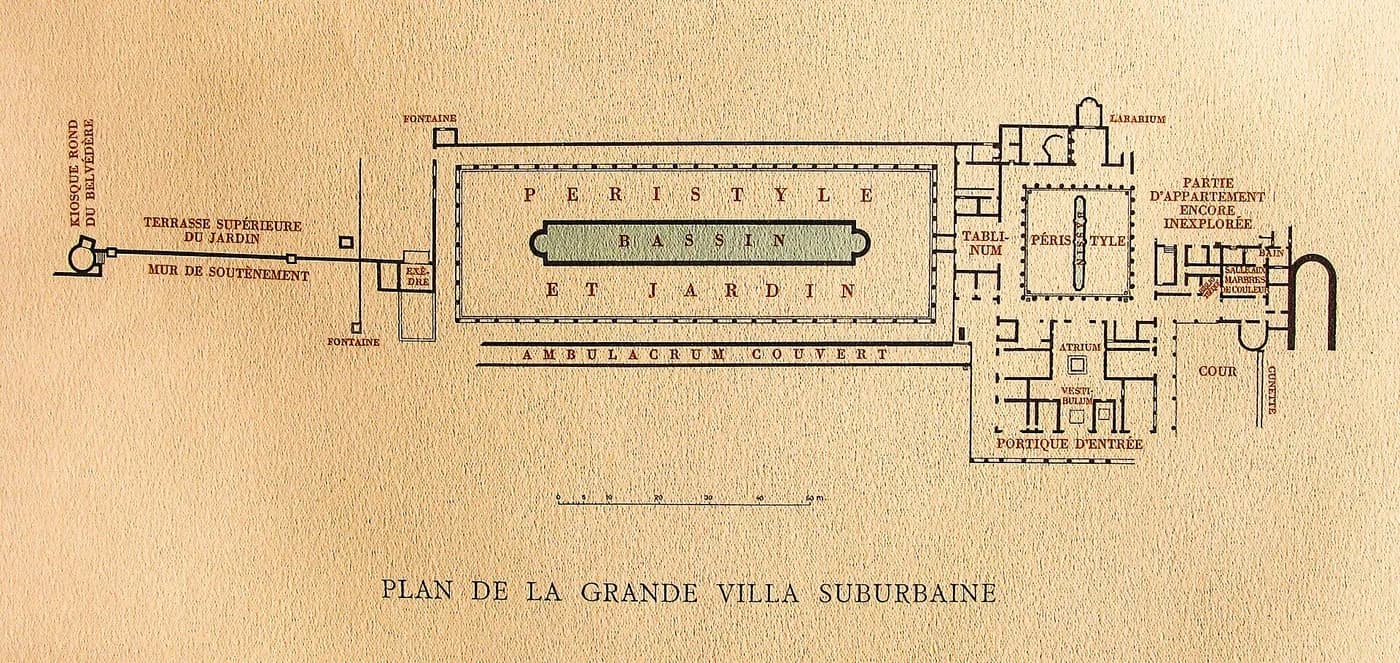
The story begins in the 18th century, when the excavations at Herculaneum uncovered an exceptional collection of carbonised papyri. The Villa of the Papyri held several hundred scrolls and fragments. It is the only large library from classical antiquity to have come down to us. The tragedy is as simple as it is cruel: these papyri survived because they were carbonised, but carbonisation made them extremely fragile. Opening a scroll mechanically often means destroying it.
PHerc. 1667 is proof of that. According to the Vesuvius Challenge, it once stood about 19 to 24 centimetres high. Attempts to open it in the 19th century, then in 1969 and in the 1980s, left only a structure about 8 centimetres high, the inner part that still survives. Today, about 600 Herculaneum scrolls have never been opened: their content is potentially intact, but out of reach of traditional methods.
Seeing a text that can no longer be seen
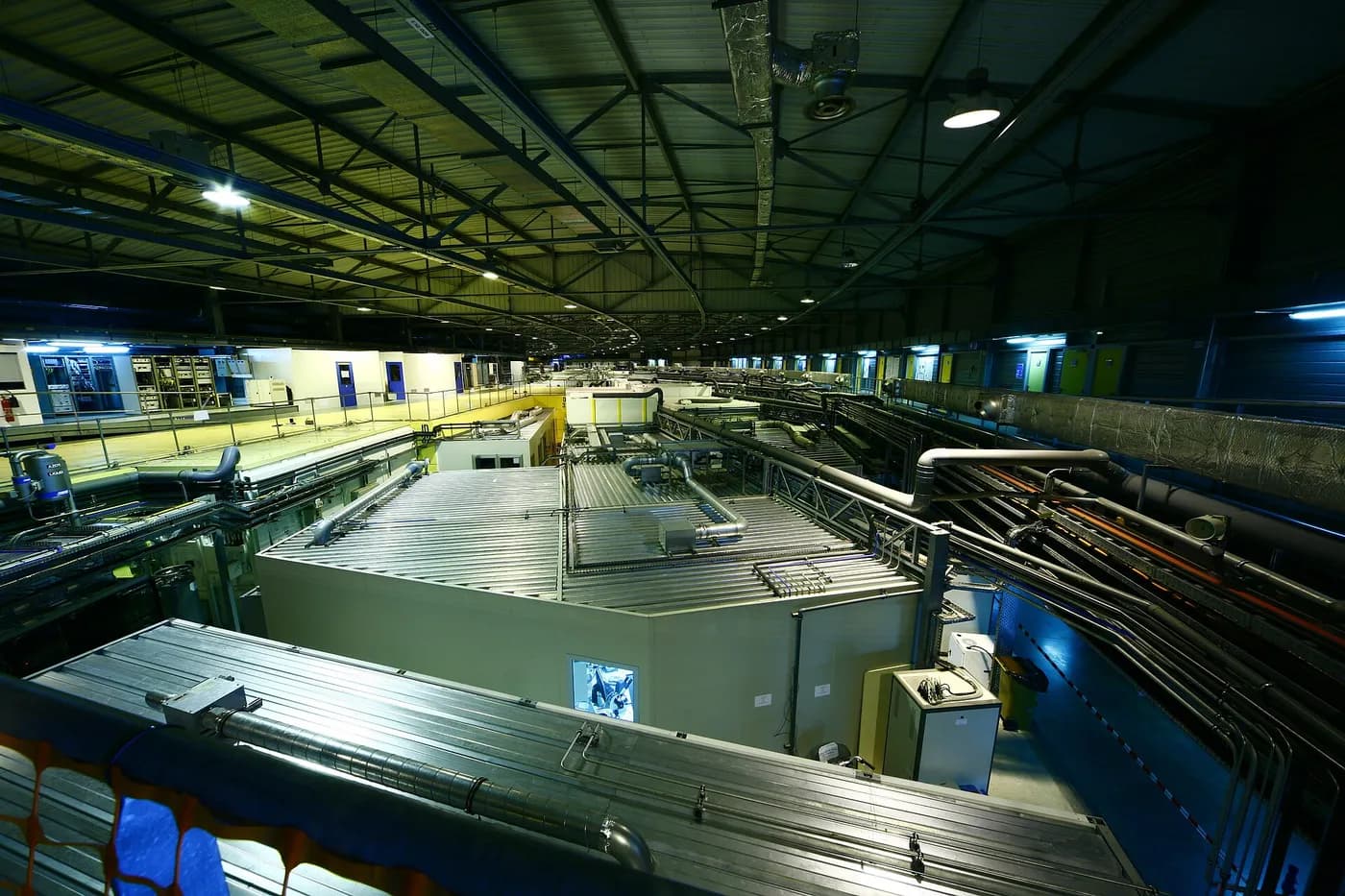
The method has three stages. First, the scroll is scanned by phase-contrast X-ray microtomography at very high resolution, notably on the BM18 beamline of the ESRF, the European synchrotron in Grenoble. A synchrotron is a particle accelerator that produces extremely intense light, able to reveal the finest details of matter. The result is a three-dimensional digital volume of the scroll.
Next, the researchers reconstruct the sheets inside this volume, follow their curves and flatten them virtually. It is this “virtual unrolling” step that turns a cylinder of carbonised material into a series of surfaces that can be examined like pages.
Finally, artificial intelligence comes in. The ink and the papyrus have both turned black, and the human eye can no longer make out the letters. Machine learning models are trained to recognise extremely faint traces in the scanner data that correspond to the physical presence of ink. The system does not invent text: it looks for material patterns. And the result is then checked by specialists in ancient Greek and papyrology. The AI does not read an ancient text on its own, nor decide what it means.
A treatise on Stoic ethics
The content is almost as remarkable as the method. The surviving part of PHerc. 1667 contains a philosophical treatise on ethics, human nature and moral progress. The text appears to belong to the Stoic tradition, the Greek school of philosophy that taught self-control and living in agreement with nature. The researchers found references to Aristocreon, nephew and disciple of the philosopher Chrysippus, which places it in a Stoic context and dates it to the 2nd century BC.
The text is still incomplete: the scroll had been damaged before it was scanned, and some parts are illegible. But the heart of the technological bet has been won. For the first time, researchers have gone from a closed scroll to a usable text, which specialists can study as a work and no longer as a handful of fragments.
Why it is so difficult
The difficulty lies in the chemistry of the Herculaneum papyri. Scribes of the time often used carbon-based ink, such as soot mixed with gum. But the carbonised papyrus has itself become carbon. On a conventional X-ray image, which distinguishes materials by their density, ink and support are almost impossible to tell apart. That calls for extremely fine measurements, and algorithms able to spot tiny differences in texture or thickness where the ink was laid down.
Then there is the geometry. A carbonised scroll is not a regular cylinder: its layers are crushed, stuck together, sometimes fused into one another. Following a single sheet over several turns, without jumping onto the neighbouring layer, requires very precise segmentation tools and a great deal of manual checking. That is where recent progress, in computing as in machine learning, has made the difference.
The Vesuvius Challenge, a collective adventure
This result is the culmination of an effort launched a few years ago as an open competition, the Vesuvius Challenge. Prizes were offered to anyone who managed to read the scrolls from the scans made public. Students, programmers and researchers from around the world took part, and several breakthroughs came from young participants outside academia. This openness of data and methods greatly accelerated progress.
The open competition model is worth remembering. Rather than entrusting the problem to a single team, the organisers published the data and offered rewards for each milestone reached: first letter read, first word, first passage. Thousands of people contributed, shared their tools and improved those of others. This approach, common in free software, shows that a scientific challenge can mobilise talent from around the world, including students without prestigious affiliations, as long as the data is accessible.
What could come next
If the method becomes widespread, potentially hundreds of unknown ancient texts could resurface: lost philosophical works, literary texts, perhaps writings by authors known only by name. The Villa of the Papyri has in fact only been partly excavated, and some specialists hope that other scrolls still lie beneath the volcanic layers.
The story of PHerc. 1667 also illustrates an exemplary use of artificial intelligence: serving human experts, to see what the eye cannot see, with results that are checked and published. Far from the spectacular promises and the fears, it is one of the most convincing applications of these technologies: giving a voice back to people we thought had been silenced for two thousand years.
- Brûlé par le Vésuve il y a 2000 ans, ce rouleau n’a jamais été ouvert, et une IA vient de lire le texte que personne n’avait vu depuis l’an 79, Journal du Geek.
- Vesuvius Challenge, Vesuvius Challenge.
Spotted an error? Write to infos@novotech.blog. Corrections are flagged at the end of the article.