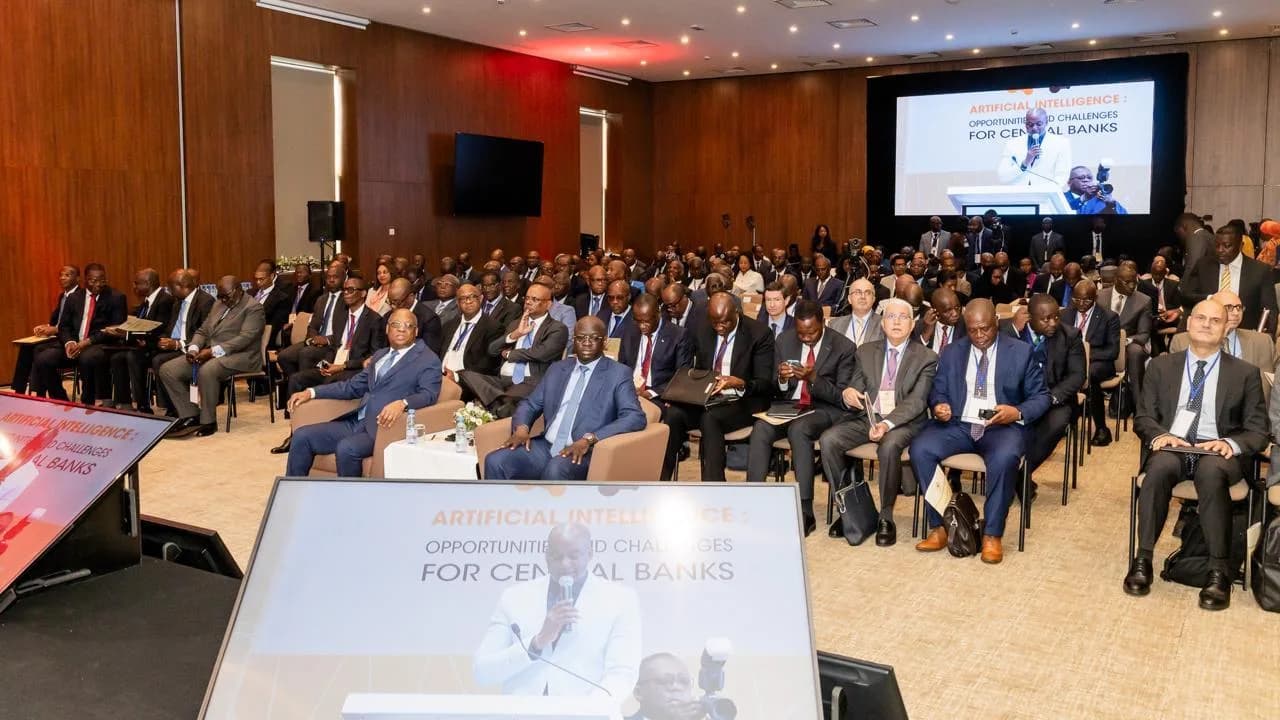
Mobile money: the balance cap on Wave and Orange Money accounts doubles to 4 million CFA francs on November 2
West Africa’s central bank is doubling the maximum balance a customer can hold in electronic money and raising the monthly top-up limit to 15 million CFA francs. On the same day, transfers between providers must run through its PI-SPI platform, and will be free up to 8,000 CFA francs a day. What changes for users in 12 days, and what the rules leave unsaid.
Why it mattersIf your salary, your takings or money from family land on Wave or Orange Money, the rules will let you keep twice as much in your account. And sending money to another provider will cost nothing up to 8,000 CFA francs a day.
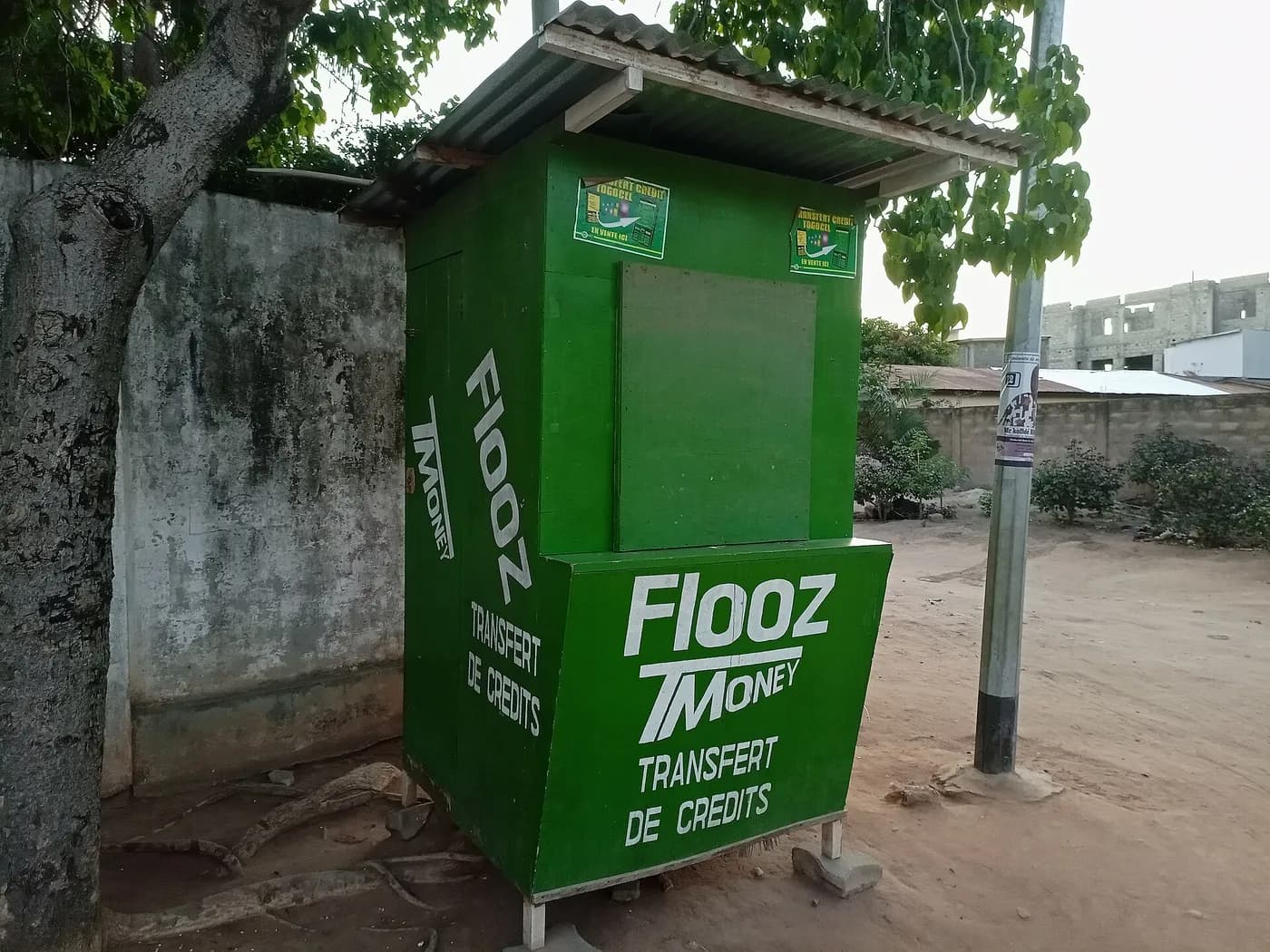
- From November 2, 2026, an identified customer may hold up to 4 million CFA francs in electronic money with a single issuer, up from 2 million (BCEAO Instruction No. 020 of October 8, 2026).
- The monthly top-up limit with a single issuer rises from 10 million to 15 million CFA francs; going over either cap requires prior approval from the BCEAO, requested by the provider.
- On the same day, transfers between institutions must go through the PI-SPI platform: sending is free up to 8,000 CFA francs a day in total, with fees of 0 to 0.8% above that, and receiving is free.
- Transfers within a single provider’s network are not covered by the central bank’s notice; transfers between WAEMU countries will move to the same pricing from June 1, 2027.
- In an op-ed published by OSIRIS, economist Seydou Bocoum argues that the reform raises the caps without improving the traceability of transactions.
Two million CFA francs, or just over €3,000. That is still, for now, the most a customer can keep in a Wave, Orange Money or any other electronic wallet across the West African Economic and Monetary Union (WAEMU). On Monday, November 2, the cap doubles.
The change runs to two pages. Instruction No. 020, signed in Dakar on October 8 by Jean-Claude Kassi Brou, governor of the Central Bank of West African States (BCEAO), rewrites two articles of the May 2015 rules governing e-money issuers in the eight countries of the West African Monetary Union. Six days earlier, a notice from the same central bank had set new rules for transfers between providers, taking effect on the same date. Taken together, the two texts change how tens of millions of people hold and send their money.
How much you can keep in your account
The new Article 31 caps the total e-money an identified customer may hold with a single issuer at 4 million CFA francs (about €6,100, or roughly $6,900). The word “identified” matters: the cap applies to accounts opened with verified ID. If you have several accounts or cards with the same provider, their balances are added together. The rule works issuer by issuer, however, so a Wave account and an Orange Money account each have their own limit.
The second figure has drawn less attention: total top-ups in a month with a single issuer rise from 10 million to 15 million CFA francs (nearly €22,900). That limit targets people who move a lot of money through an account without keeping it there: a balance can stay under 4 million while far more passes through it in a month.
E-money caps in the WAEMU, before and after November 2, 2026
In million CFA francs. Source: BCEAO, Instruction No. 020 of October 8, 2026; press reports for the previous caps
Both caps can be exceeded, but only with the BCEAO’s prior approval. It is the provider, not the customer, that applies: it must set out the reasons, the duration and the amount sought, and describe the tighter controls it will put in place. The central bank can limit the approval in time or withdraw it. Distributors (the agents where customers deposit and withdraw cash) and acceptors (businesses that take mobile money payments) are exempt from the caps when acting in the course of their business.
One practical point: 4 million and 15 million are regulatory ceilings, not entitlements. Each provider remains free to set lower limits, depending in particular on how thoroughly an account has been verified. As of publication, neither Wave nor Orange Money had said publicly how they would adjust their own limits.
Transfers to another provider free up to 8,000 CFA francs a day
The second text reaches more people. It concerns PI-SPI, the instant payment platform the BCEAO launched on September 30, 2025 to connect banks, microfinance institutions and e-money providers. A year on, it has 175 participants and gives more than 38 million people access to instant payments between institutions, according to the central bank. From November 2, every interoperable e-money transaction in the union must go through it.
Here is the new pricing for domestic transfers between individuals. As long as the total sent in a day stays at or below 8,000 CFA francs (about $14), per user and per institution, it is free, however many transfers are made; the BCEAO says that threshold covers 75% of e-money transactions in the union. A transfer above 8,000 CFA francs may be charged between 0% and 0.8% of its pre-tax amount: no more than 400 CFA francs on 50,000. Receiving money remains free, with no limit on amount or number.
Until now, free transfers between individuals on PI-SPI were capped by number (30 a month, according to Jeune Afrique). The new scale swaps that quota for a threshold in francs, which favours small, frequent transfers, like those of a market trader or a student getting pocket money, and is less generous on large amounts, which can now be charged.
The notice has a defined scope. It covers transfers between a bank or microfinance account and an e-wallet, and transfers between e-money institutions and payment institutions. A transfer from Wave to Wave, or from Orange Money to Orange Money, does not go through the platform: the notice does not cover it, and the provider’s own pricing applies. Wave advertises a 1% fee on transfers. If nothing changes before then, sending 50,000 CFA francs to an Orange Money customer could cost less (400 CFA francs at most) than sending it to another Wave customer (500 CFA francs).
- Sending up to 8,000 CFA francs a day in total to another institution, within your country: free, with no limit on the number of transfers.
- Sending more than 8,000 CFA francs: between 0% and 0.8% of the pre-tax amount, depending on the institution.
- Receiving: free, whatever the amount.
- Sending to another WAEMU country: same terms as at home, but only from June 1, 2027.
- Cash withdrawals, payments to merchants, bill payments: outside the scope of this notice, which covers only transfers between individuals.
One case remains unclear: two transfers of 5,000 CFA francs on the same day. The first is free; the second takes the day’s total to 10,000 CFA francs without itself exceeding 8,000. The notice does not say whether it can be charged, or on what basis.
Wave joined the platform on deadline day
That deadline explains a move that had been a year in coming. Wave was not among the 45 institutions live at PI-SPI’s launch; since September 30, 2026, it has appeared on the list of participants authorised to offer the platform’s services to the public, in both Senegal and Côte d’Ivoire. The timing was no accident: a BCEAO decision of June 25 had set September 30 as the connection deadline for banks, e-money issuers and payment institutions. Senegal has 43 participants, ahead of Côte d’Ivoire with 38. Which services Wave has actually opened to its customers, and when, has not been made public.
The stakes are high for Wave in Senegal, where it dominates the market. As of August 21, 2026, outstanding e-money in the country stood at 571 billion CFA francs, including 459 billion at Wave and 106 billion at Orange Money, according to Launch Base Africa. Wave built its model on free deposits and withdrawals and low transfer fees. Free transfers imposed by the regulator for small amounts erode that advantage, the economist Seydou Bocoum argued in an op-ed published on October 10 by the OSIRIS observatory: in his view, PI-SPI “shifts competition from price to the ability to finance”, in other words to credit.
The criticism: higher caps, but no more traceability
Three days later, the same author published a more pointed critique of the higher caps on OSIRIS. His central argument: the October 8 instruction strengthens protection of issuers’ liquidity but says nothing about the traceability of transactions. “We are increasing the flow from a tap without installing a meter,” he wrote.
He draws two consequences. First for banks: in his view, 4 million CFA francs is already a month’s salary for many urban professionals in the region, and if employers pay wages straight into e-wallets, banks lose both the customer and the data. “If salaries migrate to wallets, banks will be nothing more than faceless safes,” he wrote, recalling that the World Bank had warned as early as 2023 that the 2 million cap was already limiting the competitive pressure e-money issuers could put on banks. Then for governments, he argues: in several countries of the union, collecting VAT and income tax relies heavily on bank data. As activity shifts to phones, part of that income becomes invisible. “This is not organised fraud, it is structural blindness,” he concluded.
« It does not control the money that actually moves between phones. »
Seydou Bocoum, economist, on the BCEAO, in an op-ed published by OSIRIS on October 13, 2026
The economist also faults a fragmented infrastructure: GIMpay, the platform launched in November 2024 by the interbank group GIM-UEMOA, is still in technical integration, he says, and the BCEAO lacks a tool to supervise transactions in real time. Both claims are his own.
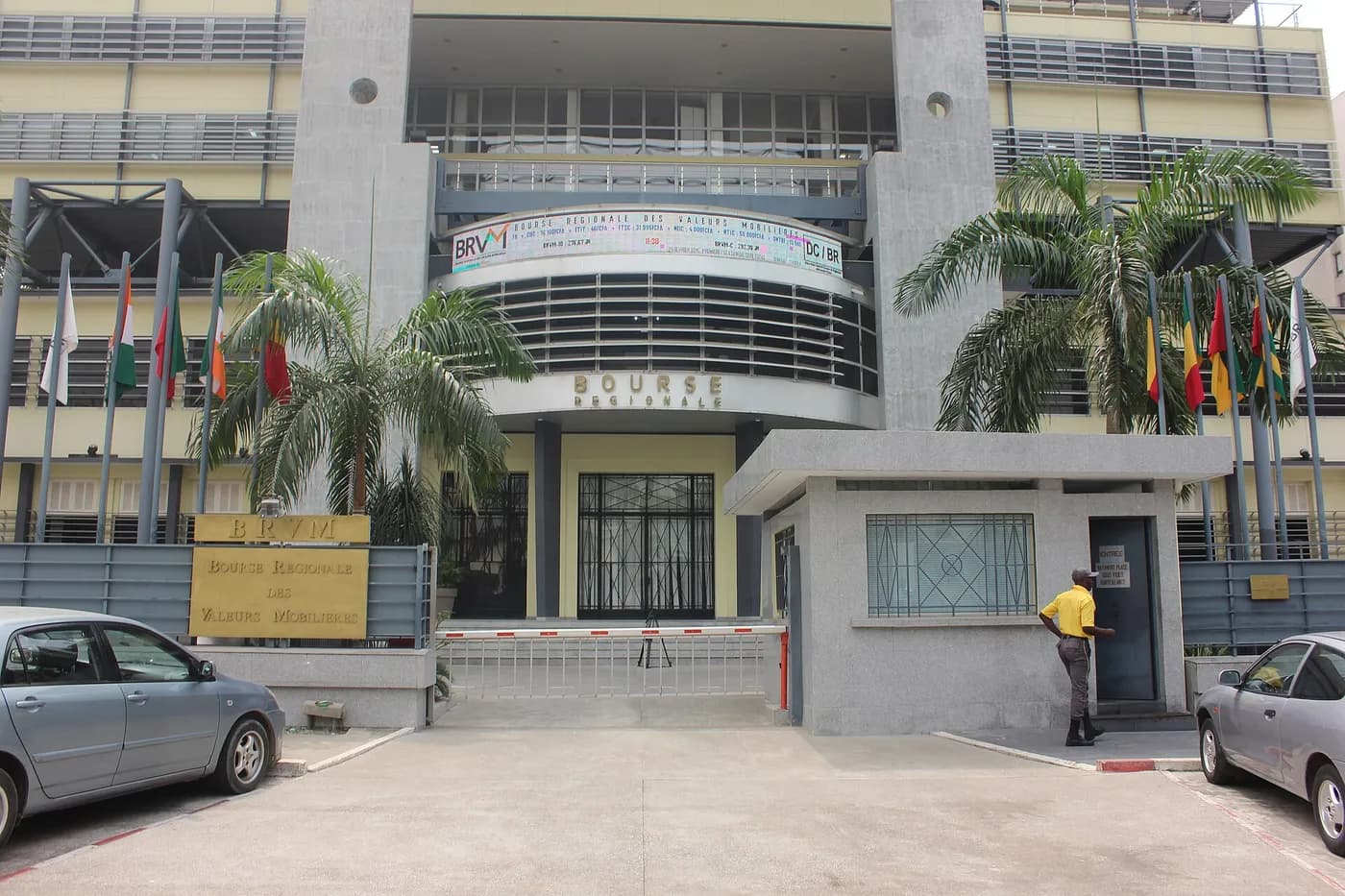
The BCEAO’s text, for its part, sticks to its purpose: keeping customers’ money safe. The new Article 34 sets a closed list of permitted investments for the funds that back customer balances: demand or term deposits with banks and microfinance institutions, and debt securities issued or guaranteed by governments, regional financial institutions or companies listed on the regional stock exchange (BRVM). Demand deposits must at all times equal at least 65% of the e-money in circulation, so that withdrawals can be met. These assets are valued at the lower of cost and market value, and the BCEAO may set different thresholds depending on each issuer’s risk profile. On money laundering, the instruction cites the union’s uniform anti-money-laundering law in its preamble but adds no new reporting or monitoring obligation.
The field is vast, and largely dormant: in 2024 the union had 248.7 million e-money accounts, of which 76.8 million were active, according to BCEAO figures reported by La Nouvelle Tribune. The next date is already set: from June 1, 2027, transfers between the eight countries will be priced the same way as domestic ones.
- Instruction n° 020 portant modification de l’Instruction n° 008-05-2015 du 21 mai 2015 régissant les conditions et modalités d’exercice des activités des émetteurs de monnaie électronique dans l’UMOA, BCEAO.
- Transactions de monnaie électronique entre personnes physiques par l’intermédiaire de la PI-SPI de l’UEMOA (communiqué du 2 octobre 2026), BCEAO.
- UMOA : la BCEAO double le plafond des avoirs en monnaie électronique à 4 millions de FCFA, Financial Afrik.
- Mobile money : la BCEAO relève le plafond des comptes à 4 millions FCFA et les rechargements mensuels à 15 millions, Sika Finance.
- Wave et Orange Money : quand la BCEAO relève les plafonds, l’État risque de perdre la trace de l’argent, OSIRIS.
- Le vrai gagnant du nouveau règlement BCEAO n’est pas Wave mais Orange Money, OSIRIS.
- Wave rejoint la plateforme de paiement instantané de la BCEAO un an après son lancement, OSIRIS (Agence Ecofin).
- Fintech unicorn Wave caves to regulators as BCEAO holds firm on West Africa’s payment deadline, Launch Base Africa.
- Wave rallie PI-SPI, SenePlus (d’après Jeune Afrique).
- Mobile money dans l’UEMOA : transferts gratuits et plafonds relevés, ce qui change dès le 2 novembre, La Nouvelle Tribune.
Spotted an error? Write to infos@novotech.blog. Corrections are flagged at the end of the article.