Paying with your face: Revolut tests facial recognition at the till, and the question of biometric data
In three London cafés, Revolut customers can pay without a card or phone, just by looking at the terminal’s camera. A showcase for the neobank’s strategy of controlling the entire payment chain.
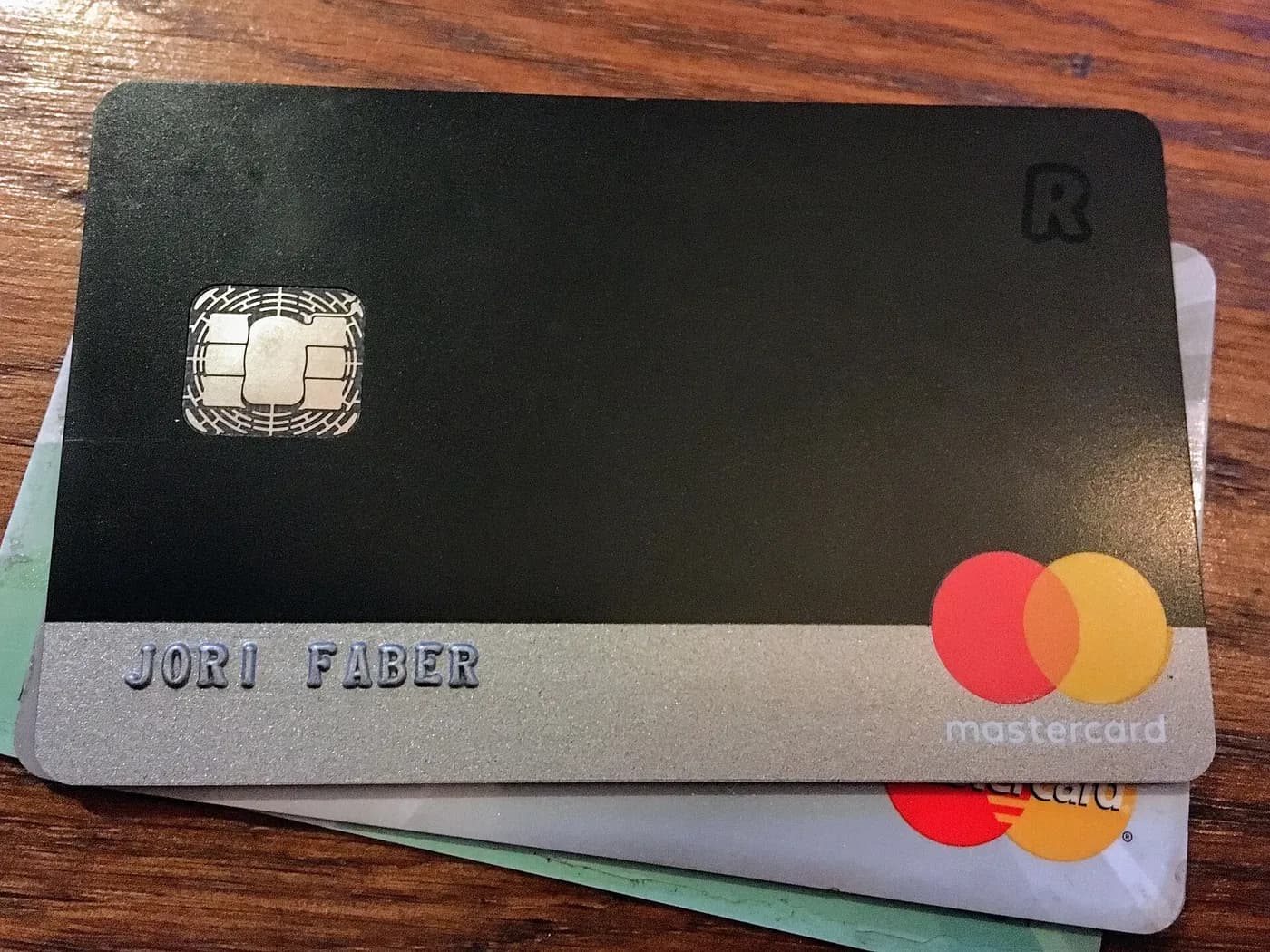
- Since 24 September, Revolut has been testing “Pay with Smile” in three London cafés: paying by looking at the till’s camera.
- The system reuses the identity check carried out when the account was opened; the feature is optional.
- The neobank wants to control the whole payment chain, right up to the merchant’s terminal.
- The storage and security of biometric data remain the central question.
Paying for your coffee by looking at the till: that is what Revolut has been testing in London since 24 September 2026. The feature, called “Pay with Smile”, is being trialled for a few days in the three branches of the Kiss the Hippo coffee chain, in Bloomsbury, Chelsea and Soho. The customer chooses this payment method on the till, looks at the terminal’s camera and, if their face is recognised, the amount is taken directly from their Revolut account. No card, no smartphone, no watch.
This is a long way from a mainstream payment method. But the test, reported by Journal du Geek, says a lot about the British neobank’s strategy and the debates surrounding biometric payments, a subject that also concerns Africa, where several banks and fintechs are looking into it.
How it works
The system relies on data Revolut already holds: the identity check carried out when the account was opened, which usually includes a photo or video of the face compared with an identity document. The customer must first switch the feature on voluntarily in the app; it is not on by default and can be turned off. At the moment of payment, the camera built into the Revolut Register till analyses the face and compares it with the data from the initial check. If the match is confirmed, the transaction is authorised.
The phone is only used to activate the service: the till’s camera does the work. Revolut says facial recognition data is end-to-end encrypted and that merchants store no personal data. To encourage people to try it, each face payment earns three times the loyalty points during the pilot, and the café is offering some drinks for one pound.
The real strategy: controlling the till
The test is revealing because it runs on Revolut’s own point-of-sale terminal. The neobank no longer just provides cards and an app: it also sells merchants their till, and can therefore control the entire chain, from the customer’s identity to the merchant’s terminal, by way of the account and the payment. Every link it controls reduces its dependence on card networks and lets it offer services that others cannot.
This is a deep trend in payments: the big players are trying to own both the customer and the merchant. For merchants, the benefit is a faster checkout; for the bank, it is a direct relationship with both ends of the transaction.
The real issue: what happens to your face
To work, the system has to process biometric data, in other words physical characteristics that make it possible to identify a person. Yet the precise technical workings and the retention rules for the data produced during the check are not publicly detailed to the same extent as the user journey, Journal du Geek notes.
The UK data protection regulator, the ICO, points out that a facial recognition system used to identify a person processes special category data under UK law, which derives from the European GDPR. In many cases, explicit consent is the most appropriate legal basis, with stronger obligations on transparency, security and governance. By reusing the identity check carried out when the account was opened, Revolut brings the bank account and the customer’s biometric identity a little closer together. It is convenient, and that is precisely why the rules on retention, encryption and deletion will be decisive if the service moves beyond the trial stage.
A global race to pay “with nothing”
Revolut is not the first to test face payments. In China, facial recognition terminals were rolled out on a large scale in shops several years ago, before enthusiasm faded amid privacy concerns. In the United States, retail and restaurant chains have experimented with paying by palm or by face. The major card networks are also working on standards for biometric payments.
These experiments have shown that the technology works, but that adoption depends on trust. Customers happily accept unlocking their own phone with their face, because the data stays on their device. They are much more reluctant when their face is analysed by a terminal belonging to a third party. Revolut’s bet is to reassure people by relying on a check already carried out and on its own terminal, which limits the number of players handling the data.
Why a face print is not a password
The fundamental difference between a password and biometric data is simple: a stolen password can be changed, a face cannot. If a biometric database is hacked, the people concerned cannot “reset” their face. That is why specialists insist on storing biometric templates locally or in encrypted form, on limiting their uses and on the ability to withdraw consent at any time.
There is also the question of reliability. Facial recognition systems were long less accurate for certain skin tones, because of unbalanced training data. The technology has improved, but any large-scale rollout, particularly in Africa, will have to demonstrate equal accuracy for all users.
Finally, facial recognition raises a question of inclusion. A system that depends on a verified bank account, a specific camera and a proprietary terminal is designed for customers who are already equipped and banked. In markets where much of the population pays in cash or by mobile money on basic phones, the priority remains access to financial services, not getting rid of the bank card.
For merchants, the equation is also economic. A terminal fitted with a camera and recognition software costs more than a simple card reader, and the benefit of a faster checkout has to offset that investment. In a busy London café, a few seconds saved per customer can matter; in a small neighbourhood shop, much less so.
The takeaway
Revolut’s test is limited, voluntary and supervised. It shows that paying without any object is technically ready. The question is no longer whether it is possible, but under what conditions it is acceptable: genuine consent, transparency about data, proven security, and the option to pay another way for those who refuse. Users, and regulators, will be right to demand these guarantees before trading their card for their smile.
- Revolut teste le paiement par reconnaissance faciale, le futur du paiement ?, Journal du Geek.
- Biometric data guidance, ICO.
Spotted an error? Write to infos@novotech.blog. Corrections are flagged at the end of the article.