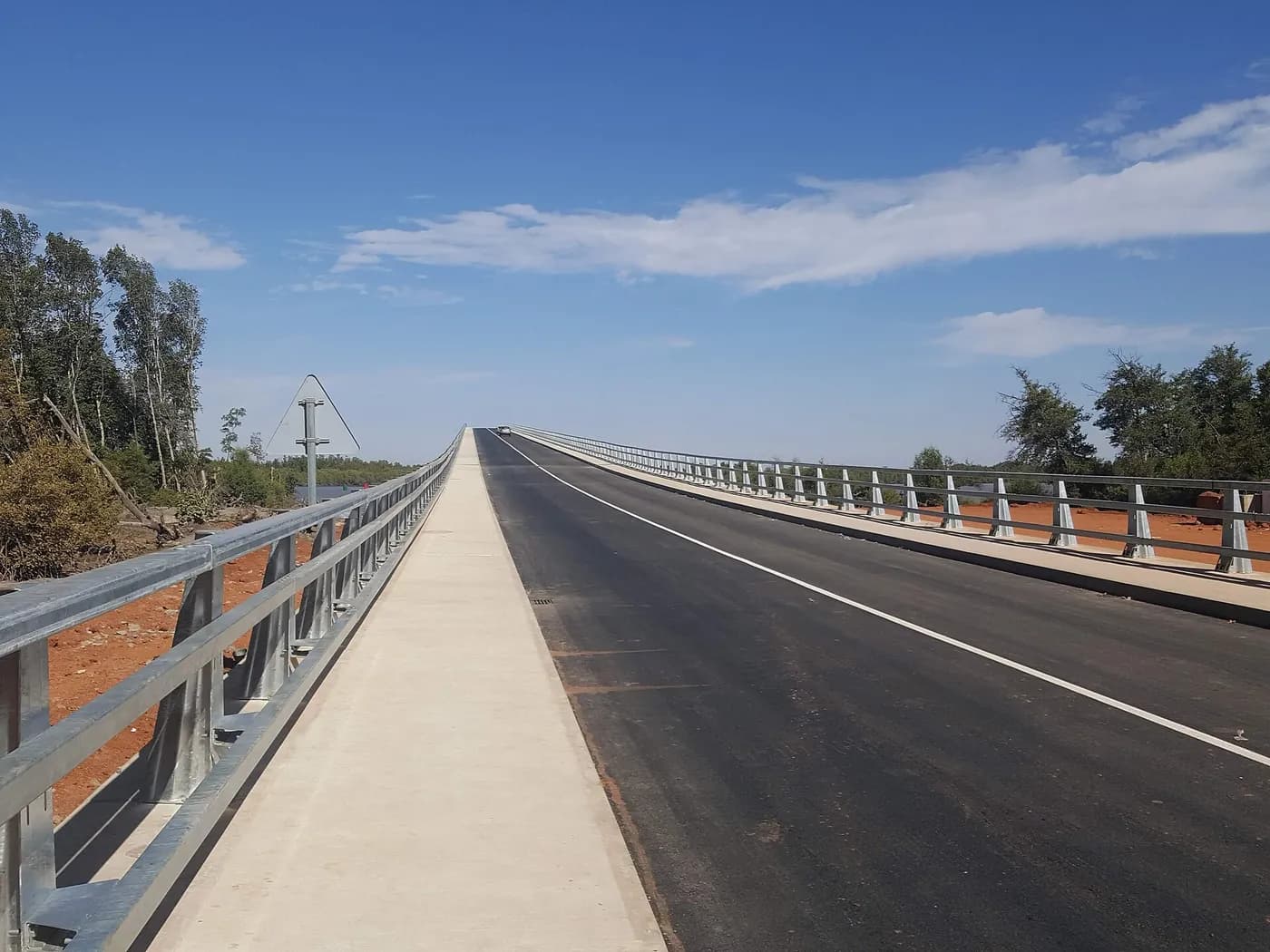
Senegal–Mali: a new route for internet traffic
Senegal and Mali have interconnected their national fibre-optic networks at Kidira and Diboli. Beyond the technical link, this infrastructure is intended to diversify the connectivity routes between the two countries and strengthen the resilience of their digital networks.
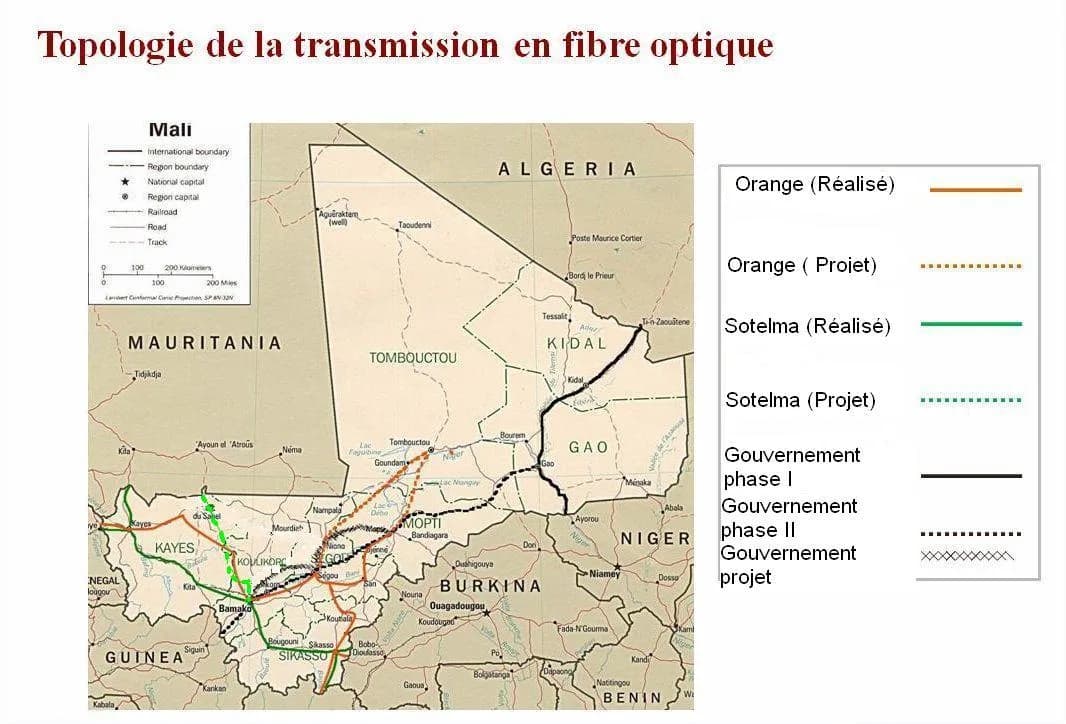
- Sénégal Numérique SA (SENUM SA) and the Malian Transmission and Broadcasting Company (SMTD-SA) inaugurated a link between their backbone networks in early October. This link enables data to be transmitted between the public infrastructure of the two countries via
- It does not mean that subscribers automatically have faster internet. Its main benefits lie in data transmission, network redundancy and the opportunities it offers to operators and public authorities.
A link between two national networks
The link was officially opened on the border between Senegal and Mali, in the Kidira area on the Senegalese side and the Diboli area on the Malian side. The project brings together the two public bodies responsible for their respective national transmission infrastructures. A fibre-optic backbone is, in a sense, the data motorway. It carries large volumes of traffic between cities, data centres, government departments and operators’ networks. Mobile networks and fixed-line connections then rely on this infrastructure to route communications to users. The interconnection therefore creates an additional crossing point between the two countries. It forms part of a strategy of regional cooperation, but also of ensuring the security of communications.
Why is this connection important?
For a landlocked country such as Mali, having a variety of routes providing access to international networks is a strategic priority. Data exchanges with the outside world rely on transmission infrastructure that may cross several countries. Having alternative routes helps to limit dependence on a single route. The new link may also facilitate exchanges between public authorities, businesses and digital service providers using the relevant transport networks. In the long term, a better-connected infrastructure can support the hosting of services, data exchanges and the development of cross-border digital solutions. But we must be clear: the launch alone is not enough to demonstrate a fall in internet prices, a measurable improvement in speeds for domestic users or an end to service outages. These outcomes will depend on how the link is operated, the available capacity, commercial agreements and the way in which operators utilise it.
A project that forms part of regional digital integration
Senegal plays a key role in West African telecommunications networks, particularly thanks to its international connections. Mali, for its part, is continuing to develop its national transmission infrastructure. The interconnection of the two public networks enhances the scope for cooperation between these infrastructures. The issue therefore goes beyond simply connecting two cables. For the region’s economies, connectivity has become essential for digital payments, administrative services, trade and the operations of technology companies. The next step will be to determine the extent to which this link will be used, the capacity it will be able to handle, and which organisations will be able to connect to it. These factors will enable us to gauge its actual impact.