Starlink in Senegal: from the promise of the Technological New Deal to suspension by the Supreme Court
Authorised in November 2025, launched in February and billed as a pillar of the state’s digital strategy, Starlink had its licence suspended on 7 September after a legal challenge by Orange Sonatel. The story of a showdown that goes well beyond satellite internet.
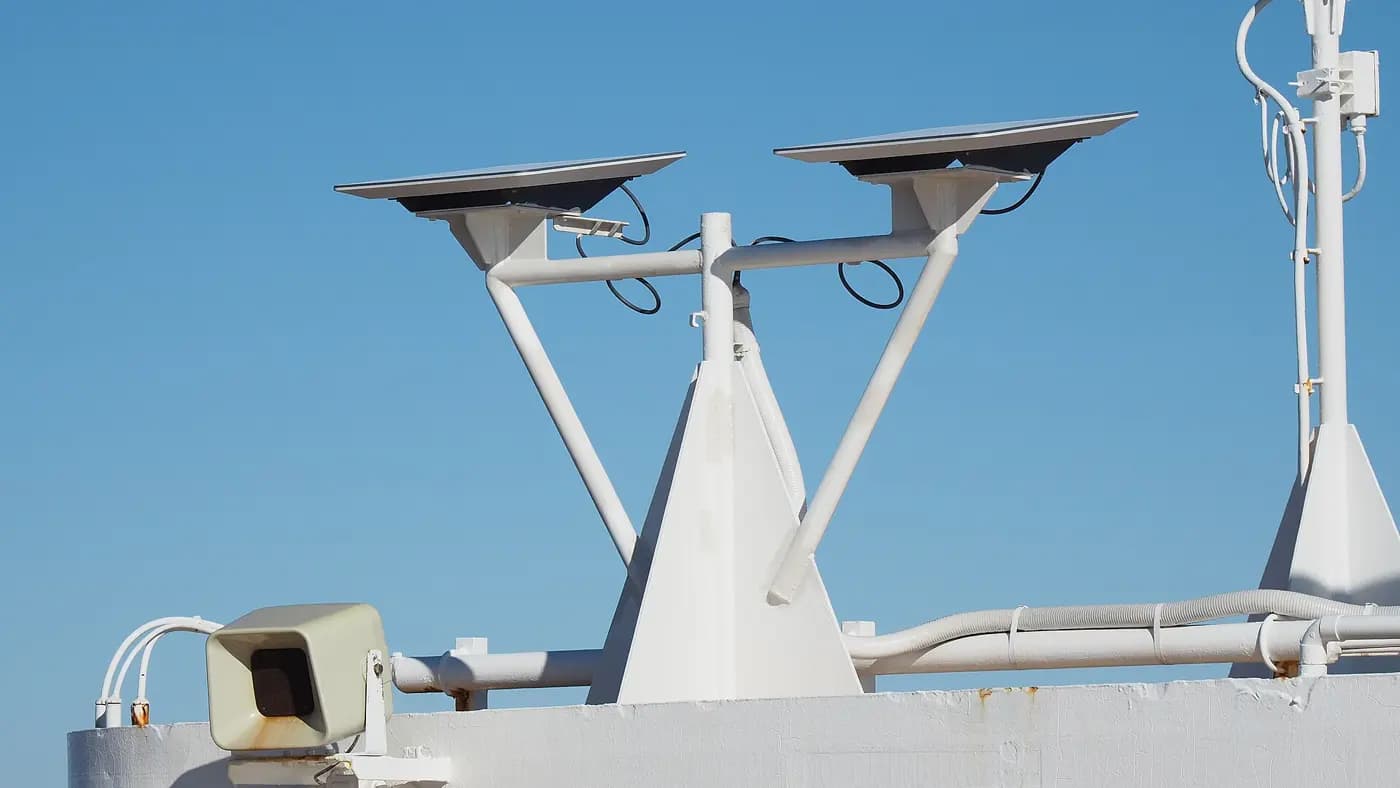
- On 7 September 2026, Senegal’s Supreme Court provisionally suspended Starlink’s authorisation, following a challenge by Orange Sonatel.
- Signed on 6 November 2025, the five-year authorisation was billed as a pillar of the Technological New Deal, with 5,000 kits to connect one million Senegalese.
- Sonatel denounces an imbalance: 134.5 billion CFA francs paid for its licences, against a mere ministerial order for Starlink.
- The merits have not been ruled on; users, especially in rural areas, and the F4C collective fear for internet access.
It took less than ten months to go from enthusiasm to deep freeze. On 7 September 2026, ruling in summary proceedings, Senegal’s Supreme Court ordered the provisional suspension of the operating authorisation granted to Starlink Sénégal SUARL, the local subsidiary of SpaceX. Behind the decision is a challenge by Orange Sonatel, the incumbent operator, which disputes the conditions under which its new competitor was allowed onto the market. To understand what is at stake, one has to go back to the government’s digital project, of which Starlink was meant to be a showcase.
The Technological New Deal, the project’s framework
On 24 February 2025, President Bassirou Diomaye Faye launched the “Technological New Deal”, Senegal’s digital strategy through 2034. The programme plans 1,105 billion CFA francs of investment, 950 billion of which had already been identified at launch, spread over some fifty projects. It rests on four pillars: digital sovereignty, the digitisation of the administration, with a target of 90% of public services online, the development of the digital economy and the ambition of making the country an African leader in the sector. The targets are bold: 100,000 graduates trained every year, 500 certified start-ups and 350,000 direct and indirect jobs.
A year later, the government was claiming its first results. Internet bandwidth for public administrations rose from 600 megabits to 20 gigabits per second, dozens of public buildings were interconnected and the E-Jokko platform lets ministries share their data. In July 2026, at the World Summit on the Information Society in Geneva, minister Samba Diouf again presented the strategy as a sovereign vision of African digital development. One weak spot remains, and everyone knows it: the divide between Dakar and the rest of the country, where many villages still lack a reliable connection.
November 2025: the green light
This is where Starlink was supposed to make a difference. On 6 November 2025, an order signed by Alioune Sall, then minister of Communication, Telecommunications and Digital Affairs, authorised the company to provide satellite internet access for five years. The service already existed informally: as early as 2023, imported kits were circulating in the country, and the Telecommunications and Posts Regulatory Authority (ARTP) had cracked down on their unauthorised sale. This time, everything went through a set of specifications.
In December 2025, Alioune Sall presented the deal to the National Assembly as a pillar of the Technological New Deal. He highlighted two negotiated benefits: 5,000 kits at a preferential rate for the state, earmarked for schools, universities, local authorities, border areas and Casamance, with the aim of connecting around one million Senegalese for free through community Wi-Fi networks; and 64 billion CFA francs in expected savings for the state. The public rollout was scheduled for the first half of 2026.
February 2026: the commercial launch
On 4 February 2026, Starlink announced the opening of its service in Senegal, confirmed by Elon Musk on X. Prices were published right away: 146,000 CFA francs for the standard kit, 117,000 CFA francs for the Mini model, 14,000 CFA francs for delivery, then a monthly subscription of 22,000 to 30,000 CFA francs depending on the plan. That is expensive for most households, but competitive for a business, an NGO or a tourist camp located far from fibre.
The next day, the ARTP’s director general, Dahirou Thiam, defended on RTS a framework drawn up with all the parties concerned and gave assurances that every operator, whatever its technology, would be regulated in the same way, in the name of market balance and consumer protection. The first months were nonetheless turbulent. In May, Starlink announced a 43% increase in its subscription, from 30,000 to nearly 43,000 CFA francs a month, before backing down under pressure from subscribers. In August, the ARTP dismantled illegal community Wi-Fi points in Kaolack that were reselling a Starlink connection: unauthorised sharing of a connection carries penalties of up to five years in prison and a 60 million CFA franc fine.
Orange Sonatel strikes back
The incumbent did not wait for its competitor to arrive before reacting. On 10 December 2025, Orange Sonatel launched its own satellite internet offer, in partnership with Eutelsat and its Konnect service. Then, on 10 March 2026, it lodged an administrative appeal with the ministry against the order authorising Starlink. The ministry rejected it on 12 May. On 16 July, Sonatel took the matter to the Supreme Court with an application to annul the order for abuse of power, together with a request for urgent suspension.
Its central argument comes down to one figure: 134.5 billion CFA francs. That is what the operator says it has paid the state for its rights, licences and frequencies, including 68 billion for the renewal of its concession, 32 billion for 4G frequencies and 34.5 billion for 5G. Starlink, by contrast, obtained its authorisation through a mere ministerial order, with no equivalent payment. Sonatel sees this as an imbalance of obligations between operators and a direct threat to its legitimate economic interests as well as to the rules of fair competition. The budget context strengthens its grievance: the 2026 finance law requires the operators Sonatel and Expresso to pay an additional 50 billion CFA francs in fees.
7 September: the Supreme Court rules urgently
The judge hearing the urgent application found that Sonatel’s arguments raised serious doubt about the legality of the order, and that urgency was established. He therefore suspended its enforcement. The speed of the decision came as a surprise, less than a year after Starlink’s official arrival, and it comes in a political landscape that has changed: Alioune Sall, who signed the order, left the government in June 2026, and his successor at the ministry, Samba Diouf, had not spoken publicly on the case at the time of the ruling.
On the ground, the situation remains unclear. By the end of September, neither the ARTP, nor the ministry, nor Starlink had issued a statement clarifying whether existing subscribers kept their service or what would become of the kits meant for the state. Starlink’s website was still accepting sign-ups for Senegal. The 5,000-kit programme, for its part, has effectively ground to a halt.
Rural areas on the front line
The first to worry are people in regions poorly served by land networks. According to figures cited by Afrique IT News, internet access is no higher than 3% in rural areas, against 43.8% in Dakar. Eastern Senegal, around Tambacounda and Kédougou, the Ferlo in the Matam region, and the isolated villages of Casamance, Kolda, Sédhiou and the Walo were the targets of the public programme. For a remote school or health post, satellite is often the only short-term option.
On 26 September, the Front against the high cost of connection (F4C), a users’ collective, declared itself firmly opposed to the suspension. It points out that being connected has become essential to work, study and access digital services, and that satellite solutions offer an alternative for people and businesses far from conventional infrastructure. For the collective, competition is also the best way to bring down prices that many Senegalese consider too high.
A conflict of interest at the heart of the state
The case puts the state in an awkward position. It is at once the authority that authorised Starlink, the recipient of the billions paid by Sonatel and one of the incumbent’s shareholders, holding around 27% of its capital alongside Orange, the largest shareholder with just over 42%. Defending the 2025 order means weakening a company that contributes heavily to the budget; dropping it means giving up one of the most tangible measures of the Technological New Deal for rural areas.
Sonatel does, however, raise a genuine question of fairness. An operator that has funded costly licences, masts and fibre across the whole country can legitimately ask that its competitor bear comparable charges, especially since Sonatel’s concession agreement was not revised when Starlink arrived. Several African countries have, moreover, set conditions for the SpaceX operator, such as opening a local subsidiary or paying fees in line with those of other operators.
The way out of the crisis may therefore lie less in the courtroom than in a new framework: an authorisation with clear fees and coverage obligations, guaranteeing established operators fair rules without depriving unconnected areas of an available solution. Samba Diouf’s ministry now holds the cards. Its answer will show whether the Technological New Deal embraces infrastructure competition or prefers to protect the national operator. In the meantime, thousands of users are waiting to find out whether their dish will stay on.
- Sénégal : la Cour suprême suspend la licence de Starlink après un recours de Sonatel, Osiris.
- Starlink Sénégal : la Cour suprême suspend provisoirement la licence de l’opérateur, Journal du Sénégal.
- Sénégal : La justice suspend la licence de Starlink moins d’un an après son arrivée, Digital Business Africa.
- Starlink suspendu au Sénégal : ce qui attend, concrètement, ceux qui en dépendent, Afrique IT News.
- Arrêt de Starlink au Sénégal : derrière la version officielle, un jeu de dupes dont personne ne parle, Afrique IT News.
- Starlink Sénégal : 134,5 milliards, l’argument Sonatel, NotreAfrik.
- Starlink Sénégal : 5 000 kits, le F4C conteste la suspension, NotreAfrik.
- Starlink sous pression au Sénégal : la suspension de son autorisation inquiète pour l’accès à Internet dans les zones rurales, Managers.
- L’ARTP clarifie le cadre d’autorisation de Starlink au Sénégal, RTS.
- Starlink Goes Live in Senegal, Space in Africa.
- Launch of Senegal’s New Digital Strategy « New Deal Technologique », Présidence du Sénégal.
- WSIS 2026 / New Deal Technologique : le Sénégal ambitionne 2 milliards de dollars d’investissements numériques sur dix ans, Socialnetlink.
Spotted an error? Write to infos@novotech.blog. Corrections are flagged at the end of the article.