AI: 102 teams from nine countries at Dakar’s PAS Challenge, and a maturity test open to companies
On Thursday the Institut des Algorithmes du Sénégal launched, at Cheikh Anta Diop University, the new edition of a contest in which young people look for artificial intelligence solutions to local problems. The same day it opened a questionnaire that gauges where Senegalese organisations stand.
Why it mattersIf you run a startup, a small business or a public service, you can measure your AI maturity with the online questionnaire; your answers stay anonymous.
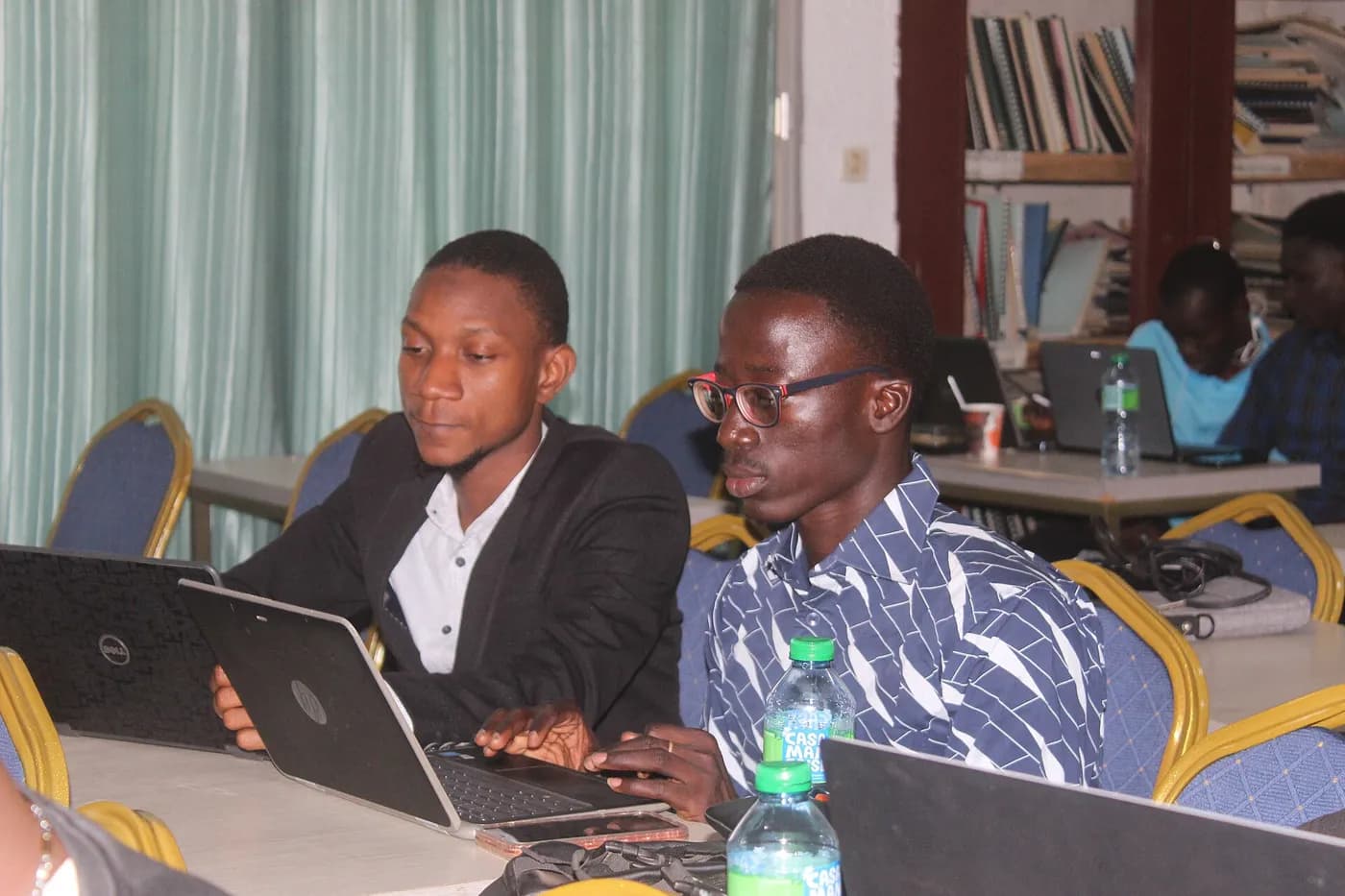
- The Institut des Algorithmes du Sénégal launched the 2026 PAS Challenge at UCAD in Dakar on Thursday, October 22, 2026: more than 300 young people in 102 teams from nine countries.
- Four themes: African languages, agriculture, transport and health.
- An online questionnaire, open to startups, small businesses, large companies and administrations, assesses AI maturity across six dimensions; answers are anonymised.
- Results will be presented at SALTIS 2026, from December 8 to 10, then published in a white paper.
More than three hundred young people stand behind the 102 teams entered in the 2026 PAS Challenge, who came from nine countries. The Institut des Algorithmes du Sénégal (IAS) kicked off this edition on Thursday, October 22, from 3 p.m. to 7 p.m., at the CIGASS of Cheikh Anta Diop University (UCAD) in Dakar, according to Socialnetlink.
The contest’s name states its principle: Problématique, Algorithme, Solution (problem, algorithm, solution). Each team starts from a concrete problem and offers an answer based on an algorithm or an artificial intelligence model. Four themes were chosen this year: African languages, agriculture, transport and health. According to the page UNDP Senegal devoted to its launch, the contest dates back to October 25, 2022, when it was launched alongside a forum on algorithms and innovation.
A questionnaire to measure AI maturity
The ceremony also launched an online questionnaire aimed at startups, small and medium-sized businesses, large companies and administrations. Designed by the scientific and technical committee of the SALTIS forum, it assesses six dimensions: strategy, fit of use cases, technical levers, talent, information and data, and security.
- Answers are anonymised and will be reported only in aggregate.
- Overall results will be presented at SALTIS 2026, from December 8 to 10 at the Grand Théâtre national in Dakar.
- They will then be published in a white paper.
For an organisation that wants to respond, the logic is that of a diagnostic: six dimensions assessed, with no company or administration named in the results. The presentation article gives neither the length of the questionnaire, nor the response deadline, nor the address where to find it. You will need to ask the Institute directly.
The questionnaire is meant to produce an overall picture of Senegalese organisations facing AI. It does not measure only the tools in use: it also looks at teams, data quality and security.
The university is moving too
The timing comes as UCAD itself changes gear. In April 2026 the university said, according to the APS news agency as relayed by Osiris, that it wanted to speed up the integration of AI into its teaching, after a three-day workshop with lecturers from the Faculty of Science and Technology. It is also preparing a charter to govern responsible AI use, protect personal data and prevent algorithmic abuses.
- IA : l’Institut des Algorithmes du Sénégal lance le PAS Challenge 2026 et un diagnostic de maturité des organisations, Socialnetlink.
- Salon des algorithmes, des sciences-technologies et de l’innovation, PNUD Sénégal.
- L’UCAD veut accélérer l’intégration de l’IA dans ses enseignements, Osiris.
Spotted an error? Write to infos@novotech.blog. Corrections are flagged at the end of the article.