AI is pushing up smartphone prices: the $20 phone is slipping out of reach for Africa
The data centre race has sent memory prices soaring. In an entry-level phone, memory now accounts for nearly half of the components. The GSMA warns: internet access for the poorest is under threat.
- Demand from AI data centres has more than doubled the price of memory, then raised it by another 80 to 90%.
- In an entry-level phone, memory now accounts for nearly half of the components.
- Sub-Saharan Africa could receive 16 million fewer smartphones in 2026.
- An entry-level phone costs 76% of the monthly income of the region’s poorest 20%.
- The GSMA recommends scrapping taxes on cheap phones and developing device financing.
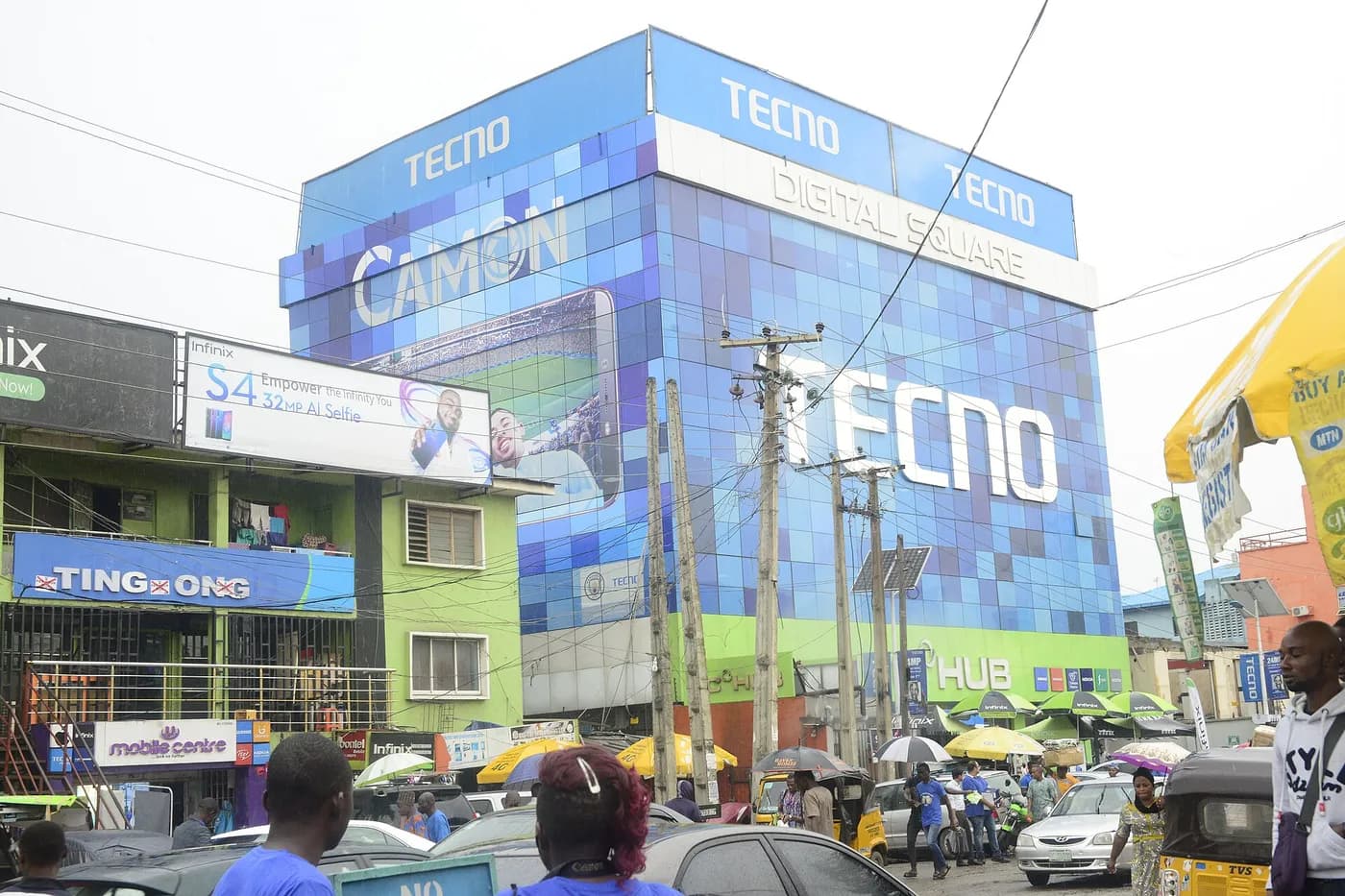
At Computer Village, Lagos’s big phone market, the most important conversation about artificial intelligence is not about trendy assistants. It is about memory. Demand from the data centres that run AI models has sent the price of memory chips soaring, and the cheapest phones, the ones through which most Africans access the internet, are paying the price.
The finding is set out in black and white in the 2026 report by the GSMA, the global association of mobile operators, on the state of mobile connectivity. A whole box is devoted to the “memory price crisis” threatening the affordability of phones. In 2025, the GSMA and six African operators launched an initiative for a $40 4G smartphone in Nigeria, Rwanda, the DRC, Ethiopia, Tanzania and Uganda. The report now notes that a single entry-level memory chip costs more on its own.
A surge in two stages
A smartphone uses two types of memory. RAM, known as DRAM, keeps open apps in memory. Storage memory, known as NAND, holds photos and installed apps. AI data centres consume huge quantities of the most recent memory, and chipmakers are redirecting their factories towards these more profitable products, at the expense of the older generations used in cheap phones.
The result: according to data cited by the GSMA, the price of memory more than doubled between the third quarter of 2025 and the first quarter of 2026, then rose by another 80 to 90% in the second quarter. In a mid-range phone, sold for $400 to $600 wholesale, memory now accounts for nearly 30% of the cost of components. In a phone sold for under $200 wholesale, where margins are thinnest, it accounts for nearly half.
Price tags are following. Xiaomi’s Redmi A7, an entry-level model released in April 2026 at around $110, costs 40% more than the Redmi A5 a year earlier, for almost identical hardware. In India, a Realme model launched in June 2025 at about $80 has gone up to $135.
Sixteen million fewer smartphones for sub-Saharan Africa
Shipment forecasts reflect the shock. Counterpoint Research, cited by the GSMA, expects the biggest annual drop in the history of global smartphone shipments in 2026: down 14%, or 174 million fewer devices. Most of the drop is concentrated below $100, a segment that would fall by 36%, about 90 million phones.
For sub-Saharan Africa, that would mean 16 million fewer smartphones shipped in 2026, a drop of more than a quarter compared with 2025. Consumers have not yet felt the full increase: stock bought at the old price is still being sold. But the wave is coming, and it will hit the cheapest models first, the ones bought by new users.
The real obstacle is the device
Why is this serious? Because in Africa, the main obstacle to internet use is no longer coverage. According to the GSMA, 81% of the population of sub-Saharan Africa now lives under 4G coverage, and the region accounted for more than half of global 4G coverage gains in 2025. Yet only 25% of the population uses mobile internet. The usage gap, meaning people covered but not connected, stands at 66%, the highest in the world.
The report shows where people drop off. In Nigeria, 86% of rural respondents know what mobile internet is, but only 51% own a phone that can connect to it. That is a 35-point drop, against 18 in cities. The same gap exists between women and men. On the other hand, once people have the phone, most of them use it to go online. The problem is not interest; it is buying the device.
Price of an entry-level phone as a share of the monthly income of the poorest 20%
Source: GSMA, State of Mobile Internet Connectivity 2026
At the end of 2025, an entry-level internet-enabled phone cost the equivalent of 76% of the average monthly income of the poorest 20% in sub-Saharan Africa, against an average of 44% in low- and middle-income countries. The GSMA considers a device affordable at around 15 to 20% of monthly income. According to its calculations, a $20 phone would make the device affordable for 230 million more people in the region, and a $10 phone for 580 million. That is the horizon expensive memory is pushing away.
Data, the second wall
The phone is not the only cost. In sub-Saharan Africa, 20 gigabytes of data cost 14% of average monthly income, five times the median for low- and middle-income countries, and 44% of the income of the poorest 20%. Many therefore settle for minimal use, or share a device: according to the GSMA, 650 million people worldwide access the internet only through a borrowed or shared phone.
Answers exist
The GSMA is not calling for more masts, but for measures on the price of devices: scrapping taxes and customs duties on entry-level phones, developing device financing, and reducing the other costs of ownership. Several African countries still heavily tax imported phones, adding several tens of percent to the final price.
Financing is already developing. In South Africa, the company Mission Mobile has just secured up to 500 million rand, about $30.8 million, from the investment group DN Invest, to expand its instalment payment offers for smartphones. The country has about 108 million mobile lines, more than 80% of them prepaid, a public generally excluded from phone contracts. Mission Mobile says more than 40% of its potential customers fail conventional credit checks, even though they are able to repay. Its assessment platform, Beam, relies on income and spending data rather than credit bureaus alone.
The AI paradox
The paradox is cruel. Artificial intelligence is presented as a tool that will help a farmer check market prices, a pupil learn or a nurse make a diagnosis. But the race for the infrastructure that runs it is making the device these people need to access it more expensive. As long as memory makers favour data centres, the connectivity battle in Africa will be fought less on masts than on the stalls of Computer Village.
- The AI boom is making smartphones less affordable for Africans, The Condia.
- AI boom threatens smartphone affordability, ITWeb.
- Mission Mobile raises $30.8M to scale smartphone financing in South Africa, The Condia.
Spotted an error? Write to infos@novotech.blog. Corrections are flagged at the end of the article.