Dangote: Africa’s biggest IPO can also be bought in stablecoins, and it is a test
The Dangote refinery is raising ₦2.15 trillion on the Lagos stock exchange. A small share of subscriptions goes through tokens on the Solana and Base blockchains. Public data shows a modest success, and legal questions that remain open.
- The Dangote refinery is raising about ₦2.15 trillion (4.1 billion shares at ₦525) from 14 September to 13 October.
- Some subscriptions go through stablecoin tokens on Solana and Base (NectarFi, GetEquity).
- First day: ₦9.25 million subscribed through this channel, a tiny share of the offer.
- Open questions: the legal link between token and share, freezing and minting powers, the secondary market.
On 14 September 2026, Aliko Dangote rang the bell of the Nigerian Exchange (NGX) to launch the initial public offering of his oil refinery. The offer is extraordinary: 4.1 billion new shares at ₦525 each, for about ₦2.15 trillion, nearly $1.63 billion. At the offer price, the refinery would be valued at around ₦65.22 trillion. Subscription is open until 13 October.
It is the largest IPO in the continent’s history. But one detail makes it particularly interesting for fintech watchers: part of the subscriptions can be made in stablecoins, cryptocurrencies pegged to the dollar, through tokens issued on the Solana and Base blockchains.
A refinery that wants small shareholders
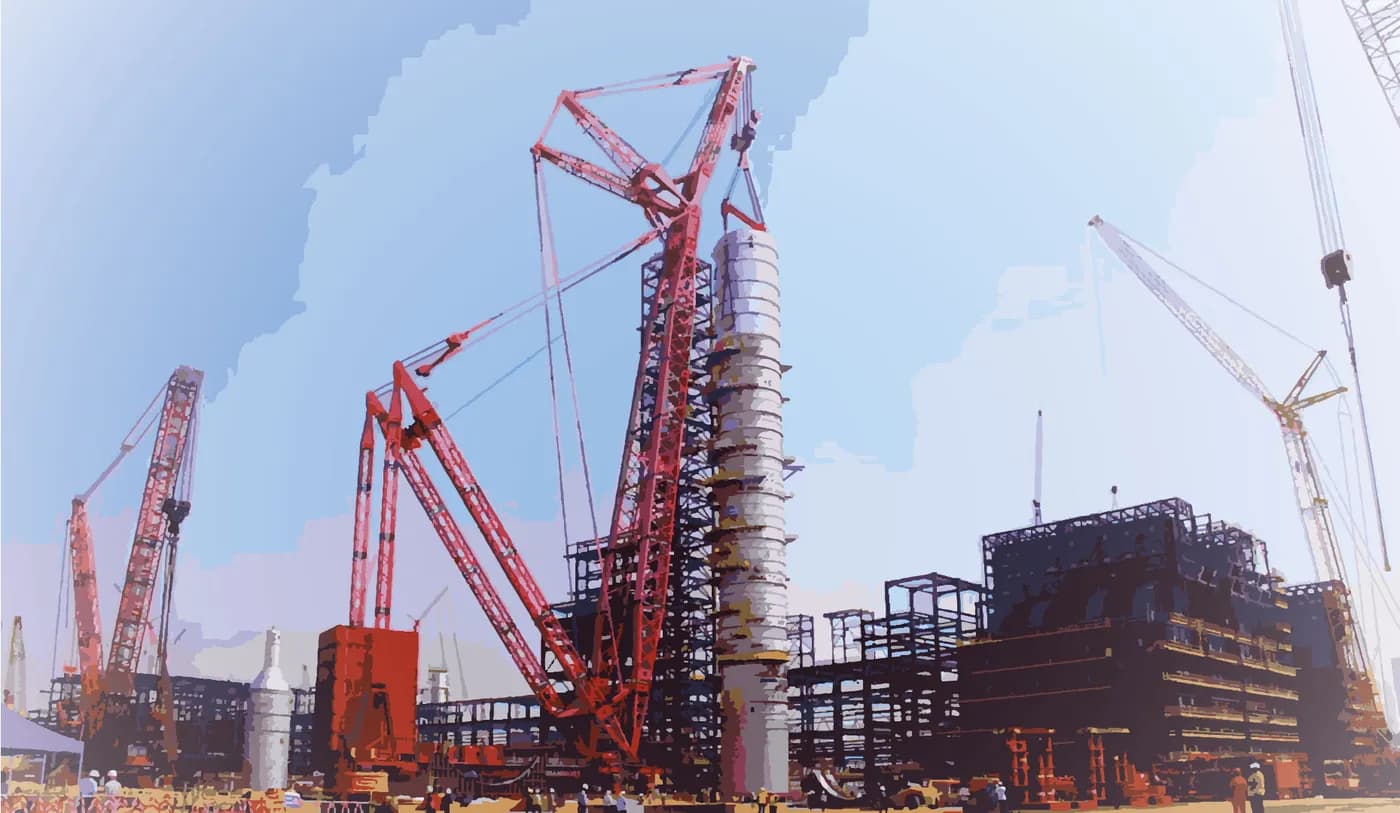
The refinery, located in the Lekki free zone near Lagos, is one of the continent’s biggest industrial projects. It is meant to allow Nigeria, a major crude oil producer but long an importer of refined fuels, to refine at home and export. According to figures presented at the NGX, it generated revenue of ₦19.47 trillion and after-tax profit of ₦2.55 trillion in the first half of 2026.
« This is more than an investment: it is about building wealth through ownership of a world-class asset that is already generating solid revenue and profits. »
Aliko Dangote, at the launch at the NGX (paraphrased)
The offer emphasises access for individuals. The minimum subscription is 10 shares, or ₦5,250, and the messaging explicitly targets teachers, artisans, civil servants and students. The NGX chairman, Umaru Kwairanga, sees it as proof that African capital can finance major projects.
For the Lagos exchange, the stakes go beyond the refinery. Nigeria’s equity market remains small compared with the size of the country’s economy, and much of household savings bypasses the financial markets. An offer of this scale, heavily publicised and aimed at individuals, can draw new savers to the stock market, provided their first experience is a good one. The small shareholders subscribing today will judge the market on how the share price moves in the months after listing.
How the token subscription works
Blockchain subscriptions go through two platforms. NectarFi relies on the infrastructure of GetEquity, a Nigerian investment platform, to turn stablecoin balances into valid subscriptions, which are then processed by the exchange’s official settlement system. The buyer receives a token, called DPRI, meant to represent a share held in custody.
The stated benefit is twofold: allowing investors who hold stablecoins, notably in the diaspora, to subscribe without going through a traditional broker, and making subscriptions publicly traceable, since every transaction is visible on the blockchain.
What the public data shows
It is precisely this transparency that makes it possible to measure the channel’s real success. According to the dashboard of Afriflux, a service analysing public blockchain data cited by The Condia, ₦9.25 million had been subscribed this way by 2:30 pm on 15 September, a little over 24 hours after opening. Buyers then held 17,618 shares, about 2.3% of the 761,905 tokens issued at that stage.
Of 142 purchases, 105 positions were still held. NectarFi accounted for 79.1% of net shares subscribed, for 72 buyers. Solana concentrated 64.1% of purchases, but the sale had opened there nearly eight hours before Base. The average pace was ₦355,800 per hour, with a peak of ₦1.84 million at 9 pm on 14 September.
Token subscriptions: split of purchases
Source: Afriflux, via The Condia (15 September)
On the scale of a ₦2.15 trillion offer, this ₦9.25 million is a drop in the ocean. But it says something. According to Afriflux’s founder, Yahaya Muhktar, 56 of the 72 NectarFi wallets were created less than 48 hours before their first purchase, suggesting users who came specifically for this offer. It is impossible, however, to know whether they are new investors or regulars who simply chose this channel.

The questions that remain
Yahaya Muhktar took care to distinguish between what the blockchain can verify and what it does not show. Does each token really correspond to a real share held in custody? Do the tokens issued on the two chains represent a single allocation or two? Who bears the loss if tokens and shares were to diverge? These, he says, are legal questions that are settled off the blockchain.
He also points to technical details every investor should know. On Solana, the issuer can still mint new tokens and freeze accounts, and transfers go through a control contract. On Base, the sale contract can be modified and is administered by a two-of-three multi-signature wallet. On 15 September, that wallet actually withdrew 80,000 tokens from the vault before putting them back later in the morning. These powers are not abnormal for a regulated security, which must be able to be frozen in case of fraud, but they are a reminder that the token is not a “decentralised” asset in the sense crypto enthusiasts mean.
There is also the question of currency. Subscribing to a naira-listed share with dollar-backed stablecoins means making a currency conversion at the time of purchase, and again on any resale. For a diaspora investor, that can be convenient. For a saver based in Nigeria, it adds risk and costs that do not exist when subscribing directly in naira through a broker. The convenience of the channel should not obscure what each step costs.
A test for “tokenisation” in Africa
The few resales recorded are not a secondary market: they are buybacks by the GetEquity sale vault, at the same fixed price of ₦525. A single address accounted for 93% of the value resold, after buying 645 shares and returning them all three hours later. No trading between investors and no liquidity pool had been observed as of 15 September.
The real test will come with the NGX listing: will resales increase, will a secondary market form for the token, and will its price track that of the listed share? For advocates of “tokenisation”, who want to make financial assets accessible to all through the blockchain, the Dangote IPO is a showcase. For Nigerian regulators, it is a textbook case. And for individuals, it is a useful reminder: technology can simplify access, but it replaces neither the prospectus nor the legal protection of a properly held security.
- Dangote Sounds NGX Gong As Refinery IPO Opens, Nigerian Exchange Group.
- Dangote Refinery tokenised IPO draws ₦9.25M onchain in the first 24 hours, data shows, The Condia.
- Dangote launches refinery’s N2.15tn IPO on NGX, Vanguard.
Spotted an error? Write to infos@novotech.blog. Corrections are flagged at the end of the article.