Data centres in space: Google launches the first test of its Suncatcher project
Near-constant sunlight and the cold of space: Google wants to run its AI chips in orbit. A first prototype is due to lift off on 1 October on a SpaceX rocket. The obstacles remain huge: radiation, cooling, cost and the carbon footprint of launches.
- Google wants to put AI chips (TPUs) in orbit to take advantage of near-permanent sunlight and the cold of space.
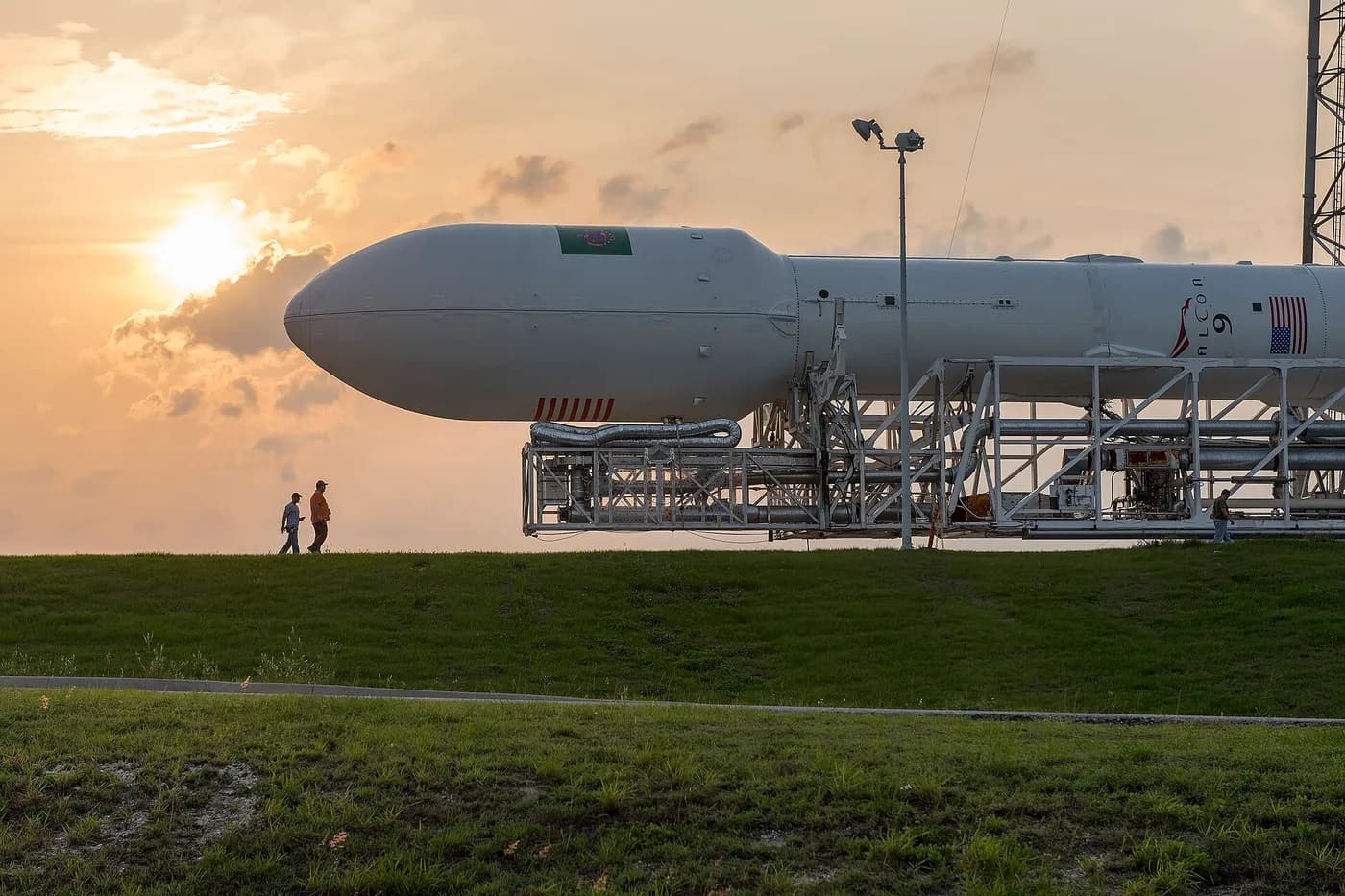
- A first prototype with four TPUs, designed with Planet, is due to launch on 1 October on a SpaceX Falcon 9.
- Challenges: radiation, cooling by radiation, a launch cost below $200 per kilo.
- According to a study for the European Commission, more than 70% of the carbon footprint would come from launches.
The data centres that run artificial intelligence consume growing amounts of electricity and water, to the point of saturating power grids in some regions. Google is exploring a radical answer: sending them into space. Its Suncatcher project, unveiled in November 2025, ultimately aims for a constellation of satellites fitted with its specialised AI chips, TPUs. A first prototype, called MVP, is due to launch on 1 October 2026 as part of SpaceX’s Transporter-18 mission, aboard a Falcon 9 rocket.
The idea may sound like science fiction, and Google itself presents it as a long-term research project. Yet it rests on serious physical arguments, and on equally serious obstacles, which this first test is meant to start measuring.
Why space
The first argument is energy. In a well-chosen low orbit, a satellite can enjoy almost continuous sunlight, with no clouds, no night and no atmosphere to filter the light. According to Google, solar panels could produce up to eight times more energy there than on Earth. The second argument is the cold: space offers an environment where heat can be shed by radiation, without using water as cooling towers on Earth do.
At a time when big tech groups are desperately looking for electricity for their AI data centres, going as far as restarting power plants or signing nuclear contracts, the prospect of abundant solar energy and water-free cooling is appealing. Provided everything works up there.
A first test, not a data centre
The MVP prototype, developed with Planet, an American company specialising in small satellites, will carry four TPUs. It is not an operational data centre, but a mission designed to check that the hardware can work in space conditions. Google had already announced a two-satellite mission with Planet for early 2027, intended in particular to test optical communications between satellites, which are essential for spreading AI computations across several units.
- Suncatcher project unveiled: November 2025.
- First prototype (MVP, four TPUs): launch scheduled for 1 October 2026, SpaceX Transporter-18 mission.
- Two satellites with Planet to test optical links: planned for early 2027.
- Launch cost needed to make the project competitive: under $200 per kilogram, hoped for around the mid-2030s.
Surviving the launch
Before even facing space, the hardware has to survive the journey. According to Travis Beals, the Google director in charge of the project, a climb to low orbit takes about ten minutes, during which the satellite undergoes intense vibrations and accelerations of up to ten times Earth’s gravity. Some components, such as TPU chips, can withstand forces of 50 to 100 times gravity. The team shook the satellite along all three axes to reproduce the frequencies of a launch. By its own admission, it was pleasantly surprised that the hardware held up.
First obstacle: radiation
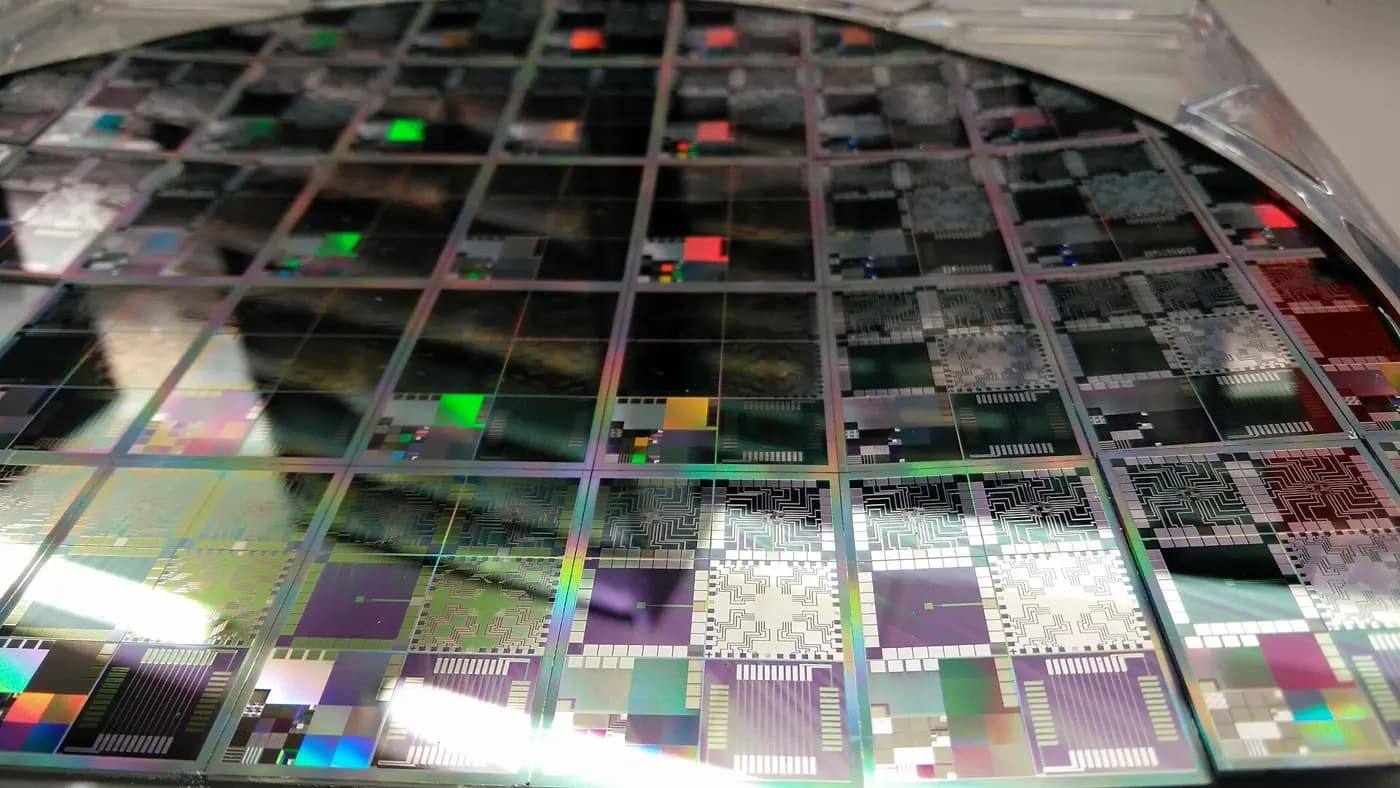
In space, cosmic rays and particles emitted by the Sun can cause computing errors or damage electronic components. Conventional satellites use specially hardened chips, which are slower and much more expensive. Google, on the contrary, is betting on its commercial TPUs. The company exposed its Trillium chips to a proton beam at the Crocker Nuclear Laboratory at the University of California, Davis, while having them run AI computations. The engineers observed how errors, such as a bit flipping from 0 to 1 when hit by a particle, affected the calculations. According to Google, the chips withstood a radiation dose higher than that expected over a five-year mission. Still, some things can only be tested in orbit, hence this first flight.
Second obstacle: heat
Paradoxically, cooling chips in space is difficult. On Earth, heat is removed with air or water. In a vacuum, there is no air to carry it away: the only way to get rid of it is to radiate it into space, which requires large radiator surfaces. Google is working on a system combining heat pipes, which carry heat away from the chips, and radiators able to shed it by radiation. But AI chips give off an enormous amount of heat over a very small area: this is one of the points the prototype is meant to clarify.
Third obstacle: cost and carbon
Google estimates that launch costs will need to fall below $200 per kilogram for the economics of a space data centre to become comparable to those of a terrestrial one on energy costs. The company hopes to reach that level around the mid-2030s, a bet that relies heavily on reusable heavy launchers such as SpaceX’s Starship, which has just completed its first orbital flight.
The environmental question remains open. A study by the consultancy Carbone 4 for the European Commission estimates that more than 70% of a space data centre’s carbon footprint would come from deploying it in orbit, in other words from launches. For it to emit less than terrestrial infrastructure, the carbon intensity of launches would have to be cut tenfold. The replacement of satellites, whose lifespan is limited, and the issue of space debris also have to be taken into account.
A race already under way
Google is not alone. The company is also working with SpaceX on orbital data centres, and start-ups such as Starcloud are developing their own space computing infrastructure. Announcements are multiplying, driven by the sector’s limitless appetite for computing power and the expected fall in launch costs.
What the test will tell us
The 1 October launch will not tell us whether data centres can leave Earth. It will give Google its first real-world data on three decisive questions: how well the chips resist radiation over time, how effective cooling by radiation is, and whether computing infrastructure in orbit is viable. The answers, expected in the coming months, will show whether Suncatcher is a promising path or a spectacular engineering exercise with no economic future.
In the meantime, the project illustrates a broader reality: the AI race is pushing tech giants to explore every avenue to find the energy they need. On Earth, this quest is already weighing on power grids, water resources and the climate targets of many countries. That it now reaches all the way to orbit shows how far energy has become the first challenge of artificial intelligence, ahead even of algorithms.
- Google va envoyer des data centers dans l’espace, Le Monde Informatique.
- Behind Project Suncatcher, our moonshot to put AI in space, Google.
Spotted an error? Write to infos@novotech.blog. Corrections are flagged at the end of the article.