Helios Towers and UNICEF team up to connect schools in DR Congo, Malawi and Tanzania
The telecom tower company and the UN children’s agency are launching a multi-year partnership to connect schools to the internet and expand digital learning, first in three countries, then in West Africa.
- Helios Towers and UNICEF launch a multi-year partnership to connect schools and expand digital learning in Africa.
- First countries: DR Congo, Malawi and Tanzania, followed by a country in West Africa.
- The programme builds on Giga (every school connected by 2030) and Learning Passport, which also works offline.
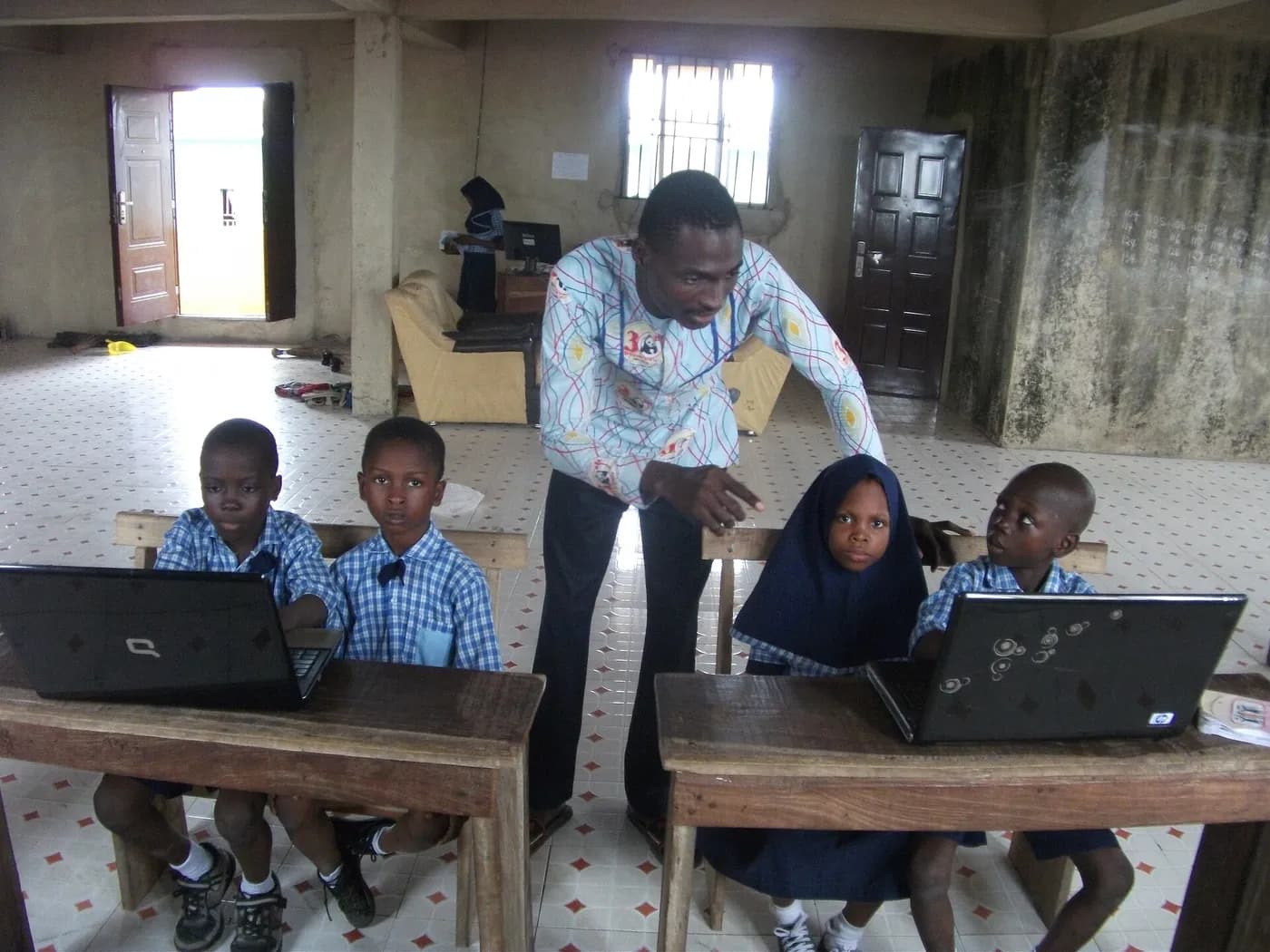
Helios Towers, which operates telecom towers in Africa and the Middle East, and UNICEF announced a multi-year partnership on 29 September. The aim: to expand internet access and digital learning for children and young people on the continent. The programme starts in the Democratic Republic of Congo, Malawi and Tanzania, and is due to extend later to a West African country that has not yet been named.
Two UNICEF programmes
The partnership builds on two existing initiatives. The first, Giga, is run by UNICEF and the International Telecommunication Union (ITU): it helps governments map schools and their level of connectivity, with the goal of connecting every school to the internet by 2030. Helios Towers will bring its engineering expertise and local knowledge to advance this mapping and the infrastructure.
The second, Learning Passport, is a UNICEF digital learning platform designed to work both online and offline, so that pupils can keep learning even where the network is missing or down. Helios Towers is to help widen access to it in the countries concerned, where the company already operates.
The two strands complement each other. Before connecting a school, you need to know where it is, whether it has electricity and which network runs nearby: that is the whole point of Giga’s mapping, which lets governments and operators target their investments. Until the connection arrives, Learning Passport’s offline mode lets pupils download lessons when the network is available, then follow them without a connection. Helios Towers says it focuses its investment on underserved, fast-growing markets, where the need is greatest.
“Connectivity is a core enabler of education, social inclusion and long-term economic growth,” said Tom Greenwood, chief executive of Helios Towers. For Philip Goodwin, chief executive of UNICEF UK, this kind of partnership with the private sector helps remove barriers to education in the least well-served communities. Digital connectivity, he says, is increasingly essential for learning and for helping children reach their full potential.
Neither the amount committed nor the number of schools targeted has been disclosed. The stakes are high: in rural areas of these three countries, many schools have neither stable electricity nor adequate mobile coverage. For a tower company, whose business is hosting mobile operators’ antennas, extending coverage to schools is also a way to expand its network in markets where demand for data keeps growing.
- Helios Towers and UNICEF Partner to Expand Digital Learning Across Africa, TechAfrica News.
- Helios Towers s’allie à l’UNICEF pour numériser l’éducation en Afrique, Afrique IT News.
- Helios Towers, UNICEF to accelerate digital inclusion across Africa, Connecting Africa.
Spotted an error? Write to infos@novotech.blog. Corrections are flagged at the end of the article.