Kenya: 10,384 public junior schools equipped with interactive boards, the digital bet of Kenyan education
A 65-inch interactive board, a laptop for the teacher, digitised content and more than 62,000 teachers trained: the programme’s first phase is complete in all 47 counties. The second is due to cover more than 21,000 schools.
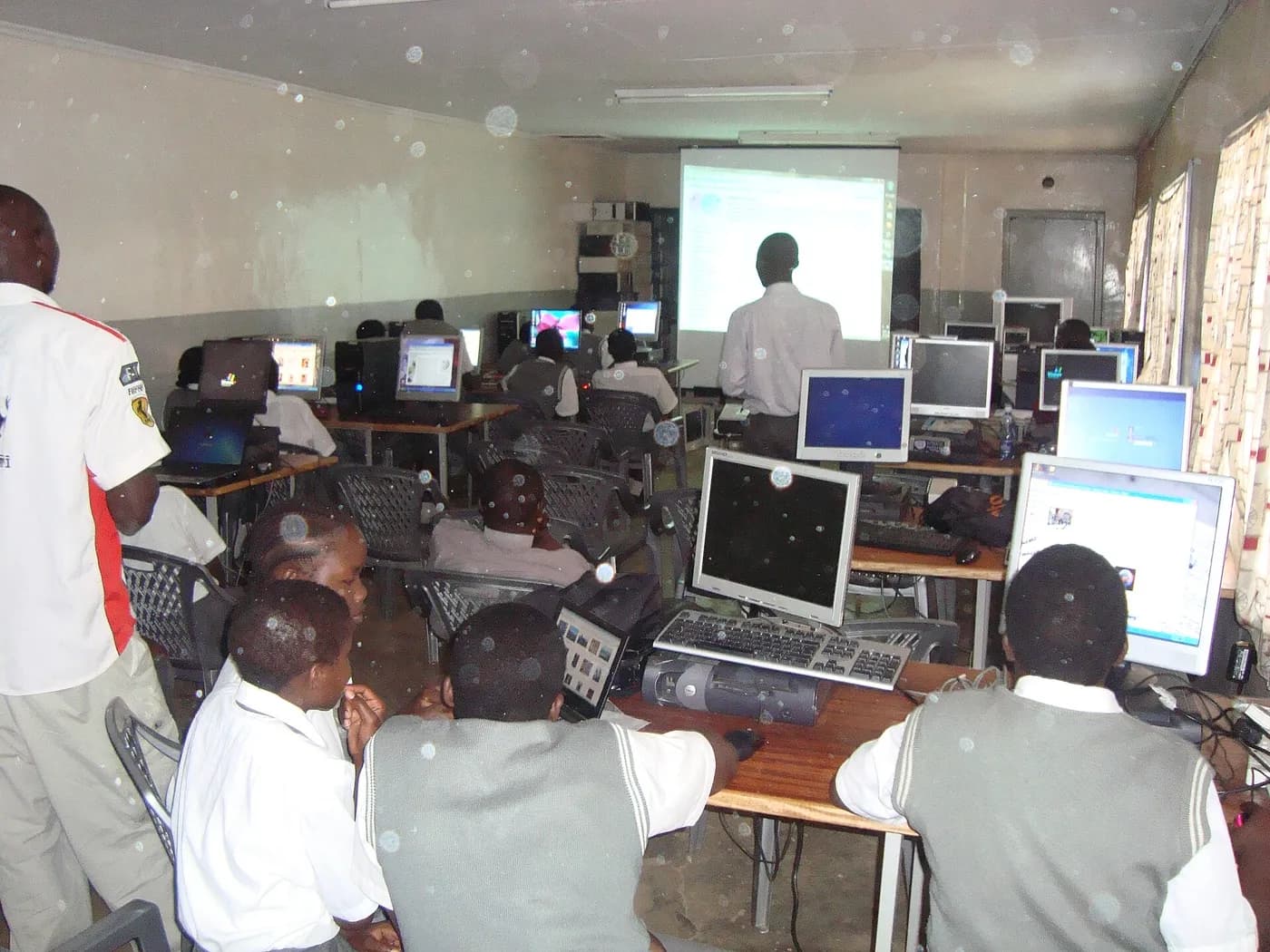
- The programme’s first phase has equipped 10,384 Kenyan public junior schools with 65-inch interactive boards.
- Each school also receives a laptop for the teacher and digitised content; 62,364 teachers trained.
- Programme backed by the World Bank; the second phase targets more than 21,000 schools.
- Electricity, connectivity, maintenance and ongoing training will decide actual use.
In a few months, more than ten thousand Kenyan schools have changed boards. The first phase of the interactive digital board programme has reached 10,384 public junior schools, part of the new education system, and trained 62,364 teachers across the country’s 47 counties, according to the State Department for ICT.
Each school receives a 65-inch interactive board and a laptop for the teacher, with digitised teaching content. The programme was launched by Deputy President Kithure Kindiki and is part of the Kenya Digital Economy Acceleration Project, backed by the World Bank.
Who does what
The rollout is led by the Information and Communications Technology Authority (ICT Authority), with the Ministry of Education, the Kenya Institute of Curriculum Development (KICD), which produces the content, and the Teachers Service Commission (TSC), which manages teachers. This division of roles matters: equipment without content suited to the curriculum, or without trained teachers, often ends up switched off in a corner of the classroom.
« The goal is to give students greater exposure to digital opportunities, including creativity, innovation, digital skills and artificial intelligence. »
John Kipchumba Tanui, Principal Secretary, State Department for ICT (paraphrased)
Why junior schools first
Kenya has overhauled its school system with a competency-based curriculum, which is gradually replacing the old exam-centred model. Junior schools, which take pupils in grades 7 to 9, are at the heart of this transition: they are new, often housed in existing primary schools, and lack specialised equipment.
The interactive board has a practical advantage in this context. It lets a teacher display content, videos, simulations or exercises in front of the whole class, where individual computer equipment would be prohibitively expensive. One room, one board, one computer: the formula is cheaper than equipping every pupil, and easier to maintain. It also has the advantage of leaving the teacher in control of the pace of the class.
Kenya’s digital board programme
In number. Source: State Department for ICT, TechAfrica News
What a lesson with an interactive board looks like
In practice, the interactive board is a large touchscreen connected to the teacher’s computer. In maths, the teacher can draw a shape, rotate it, change an angle and show live how the measurements change. In science, they can run a simulation of the water cycle or an electrical circuit that the whole class watches. In languages, they can play an audio recording, display a text and have pupils annotate it by coming up to write directly on the screen.
The tool also makes it possible to save a lesson, pick it up again in the next class, or share it with a colleague teaching another class. In schools where a single teacher may cover several subjects, being able to rely on content prepared in advance and approved by the curriculum institute saves real time. The Kenya Institute of Curriculum Development already publishes digital resources on its online platform, which can feed this equipment.
Training, the key to success
With more than 62,000 teachers trained, about six per school, the programme has put the emphasis on support. That is the lesson of previous attempts to digitise schools in Africa, including in Kenya: in the 2010s, a programme distributing tablets and computers to primary pupils raised high expectations and drew much criticism, for lack of sufficient content, training and maintenance.
Training a teacher to use an interactive board takes more than a few hours. They have to learn to prepare lessons differently, to integrate digital content without losing the thread of teaching, and to manage a large class around a screen. Long-term follow-up, not just initial training, will decide how the equipment is actually used.
The challenges on the ground
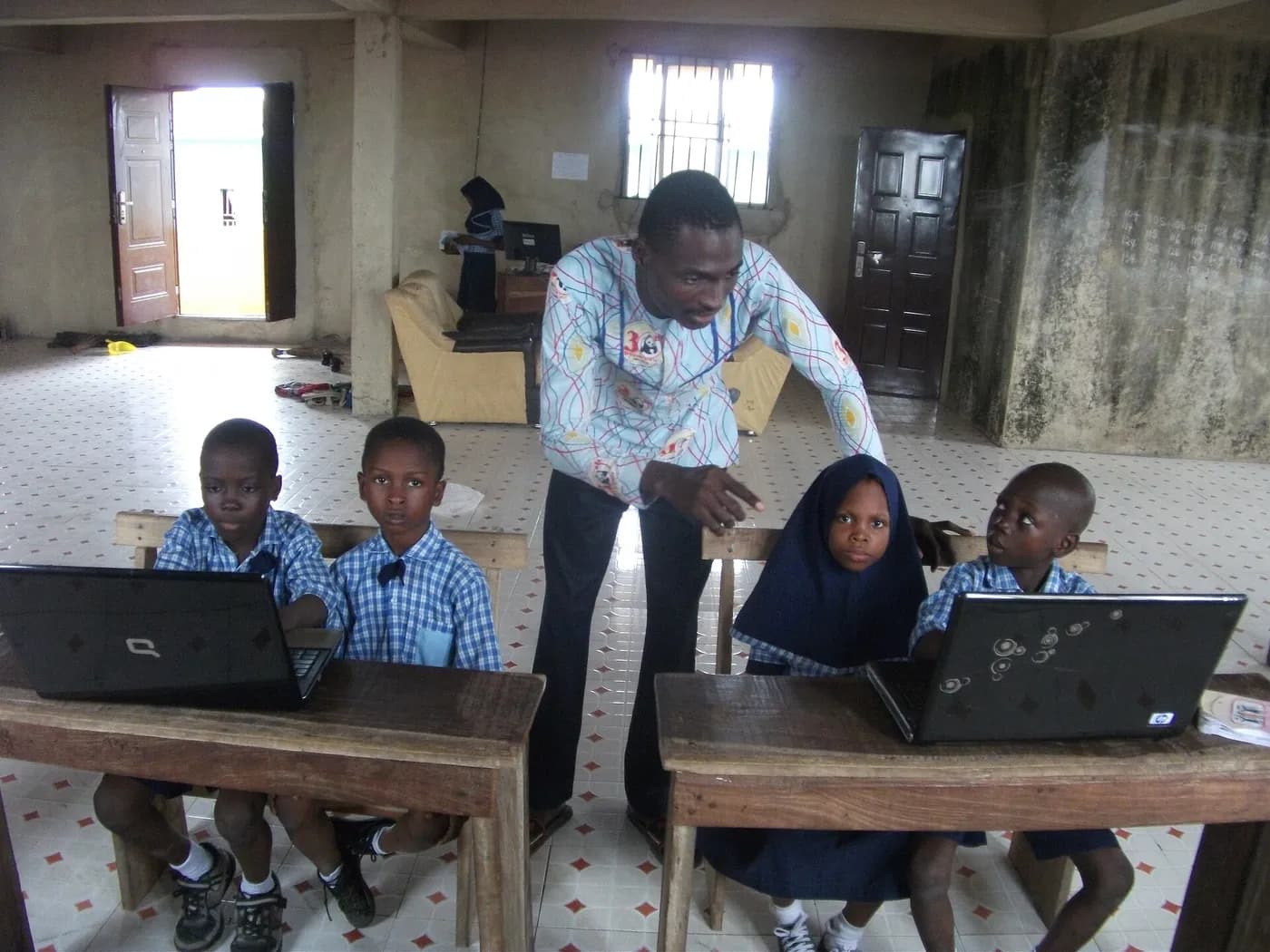
- Electricity: an interactive board does not work without a stable power supply; many rural schools depend on unreliable grids or solar solutions.
- Connectivity: locally stored content works offline, but updates and online resources require internet access.
- Maintenance: screens, cables and computers wear out; technicians and spare parts are needed.
- Security: valuable equipment must be protected against theft in buildings that are not always secure.
None of these challenges is insurmountable, but each requires an operating budget, not just capital investment. That is often where equipment programmes fail: the start-up money comes from a donor, but maintenance then falls on schools that cannot afford it.
A model watched by the neighbours
Kenya is not the only African country betting on digital tools in the classroom. Rwanda has developed equipped classrooms for several years, and many countries are testing combinations of screens, offline content and solar power for rural schools. Kenya’s scale, more than ten thousand schools in a single phase, nonetheless makes it one of the most ambitious programmes on the continent, and therefore one of the most closely watched.
Its total cost was not detailed in the announcements. It is part of the digital economy acceleration project financed with the World Bank, which also covers connectivity and online public services. To assess cost-effectiveness, the full price per school, including maintenance, will need to be known and compared with pupils’ progress.
The second phase and artificial intelligence
The second phase is due to extend the programme to the remaining public junior schools, reaching more than 21,000 schools. The government explicitly links the programme to artificial intelligence, in a country signing more and more agreements with the sector’s big labs. AI tools could eventually help teachers prepare lessons, adapt exercises to pupils’ levels or mark some work.
The risk, often pointed out by education specialists, would be to present AI as a miracle solution before the foundations are solid: teachers comfortable with the tool, content aligned with the curriculum, and pupils who have mastered reading and arithmetic. An interactive board and an AI assistant can help a good teacher do better; they replace neither their presence nor their judgement. The first evaluations of phase 1, if published, will show whether the tool has found its place in everyday teaching or remains showcase equipment.
Kenya has laid an impressive material foundation in a short time. The measure of success will come from the classrooms themselves: how often the boards are used, pupils’ results in the subjects concerned, and schools’ ability to keep their equipment working beyond the first year. These are indicators the ministry would do well to publish, county by county, so that parents, teachers and taxpayers can judge for themselves.
- Kenya’s Digital Smartboards Programme Reaches 10,384 Public Junior Schools, TechAfrica News.
- Kenya Begins AI Education Push as Govt Digitises 10,382 Junior Schools, Kenyans.co.ke.
- Kenya Begins Rollout of Digital Devices to 10,382 Schools, TechMoran.
Spotted an error? Write to infos@novotech.blog. Corrections are flagged at the end of the article.