Kinshasa considers becoming a smart city
In Kinshasa, digital technology is starting to play a bigger part in thinking about the city’s future. The Congolese government and the organisers of Expo Béton want to explore how technology can improve mobility, public services and urban planning.
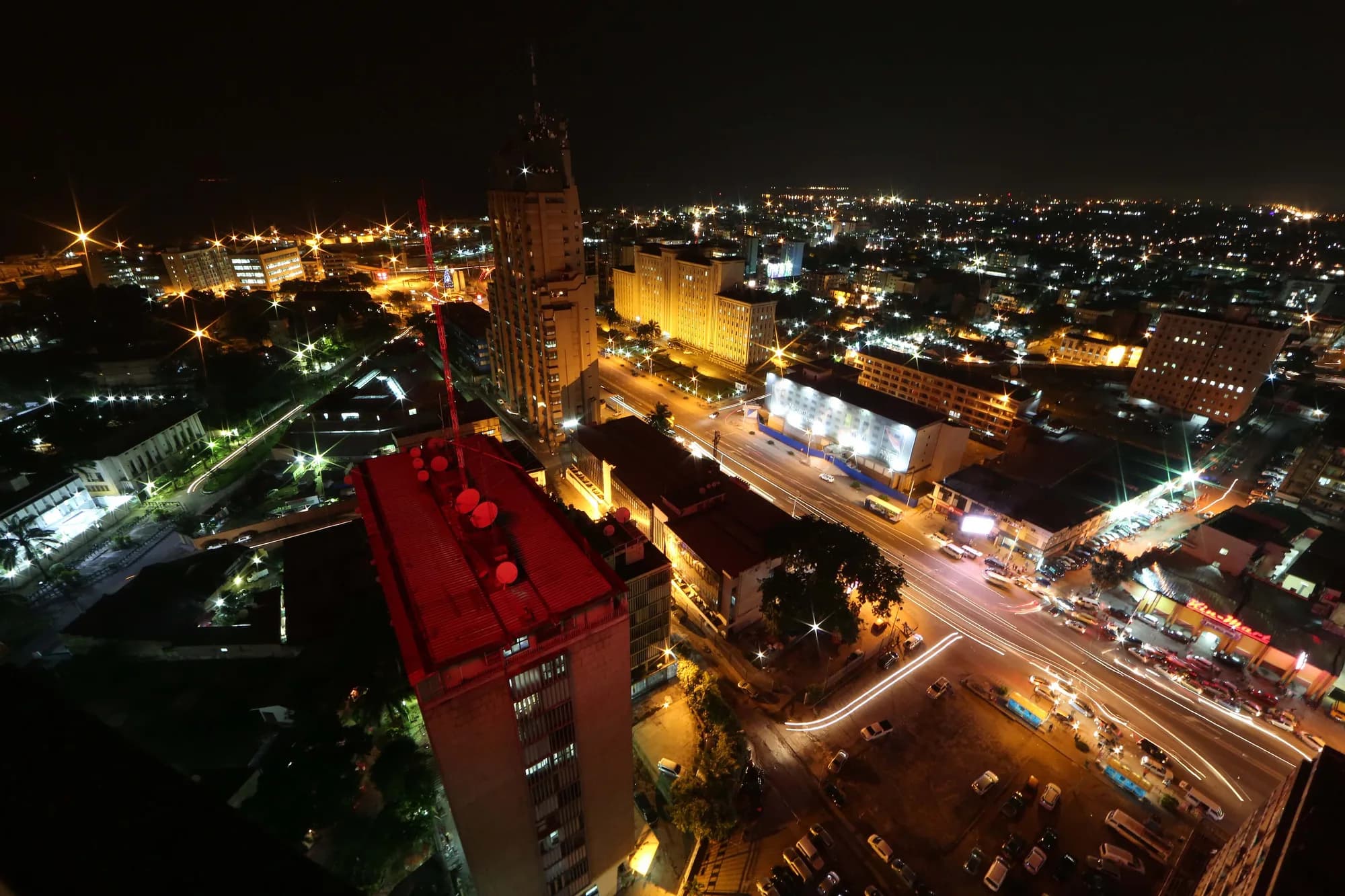
- The DRC is not yet presenting Kinshasa as a finished smart city. The aim is rather to think about how digital infrastructure and online services can support the transformation of the capital.
- These discussions come a few days before the 12th edition of Expo Béton, devoted this year to the transformation of Congolese cities.
Digital technology enters the city’s plans
On 29 September, Digital Economy Minister Augustin Kibassa Maliba received a delegation from Expo Béton to discuss how digital technology can be built into urban development in the DRC. The talks focused in particular on digital infrastructure, the modernisation of cities and the ways technology can improve services for citizens, businesses and public administrations. One idea sums up the approach: “I am digital, I am not stuck”. In other words, digital technology could limit some physical journeys by giving people greater access to services remotely. In a metropolis facing major traffic and mobility problems, the issue is far from being purely technological.
Easing congestion in Kinshasa through digital services
One of the ideas discussed is to use digital services to cut down on some unnecessary journeys. Government offices, administrative procedures, access to information and urban services could gradually become more accessible remotely. The aim would be to make the city flow better while making services easier to reach. This approach echoes a trend seen in several major African cities: using data, connectivity and digital platforms to improve day-to-day management rather than simply adding new infrastructure. But for Kinshasa, the challenge is especially large. The city-province covers nearly 10,000 km² and has more than 18 million inhabitants, according to the provincial authorities. Its growth makes urban planning increasingly complex.
Cables, masts and networks: the other challenge
Building a digital city, however, is not just about developing apps. The physical infrastructure needed for connectivity must also be built into urban planning. Cables, poles, telecoms equipment and other installations have to be put in place with safety, appearance and land-use rules in mind. This was precisely one of the points raised during the discussions between the ministry and Expo Béton. The question is strategic: a city that wants to become more connected must plan for digital networks just as it plans for roads, electricity, water and transport.
Kinshasa Kia Mona is already pushing this vision
These discussions are not starting entirely from scratch. The Kinshasa Kia Mona project, devoted to the extension of the capital, already sets out a vision of a smart, safe and digital city. It mentions smart street lighting, waste management, smart parking, water management, urban security and smart transport. Expo Béton 2026 is also due to devote part of its work to this project and to Kinshasa’s major infrastructure projects. The smart city discussion is therefore part of a much broader undertaking: supporting the capital’s expansion while trying to organise its infrastructure and services better.
An ambition still to be delivered
For now, it would be premature to talk about a complete transformation of Kinshasa into a smart city. The meeting between the ministry and Expo Béton mainly marks a stage of reflection and coordination. Success will then depend on the ability to finance infrastructure, connect services, protect data and make these solutions work at scale. The DRC nevertheless has an increasingly structured digital roadmap. In August, the government presented its Sectoral Policy for the Digital Economy and its National Artificial Intelligence Strategy for 2030. For Kinshasa, the next challenge will be to turn this digital ambition into services that are genuinely useful in everyday life.
Spotted an error? Write to infos@novotech.blog. Corrections are flagged at the end of the article.