PI-SPI: the BCEAO revises its payment fees
The BCEAO is revising the fees for its PI-SPI platform less than a year after its launch. From 2 November 2026, domestic transfers of up to 8,000 CFA francs a day will remain free, while transactions above that threshold may be charged up to 0.8%. A change that could reshuffle the cards for mobile money and digital payments across WAEMU.
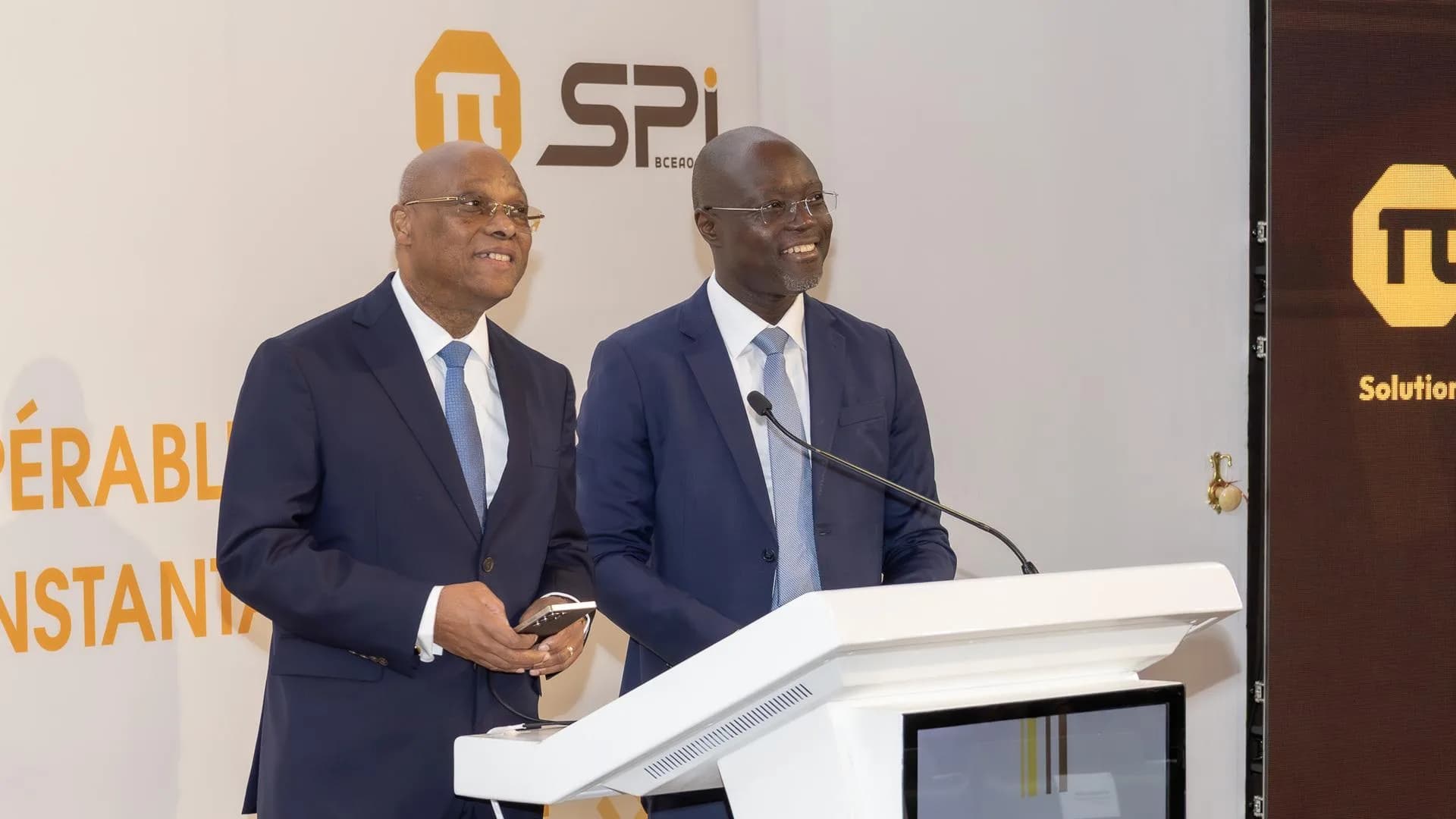
- The BCEAO has announced a revision of the fees for PI-SPI, its regional instant payment platform. From 2 November 2026, domestic transfers totalling up to 8,000 CFA francs a day will be free for the sender.
PI-SPI becomes unavoidable in WAEMU
Officially launched on 30 September 2025, PI-SPI is the BCEAO’s instant, interoperable payment infrastructure. Its aim is to let users transfer money between different financial institutions without having to worry about which network the recipient belongs to. Bank, e-wallet, payment institution or microfinance institution: the platform is meant to move funds between all these players. Transactions are designed to go through in a few seconds and to work 24 hours a day, 7 days a week. One year after its launch, the BCEAO says that 175 participants are now connected to the platform, giving more than 38 million people access to instant payment services.
A new fee schedule from 2 November
This is the main change announced by the central bank. From 2 November 2026, domestic transfers made through PI-SPI will be free when their cumulative daily amount is 8,000 CFA francs or less, per user and per participant. According to the BCEAO, this threshold should cover about 75% of e-money transactions in WAEMU. Free transfers therefore do not depend on the number of transactions: several small transfers can be made free of charge as long as the daily total does not exceed the threshold. Above 8,000 CFA francs, things change. Providers will be able to charge fees of between 0 and 0.8% of the transfer amount, excluding tax. In other words, 0.8% is a ceiling, not a mandatory rate. Each institution will be able to set its own terms within this range. Receiving money, meanwhile, remains completely free, with no limit on the amount or the number of transactions.
- Sending ≤ 8,000 CFA francs/day --------- Free
- Sending > 8,000 CFA francs ---------- 0 to 0.8% maximum
- Receiving -------- Free
- Number of transactions under the threshold ------- No limit
- Transfers between WAEMU countries -------- Same from 1 June 2027
Why is the BCEAO changing its fees?
The central bank presents the revision as a way to strengthen financial inclusion, extend free services and increase use of the platform. It is also pursuing a more strategic goal: making PI-SPI a central infrastructure for instant payments in WAEMU and encouraging new digital uses. The change comes as competition in digital payments is shifting. Interoperability is gradually reducing the importance of closed networks. Users no longer necessarily need to be with the same operator or bank as the person they are paying in order to transfer money. For mobile money players and fintechs, the question is therefore less about simply moving money and more about the services built around payments.
The new battleground: businesses and merchants
The BCEAO seems to be preparing for this next stage. In September, it announced the approval of the PI-SPI Business APIs. These interfaces allow businesses to send and receive payments, automate certain operations, handle bulk payments and track transactions in real time. This paves the way for new services: payments built into management software, automated collections, accounting reconciliation, supplier payments and cash-flow management. For fintechs, value could therefore gradually shift: the transfer becomes infrastructure, while the digital services around it become the real field of competition.