Starship reaches orbit for the first time, but comes back seven hours early
The 14th test flight of SpaceX’s giant rocket deployed real Starlink satellites and completed its first laps of the Earth, before an early return to the Pacific. A key step for the Moon, Mars and satellite internet, including in Africa.
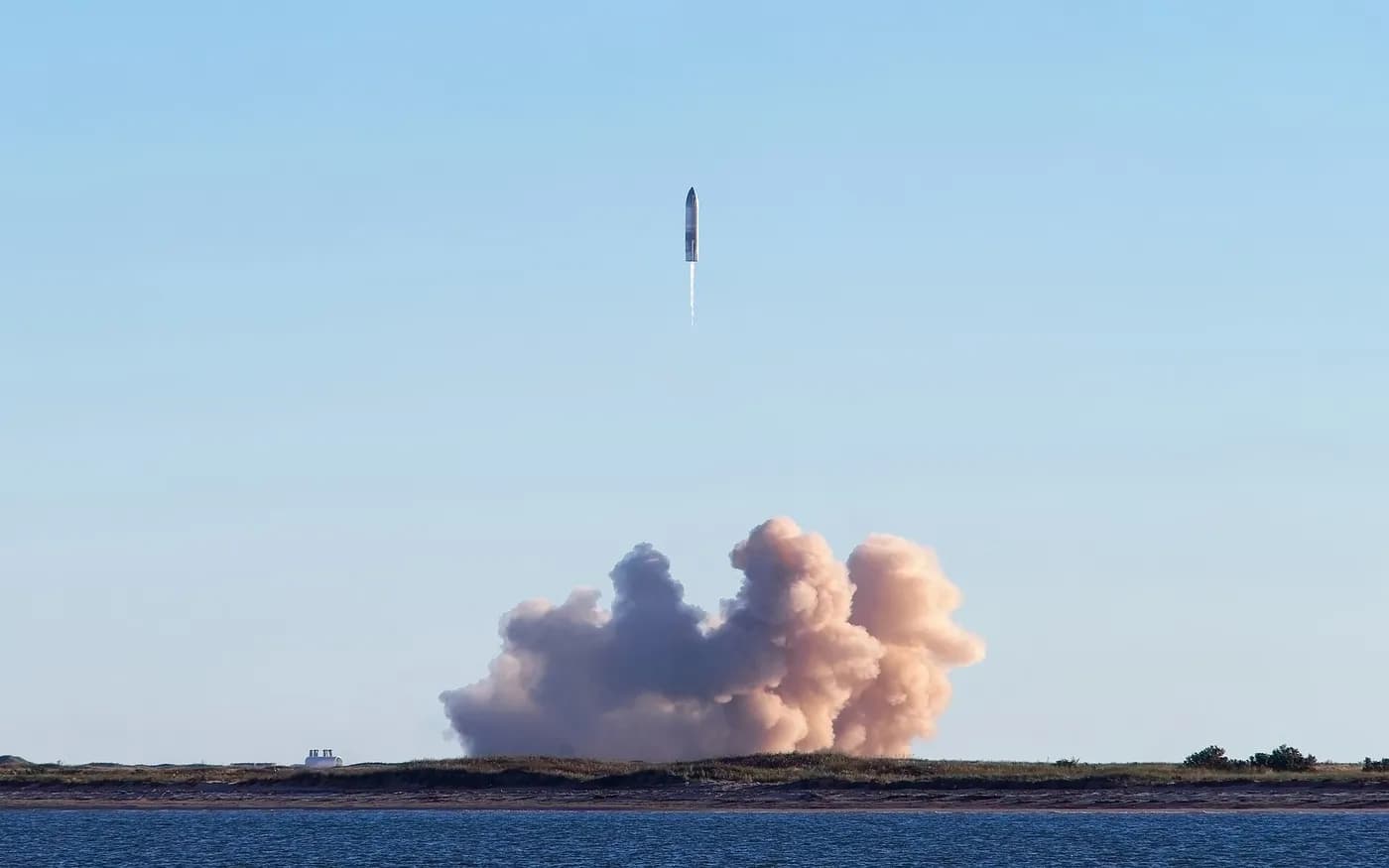
- On 28 September, SpaceX’s Starship made its first orbital flight and deployed 26 Starlink V3 satellites.
- Planned for around ten hours, the time in orbit was cut to just over three hours.
- The ship splashed down in the Pacific; the first stage in the Gulf of Mexico.
- A key step for next-generation Starlink, lunar missions and, eventually, Mars.
On 28 September 2026, SpaceX’s Starship reached a milestone years in the making: for the first time, the largest rocket ever built placed itself in orbit around the Earth. During this 14th test flight, designated IFT-14, the ship deployed operational Starlink satellites, then made a controlled splashdown in the Pacific, west of Chile. SpaceX hailed it as Starship’s first orbital flight.
The success is not complete, however. While the ship was meant to stay in orbit for around ten hours and circle the Earth six times, SpaceX decided to bring it back after just over three hours, at an altitude of about 275 kilometres. The company had not publicly explained the reason for this early return at the time of splashdown.
What was new
Until now, SpaceX had deliberately stopped just short of orbit: on the first thirteen tests, the ship followed a long arc and came back down before completing a lap of the planet. It took off from Texas, flew over the Atlantic and Africa, then aimed for a splashdown in the Indian Ocean, off Australia. Several of those flights ended early, with the loss of the ship.
- Starship’s first truly orbital flight, in its third version.
- First operational deployment of third-generation Starlink satellites: 26 satellites on board.
- Lift-off from Starbase, SpaceX’s base in Boca Chica, Texas.
- The ship returned with a splashdown in the Pacific; the first stage, Super Heavy, splashed down in the Gulf of Mexico.
On flight 13, in July, Starship had already carried about twenty real Starlink V3 satellites, but on a suborbital trajectory: after deploying their panels and communicating with the constellation, they burned up in the atmosphere. This time, the satellites stayed in orbit, which begins to make the test flights pay for themselves.
Why orbit changes everything
Reaching orbit is not just symbolic. It is the condition for Starship to carry out the missions it was designed for. First, deploying the next-generation Starlink constellation: the V3 satellites, bigger and more powerful than their predecessors, are too heavy to be launched in large numbers by the current Falcon 9 rocket. Next, missions to the Moon: a version of Starship is to serve as the lunar lander for the American Artemis programme. Finally, Elon Musk’s stated ambition of sending ships to Mars.
All these missions will also require mastering orbital refuelling, meaning transferring propellant from one ship to another in space, and full reuse: catching the ship and the first stage so they can fly again quickly. SpaceX has already caught the first stage with its tower’s arms on previous flights. For this flight, the company had chosen not to attempt to catch the ship, opting for a splashdown instead.
A very fast test programme
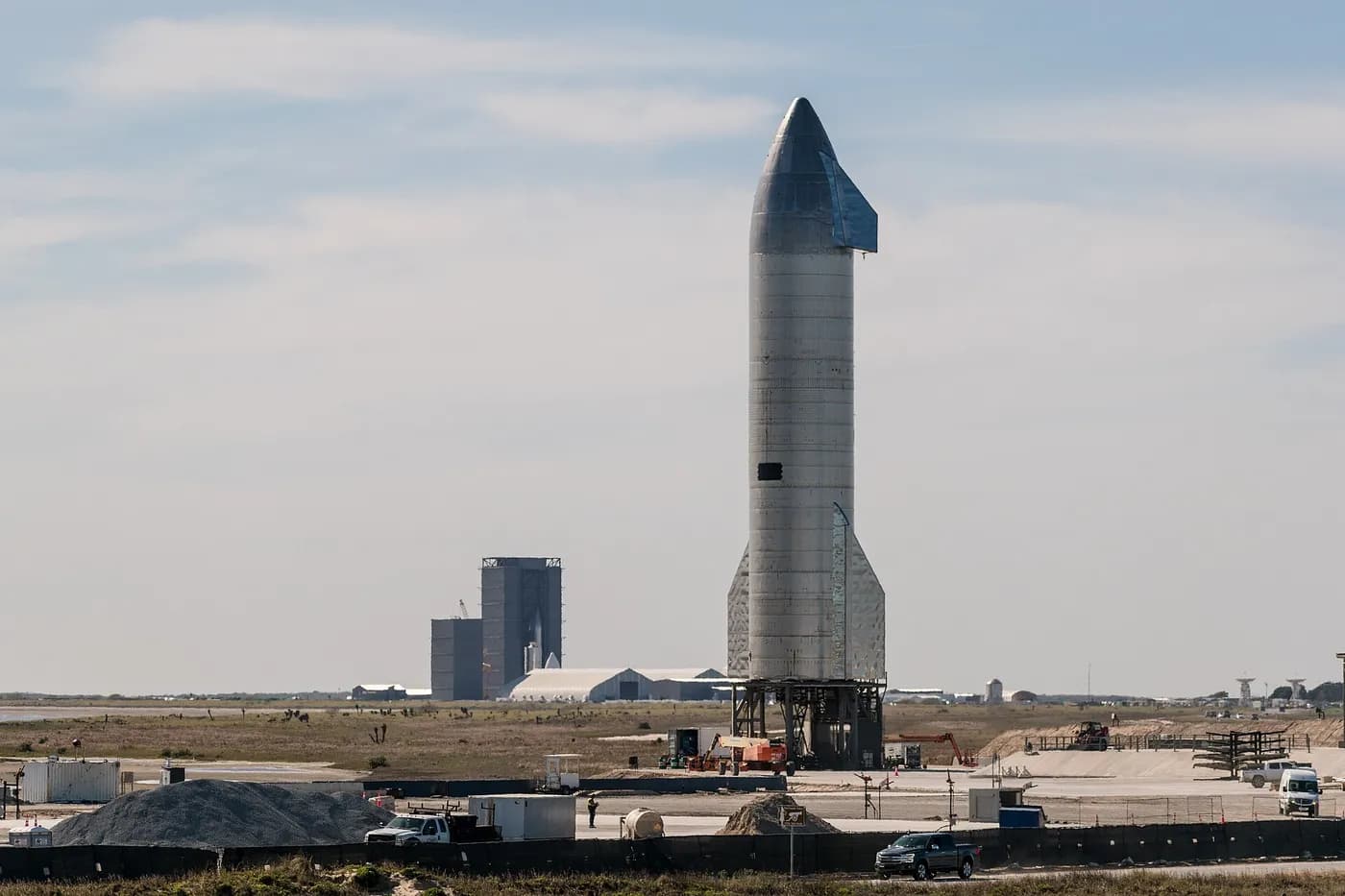
SpaceX’s method often surprises: rather than testing at length on the ground, the company flies prototypes, accepts spectacular failures and fixes things fast. Before this flight, it had completed an engine test campaign at the end of August, including firing the ship’s six engines and the first stage’s 33 engines. One of the tests simulated the deorbit burn, the braking manoeuvre needed to bring the ship back towards Earth, precisely the manoeuvre carried out earlier than planned on this flight.
The company had also recovered at sea the ship from the previous flight, which remained intact after splashing down in the Indian Ocean, and took pieces of its heat shield for analysis. This shield, which protects the ship from the extreme heat of atmospheric re-entry, is one of the most delicate aspects of rapid reuse.
Why coming back early is not a failure
An early return may seem disappointing. In a test programme, it is often a precautionary decision. To bring a ship back from orbit, its engines have to be fired in the right direction at the right moment, to slow it down and send it towards an area of ocean cleared in advance. If engineers see an anomaly, in propellant consumption, a component’s temperature or the ship’s behaviour, they may prefer to cut the mission short while all the conditions for a controlled return are still in place.
Most of the objectives were achieved: reaching orbit, deploying operational satellites, a successful deorbit burn and a controlled splashdown. The data gathered during those three hours in orbit will be used to prepare the next flights. That has been SpaceX’s logic since the programme began: every flight teaches something, including when it does not go to plan.
What it changes for Africa
Starship’s success matters directly to the continent, through Starlink. SpaceX’s satellite internet service is available in some African countries, and the service that connects smartphones directly to satellites has just launched in the Democratic Republic of Congo and Uganda with Airtel. Third-generation satellites, which only Starship can deploy at scale, are expected to offer much more capacity, which could improve speeds and, eventually, bring prices down.
This ramp-up also raises questions for African countries: dependence on a foreign private company for a growing share of connectivity, competition with local operators investing in terrestrial networks, and the regulation of a service that operates above borders. Several regulators, as in Uganda, already require satellite capacity to go through local operators.
There is also a scientific and industrial dimension. A heavy, reusable launcher lowers the cost of putting any kind of satellite into orbit, including Earth observation satellites useful for agriculture, forest monitoring or disaster management. Several African countries, including Nigeria, Kenya, Egypt and Rwanda, are developing space programmes and small satellites. Cheaper launches, whether from SpaceX or its competitors, open up possibilities that were previously out of budgetary reach.
The next steps
After this first orbital flight, observers are waiting for several demonstrations: a stay in orbit of the planned duration, the ship being caught by the tower, and above all orbital refuelling, essential for lunar missions. The timetable of the Artemis programme, which is to return astronauts to the Moon, depends partly on these advances. This flight’s early return is a reminder that every step is still a test. But the direction is clear: the rocket that only made short hops has, for the first time, joined the procession of satellites circling the Earth. Its American, Chinese and European competitors are watching closely, because mastering a reusable heavy launcher will weigh on the space economy for decades to come.
- Le tout premier vol orbital du Starship tourne court, SpaceX décide de faire rentrer le Ship bien plus tôt que prévu, Numerama.
- Starship : SpaceX réussit le décollage de la fusée géante et le retour en mer du booster, et vise sa première mise en orbite, Numerama.
Spotted an error? Write to infos@novotech.blog. Corrections are flagged at the end of the article.