Starship: SpaceX explains why its first orbital flight was cut short
An engine that shut down too early during the climb, and the fear of not being able to come back down: SpaceX has detailed why the ship stayed in orbit for just over two hours instead of ten. A cautious call that made a first possible: a controlled deorbit.
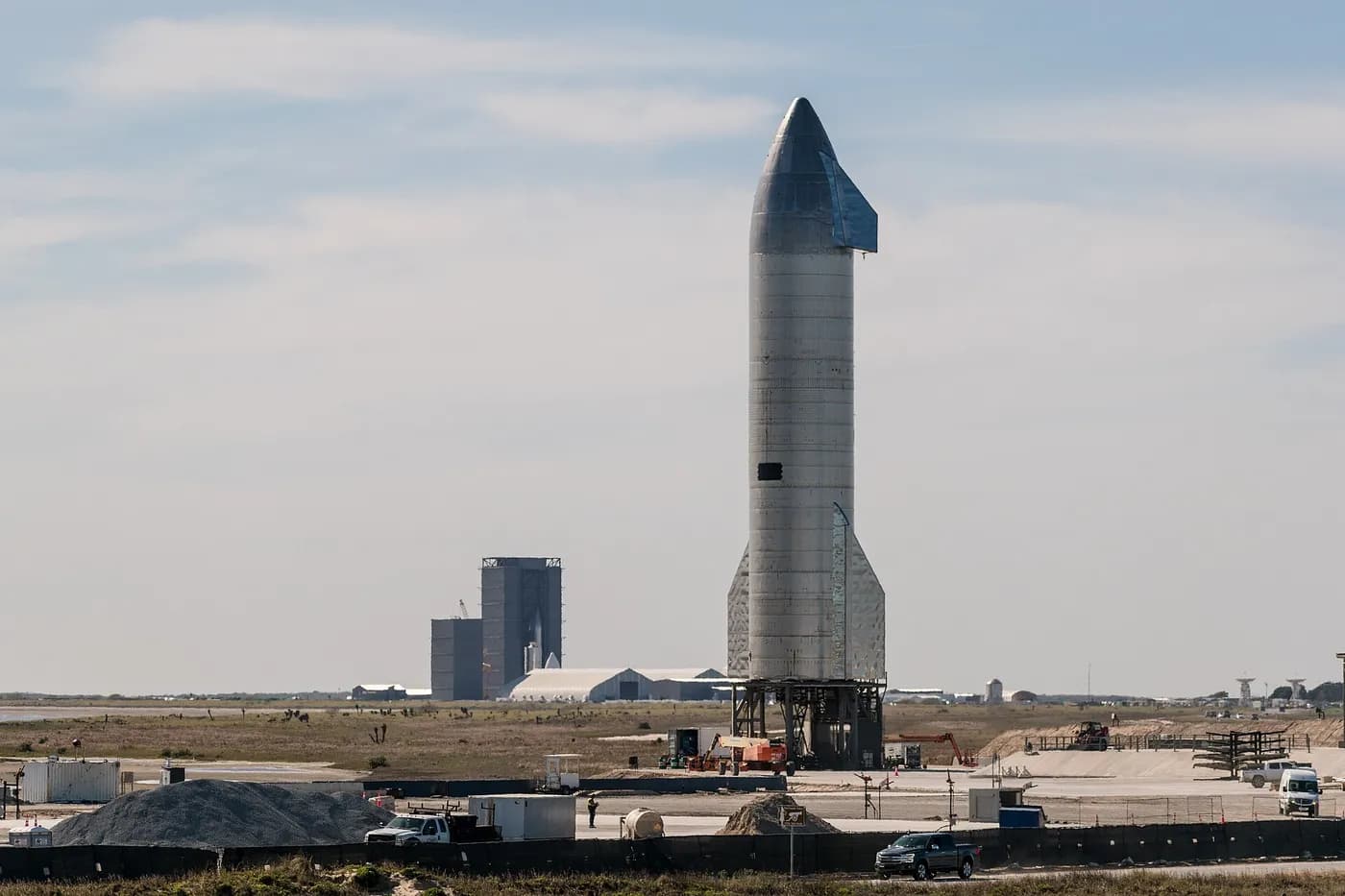
- One of the ship’s three Raptor Vacuum engines shut down too early during the climb; the other engines made up for it.
- As a precaution, SpaceX started the deorbit 2 h 12 min after lift-off, instead of flying for ten hours.
- Starship completed its first controlled deorbit and splashed down in the North Pacific.
Starship’s first orbital flight, on Monday 28 September, was meant to last around ten hours and circle the Earth six times. It ended after just over three hours. In the flight summary published on its website, SpaceX says it limited the time spent in orbit out of an abundance of caution, after an engine incident during the climb.
An engine cut off too early
After the two stages separated, the ship lit its six Raptor engines. One of the three Raptor Vacuum engines, which have a large nozzle and are designed to work in the vacuum of space, shut down ahead of time. The other five burned longer to compensate, and the ship did reach its planned trajectory. SpaceX has not yet explained why that engine stopped.
For several minutes, controllers held back the go-ahead for orbital insertion. Without a new burn, the ship would have fallen back on its own, on a so-called “passively safe” trajectory, as on the thirteen previous flights. The teams first checked that the three “sea-level” engines, the ones used for later relights, were in good shape. A single engine was then relit for about twenty seconds to place Starship in orbit, at an altitude of around 275 kilometres.
The fear of not being able to come back down
The problem was not reaching orbit, but getting back from it. To leave orbit, the ship has to relight an engine and brake. Without that braking, a vehicle of this size would stay in orbit for some time before falling back in an uncontrolled way. After one engine had already failed, SpaceX did not want to wait ten hours to check that the others would still respond.
In the meantime, the ship deployed its 26 next-generation Starlink satellites, with which SpaceX says it has established contact. Controllers started the deorbit 2 hours and 12 minutes after lift-off, and Starship then took nearly an hour to come back down. It aimed for the North Pacific, a fallback zone prepared before launch and cleared of all shipping and air traffic, instead of the planned splashdown off the coast of Chile.
SpaceX said that, as a precaution given the engine issue during ascent, the flight control team had decided to limit the time spent in orbit (paraphrased). The manoeuvre worked: a Raptor relit for the programme’s very first deorbit, the passage through the atmosphere, then the flip onto three engines before splashdown at the target point, where the ship then exploded.
For SpaceX, the outcome is still positive: first orbit, first next-generation satellites deployed from Starship, first commanded re-entry from orbit. What remains is to understand the Raptor Vacuum failure, a decisive point for upcoming missions to the Moon, which will require engines that are reliable after days in space.
- SpaceX explique pourquoi le vol orbital de la fusée géante Starship s’est abrégé si vite, Numerama.
- SpaceX : revivez le tout premier vol orbital de Starship à travers des images spectaculaires, Clubic.
- SpaceX’s latest Starship mission reached low-Earth orbit, Engadget.
Spotted an error? Write to infos@novotech.blog. Corrections are flagged at the end of the article.