Virtual Visa cards: how mobile money is opening up online payments to Africans, the example of Wave
Paying for a subscription, a plane ticket or a purchase on a foreign website without a bank account: that is the promise of virtual cards linked to mobile money. Wave has launched its own with Visa and Ecobank in Senegal. How they work, the competitors, the limits and what is at stake: our Dossier-Tek.

- A virtual card linked to mobile money lets you pay on websites worldwide without a bank account.
- Wave launched it on 23 January 2026 in Senegal with Visa and Ecobank, after a pilot in Senegal and Côte d’Ivoire.
- The movement is continent-wide: M-Pesa GlobalPay (Kenya, 2022), MTN MoMo cards with Mastercard in several countries.
- Limits: websites that reject these cards, opaque currency conversion fees, little-known consumer recourse.
- In Senegal, Wave’s weight (about 80% of the market) raises the question of dependence on a single player.
For years, the same scene played out in homes across West Africa: to pay for a streaming subscription, software, an exam registration or a ticket on a foreign website, you had to borrow a relative’s bank card, or give up. In countries where a small share of the population has a bank account, but almost everyone has a mobile money wallet, the payment card was still the missing piece. Virtual cards are filling that gap.
The principle is simple: the mobile money operator, working with a card network such as Visa or Mastercard and a bank, generates a card number, an expiry date and a security code in its app. The user enters them on a merchant website as with an ordinary card, and the payment is taken from their mobile money balance. In Senegal, it is Wave, the dominant operator, that has taken the step. This Dossier-Tek describes how these cards work, what they change and what they do not solve.
Why the card took so long
The payment card’s late arrival in West Africa has several mutually reinforcing causes. First, access to bank accounts has remained limited: account fees, required documents, branches concentrated in big cities. A large part of the working population is in the informal economy, with irregular incomes that fit poorly with banks’ requirements. For these people, the bank card, which requires an account, remained out of reach.
Next, cash dominates everyday payments: at the market, on public transport, at the neighbourhood shop, few merchants have invested in a card terminal, which is expensive and subject to fees. Even cardholders mainly used them to withdraw cash from ATMs. Finally, cards issued in the region were long poorly accepted by foreign websites, which considered them more exposed to fraud.
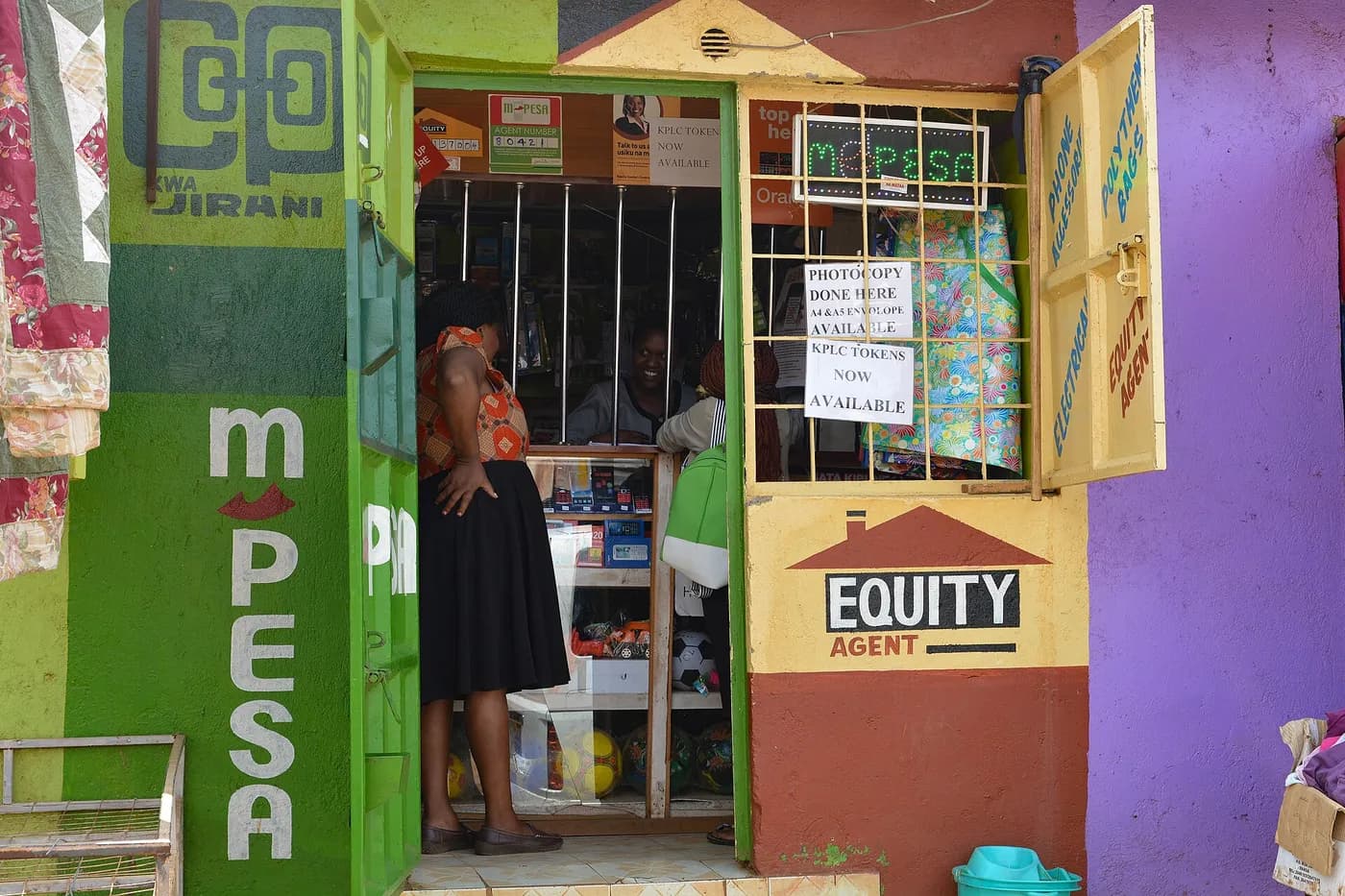
Mobile money got around these obstacles from the bottom up. All it takes is a phone, even a basic one, and an ID document to open a wallet; deposits and withdrawals are made at an agent on the street corner; payments between individuals and at merchants are settled in seconds. In a decade, it has become the main financial tool for millions of people. But it remained a closed loop, effective inside the country and unusable on a foreign merchant website. The virtual card is the bridge between these two worlds.
Wave, the heavyweight of Senegalese mobile money
To gauge the importance of the launch, you have to remember Wave’s position. Founded in 2018 and based in Dakar, the company shook up the market by scrapping deposit and withdrawal fees and imposing low, simple transfer fees, where its competitors charged much more for each transaction. The bet paid off: in 2021, a $200 million funding round valued it at about $1.7 billion, making it French-speaking Africa’s first unicorn.
Wave now claims 23 million monthly active users, 2 million merchants and more than 50,000 agents, in about ten countries including Senegal, Côte d’Ivoire, Mali, Burkina Faso, Uganda and The Gambia. In Senegal, its dominance is overwhelming: according to Agence Ecofin, the operator holds about 80% of the mobile money market. As of 21 August 2026, out of 571 billion CFA francs of electronic money in circulation in the country, 459 billion were with Wave.
Electronic money in circulation in Senegal as of 21 August 2026
In billion CFA francs. Source: Agence Ecofin
The launch: Wave, Visa and Ecobank
The Wave virtual card was officially launched on 23 January 2026 in Dakar, after several months of pilot testing in Côte d’Ivoire and Senegal. The roles are divided among three partners. Wave designs the service and builds it into its app. Visa brings its global acceptance network and security standards. Ecobank Senegal, the partner bank, handles distribution and brings its payments expertise: in the West African Economic and Monetary Union, card issuance must go through a licensed institution. The central bank supported the risk management framework.
For the user, the card is entirely digital: it is created instantly in the app, without visiting a branch or opening a bank account, and can be used to pay on e-commerce platforms, subscription services, ticketing, streaming and other digital services. “This card makes it possible to pay online as easily as with everyday transactions,” said Malick Gueye, managing director of Wave Senegal, at the launch (our translation). For Visa, its country manager for Senegal, Sandra Gayibor, highlighted a card protected by Visa’s security standards, serving financial inclusion.
Each of the three partners gets something out of it. For Ecobank, present in some thirty African countries, the agreement is part of a pan-African digital financial services strategy: its managing director in Senegal, Sahid Yallou, sees it as confirmation of the bank’s role as a preferred partner for fintechs. For Visa, it means access to a huge customer base that bank cards had missed. For Wave, it is one more service that keeps its users in its app, where previously an online purchase forced them to look for a solution elsewhere.
How it works, step by step
The typical journey of a virtual card linked to mobile money takes a few steps. The user opens their operator’s app and goes to the card section. They accept the terms of use, and the card is issued immediately: a sixteen-digit number, an expiry date and a three-digit security code, displayed in the app. There is nothing to print or collect at a branch.
When paying on a website, they choose card payment and enter these details as for an ordinary bank card. The amount is debited from their mobile money balance; if the website charges in another currency, conversion is applied along the way. Some websites ask for an extra verification step, such as a code received on the phone: this protects against fraudulent use of the card. If the phone is lost or in case of doubt, the card can usually be blocked from the app.
A continent-wide movement
Wave did not invent the idea, but it is applying it to the market where the need is greatest. In Kenya, Safaricom and Visa launched M-Pesa GlobalPay as early as June 2022, a virtual Visa card linked to the M-Pesa wallet. It is reserved for payments on foreign websites, to spare customers conversion fees on purchases in shillings, and can be activated directly in the app or via a USSD code, without a smartphone.
The MTN group did the same with Mastercard, as part of a partnership covering 13 African markets, including Benin, Cameroon, Côte d’Ivoire, Ghana, Nigeria, Rwanda and Uganda. Virtual MoMo cards have been launched country by country, notably in Uganda in February 2025 and in Zambia in December 2025. The two big card networks are thus competing for Africa’s mobile money wallets, which have become the main gateway to digital payments for hundreds of millions of people.
The logic is the same everywhere: rather than waiting for customers to open a bank account and request a physical card, a card is grafted onto a service they already use every day. For Visa and Mastercard, it is a way to reach millions of new cardholders without a branch network. For mobile money operators, it is a way to keep their customers’ money in their wallet, instead of seeing it leave for a bank.
What these cards really change
The first effect is access. A student who wants to take a paid online course, a freelancer subscribing to professional software, a small business buying social media advertising or booking accommodation for a trade fair abroad: all can now pay for themselves, with the money in their mobile wallet. For a digital economy that increasingly relies on services billed internationally, this is a real change.
The second effect concerns security. Borrowing a relative’s card or handing your details to an intermediary was a source of fraud and disputes. A personal virtual card, which can be topped up just before a purchase, limits the risks. The third effect is more discreet: these cards bring millions of people into international payment circuits, with a traceability that cash does not offer.
A few typical situations help measure what the card changes day to day. Aïssatou, a student in Dakar, wants to take a certified online course offered by an American platform: she tops up her wallet with the exact amount, pays with her virtual card and gets access within a minute, without asking a parent to lend their card. Moussa, a freelance graphic designer, pays the monthly subscription for his design software and his file storage: he no longer has to go through an intermediary who took a commission.
A small clothing shop in Thiès advertises its new collection on social media: it pays for its campaigns directly, tracks its spending in the app’s history and adjusts its budget from week to week. A family books accommodation for a trip abroad on a rental platform. These scenarios, which seem ordinary elsewhere, were until recently complicated or impossible for a large share of mobile money users.
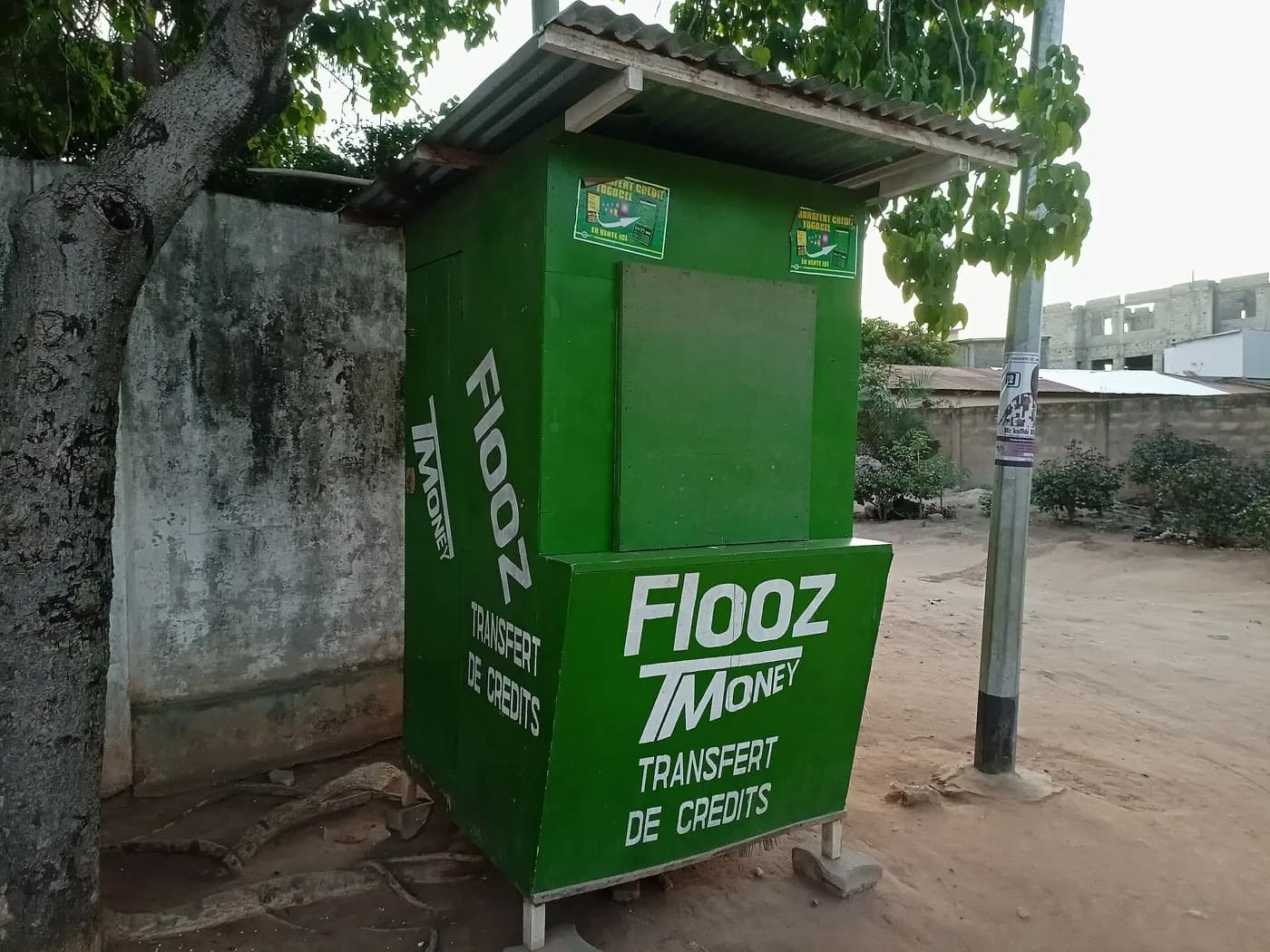
For African e-commerce companies, the arrival of these cards is a double-edged sword. It gets consumers used to buying online, which widens their market. But it also puts them in direct competition with the big international platforms, now accessible with a click. Local merchants keep one advantage: accepting mobile money payments directly, without going through the card, is often simpler and cheaper for their customers. The two circuits will coexist, and the smartest merchants will offer both payment methods so as not to lose any customers.
The limits and the open questions
These cards do not solve everything. Not all platforms accept cards issued in Africa, and some payments still fail, particularly on websites that apply strict anti-fraud checks to prepaid cards or to countries deemed risky. Currency conversion fees, charged by the network or the issuing bank, can make a purchase in dollars or euros more expensive, and often remain unclear to the user.
Consumer protection is also an issue. In a dispute with a foreign merchant, a subscription that cannot be cancelled or a contested charge, the user needs to know where to turn: the mobile money operator, the issuing bank or the card network. The chargeback procedures common for conventional bank cards are still little known to new cardholders.
Finally, market concentration raises questions. In Senegal, the state is relying more and more on Wave: in April 2026, the Ministry of Health signed a partnership to digitise payment for services in public facilities; on 10 September, the Minister of Communications and Digital Economy, Samba Diouf, met the operator’s teams to extend its role to transport and the Treasury; and the social security fund now pays some benefits directly into Wave accounts. Relying on the dominant player speeds up digitisation, but makes part of the country’s public services and payments dependent on a single private provider.
What next?
Several developments are taking shape. Interoperability first: African central banks are pushing for wallets from different operators and bank accounts to be able to exchange money instantly, which will make the choice of card less dependent on the operator. Physical cards next: several operators already pair their virtual cards with a physical equivalent that can be used at ATMs and payment terminals abroad. Business payments finally: after individuals, small businesses are asking for cards to pay their digital suppliers and work tools.
- January 2026: official launch of the Wave virtual card in Dakar, with Visa and Ecobank Senegal, after a pilot in Senegal and Côte d’Ivoire.
- June 2022: launch of M-Pesa GlobalPay in Kenya by Safaricom and Visa.
- February 2025 and December 2025: MTN MoMo virtual cards with Mastercard in Uganda, then Zambia.
- August 2026: 459 billion CFA francs of electronic money with Wave in Senegal, out of 571 billion in total.
- September 2026: the Senegalese state and the social security fund step up their payments through Wave.
Virtual cards linked to mobile money say something broader about Africa’s financial transformation. The continent did not follow the path of rich countries, from the counter to the card and then to the phone: it went straight to the phone, and is now grafting the card onto it. For millions of people, their first Visa card will not come from a bank branch, but from a mobile money app. It remains to be ensured that this opening comes with transparent fees, real consumer protection and enough competition for its benefits to reach as many people as possible.
- Wave, en partenariat avec Visa et Ecobank, lance une carte virtuelle pour accélérer l’inclusion financière en Afrique, Socialnetlink.
- Sénégal : Wave lance une carte virtuelle avec Visa et Ecobank, Financial Afrik.
- How Wave Built a 23 Million-User Fintech Empire in Africa, Pan African Visions.
- Le Sénégal veut renforcer le rôle de Wave dans les paiements publics, Agence Ecofin.
- CSS : lancement du paiement de certaines prestations sociales via Wave, Senego.
- Safaricom and Visa Launch M-PESA GlobalPay Visa Virtual Card, Safaricom.
- MTN MoMo Uganda introduces the Virtual Card by MoMo to enable e-commerce growth, Mastercard.
- Mastercard, MTN Group launch virtual MoMo card for 13 African markets, Connecting Africa.
Spotted an error? Write to infos@novotech.blog. Corrections are flagged at the end of the article.