AI in Morocco: what Nvidia actually confirmed, and why the $1.8 billion figure is misleading
Nvidia cited two AI infrastructure projects in Morocco, including an “AI factory” near Casablanca. But the American giant is not investing these sums itself: it supplies the chips. Untangling a misunderstood announcement.
- On 21 September, Nvidia cited two AI infrastructure projects in Morocco, as a chip supplier and not as an investor.
- Nexus AI Factory, in Nouaceur: an initial budget of $1.2 billion, 36 MW by the end of 2027, 500 MW targeted eventually.
- Cassava: a programme in five countries, up to $720 million, with no separate figure for Morocco.
- The $1.8 billion figure adds up amounts of a different nature.
On 21 September 2026, Nvidia, the American manufacturer whose processors power most artificial intelligence data centres, cited two AI infrastructure projects in Morocco. In the wake of this, several headlines announced that “Nvidia is investing nearly $1.8 billion” in the kingdom. The reality is different, and more interesting.
Nvidia did not announce that it was putting up that amount itself. The company is involved as a technology supplier, with its Blackwell-generation processors, in projects led by other investors. The $1.8 billion figure is the sum of two amounts of a different nature, one of which does not concern Morocco alone.
Project 1: Nexus AI Factory, near Casablanca
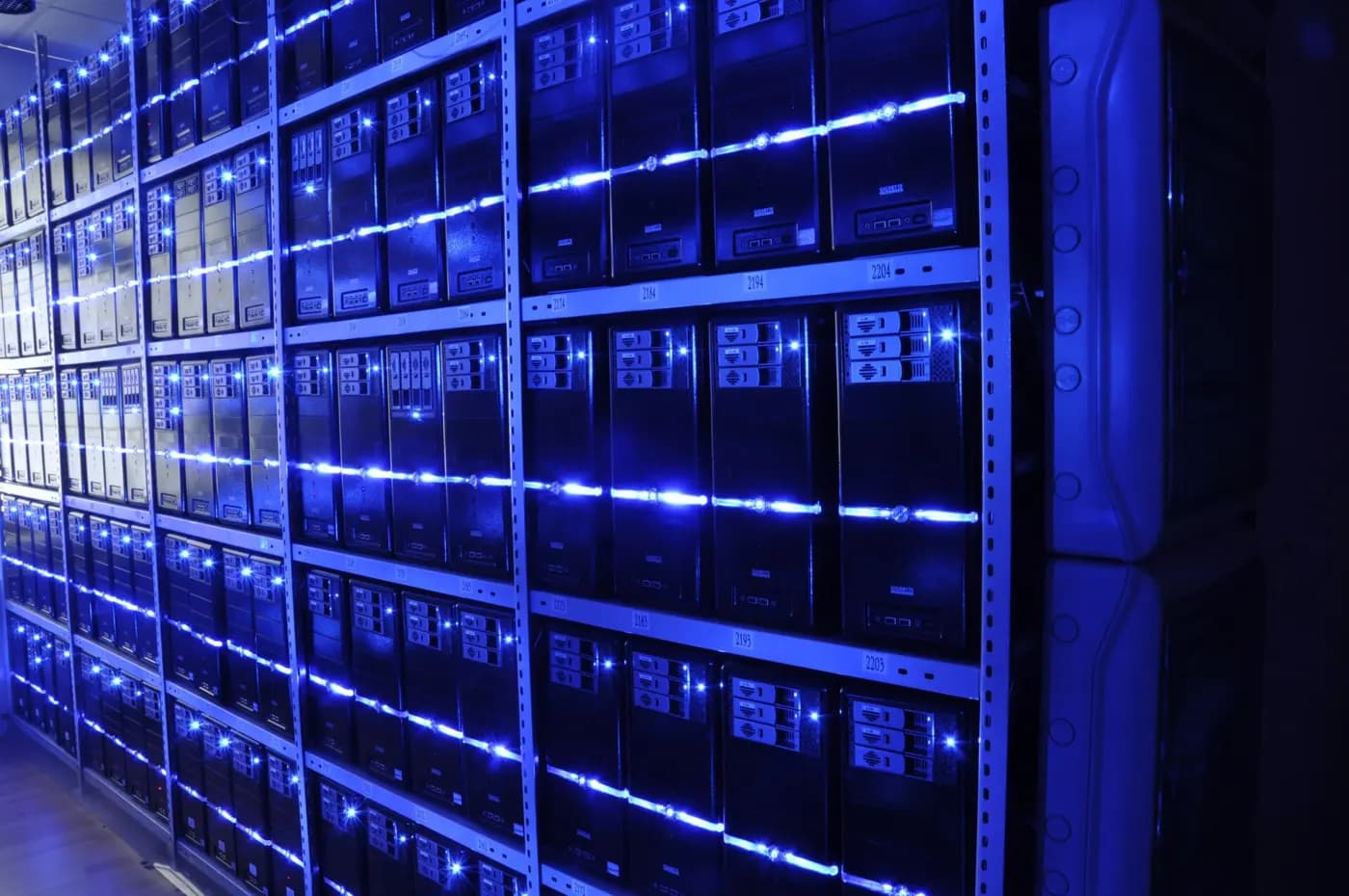
The most advanced project is the Nexus AI Factory, planned in Nouaceur, on the outskirts of Casablanca. An “AI factory”, in Nvidia’s vocabulary, is a data centre designed specifically to train and run artificial intelligence models, with thousands of graphics processors and suitable cooling systems.
The project is led by a consortium including Nexus Core Systems, the South Korean company Naver Cloud and Lloyd Capital. Its initial investment is announced at $1.2 billion. Morocco’s Ministry of Digital Transition, for its part, mentions 12 billion dirhams, an amount of the same order that should not be added to the previous one. An agreement was signed with the ministry on 8 April 2026.
- Eventual target capacity: 500 megawatts, a size comparable to the largest data centres in the world.
- First phases by the end of 2027: 36 megawatts in total, 16 in Nouaceur and 20 in the north of the country.
- Energy: renewable power supplied by TAQA Morocco.
- Direct jobs announced by the ministry: 125.
The gap between the 36 megawatts planned by the end of 2027 and the 500 megawatts targeted eventually shows the nature of the project: a long-term ambition whose first steps are modest. That is normal for infrastructure of this type, which is built in phases as customers arrive. But it is a nuance the headlines often erased.
Project 2: Cassava, a continental programme
The second project involves Cassava Technologies, the pan-African technology group founded by Zimbabwean entrepreneur Strive Masiyiwa, Nvidia’s cloud partner in Africa. Cassava is developing AI computing capacity in several countries: South Africa, Egypt, Kenya, Nigeria and Morocco. The programme as a whole could represent up to $720 million of investment.
No specific amount has been set aside for Morocco. Adding the $720 million continental programme to Nexus’s $1.2 billion, then attributing the total to Morocco and to Nvidia, therefore mixes up a national budget, a multi-country programme and the role of a supplier. Hence the misleading figure of $1.8 billion.
The amounts at stake
Source: Nvidia, Moroccan Ministry of Digital Transition, L’ODJ
Why Morocco
The kingdom has real assets for hosting this type of infrastructure. First, energy: its massive investments in solar and wind power over more than ten years allow it to offer renewable electricity, a major argument for very power-hungry data centres and for customers concerned about their carbon footprint. Next, its location: a few milliseconds from Europe via submarine cables, Morocco can serve European customers while facing West Africa.
Finally, public policy: the government has made digital technology and AI a priority, with a national strategy and a drive to attract foreign investment in infrastructure. The partnership with a Korean player such as Naver Cloud also shows that competition for African data centres is not just between Americans and Chinese.
Morocco is not alone in this niche. South Africa, Kenya, Nigeria and Egypt are also attracting data centre projects, often with the same argument: hosting close to African users capacity that currently sits in Europe or the United States. The difference will come down to the price of electricity, grid stability, the quality of international connections and the clarity of data rules. On several of these criteria, the kingdom starts with a head start.
Who will these machines serve?
That is the central question. An AI data centre is only valuable if it has customers: companies training models, government agencies wanting to host their data within the country, researchers, start-ups. The first 36-megawatt phases will have to find takers before the next ones are built.
For the Moroccan and African ecosystem, the stakes are twofold. On the one hand, having local computing power reduces dependence on foreign data centres and makes it possible to keep some sensitive data within the country. On the other, if this capacity is mainly rented to foreign customers, the local benefits will be limited to modest direct employment and to land and energy revenue.
Energy and water, the real raw materials
A large AI data centre consumes as much electricity as a medium-sized city. The processors heat up and have to be cooled, often with water. For a country like Morocco, which has suffered severe droughts and pressure on its water resources in recent years, this is not a side issue. Closed-loop or air cooling techniques limit consumption, but they cost more and use more electricity.
The choice of renewable power from TAQA Morocco answers part of the question. It remains to be seen how this contract fits with the country’s growing electricity demand, and whether the 500 megawatts targeted eventually can be covered without weighing on supply to households and industry. The authorities will need to publish clear requirements on water and energy as the projects grow.
What the Moroccan ecosystem can gain
The most concrete benefit for the country could come from giving researchers and start-ups access to computing power. Today, a Moroccan university team that wants to train a language model in Darija or Amazigh has to rent processors abroad, at high prices and in foreign currency. A local offer, with suitable prices or quotas reserved for research, would change the game. This is a point on which the authorities can weigh in during negotiations with operators.
The other issue is data sovereignty. Government agencies, banks and hospitals are reluctant to entrust sensitive data to centres located outside the country. Local capacity, subject to Moroccan law, can speed up the adoption of AI in these sectors, provided the access and security rules are transparent.
Nvidia’s announcement remains good news for Morocco: it signals that a central player in global AI considers its projects serious. But success will not be measured by a figure in billions in a headline. It will be measured by the megawatts actually in service at the end of 2027, the customers using them, and the share of that power made available to Moroccan researchers and businesses.
- IA au Maroc : ce que Nvidia confirme sur les projets Cassava et Nexus, L’ODJ.
- Deux projets géants : NVIDIA accélère la révolution IA au Maroc avec 1,2 milliard de dollars, Industries du Maroc.
- Maroc : Socle de l’IA, Nvidia annonce un investissement de près d’1,8 milliard de $, Digital Business Africa.
Spotted an error? Write to infos@novotech.blog. Corrections are flagged at the end of the article.