Flash charging: Geely goes from 10 to 70% in 4 minutes 30 and dethrones BYD
2,250 kW chargers, a battery that can charge at 12C and an AI that anticipates temperature: Chinese group Geely beats BYD’s record on production cars. A race for speed that raises questions about the power grid and about when it will arrive outside China.
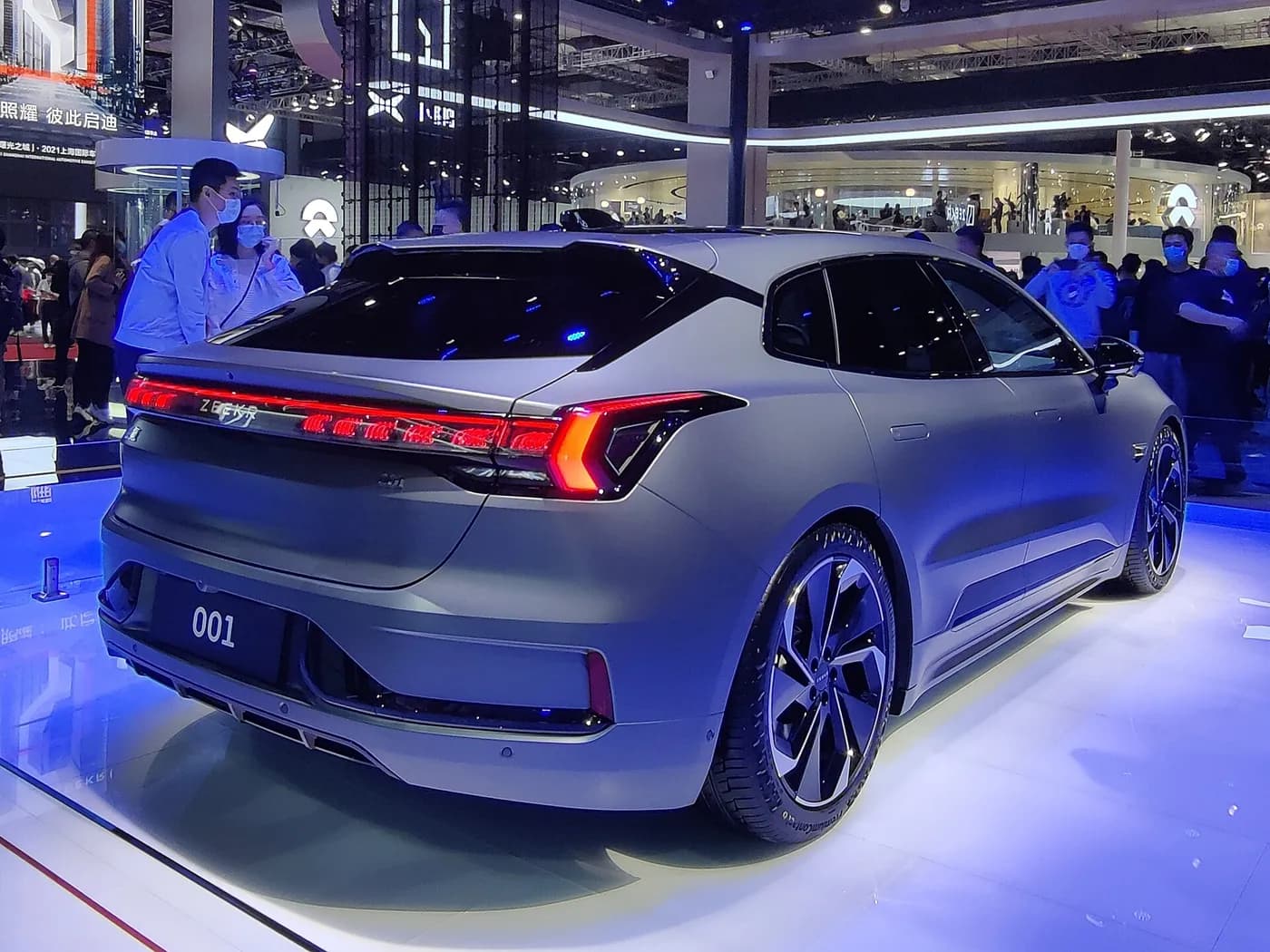
- Geely charges two production models from 10 to 70% in 4 min 30 s, against 5 minutes for BYD.
- Its fifth-generation chargers reach 2,250 kW, against 1,500 kW for BYD’s Flash chargers.
- The Shendun Golden battery accepts 12C; an AI developed with StepFun anticipates temperature 30 seconds ahead.
- The power grid, the cost of stations and battery wear remain the big questions.
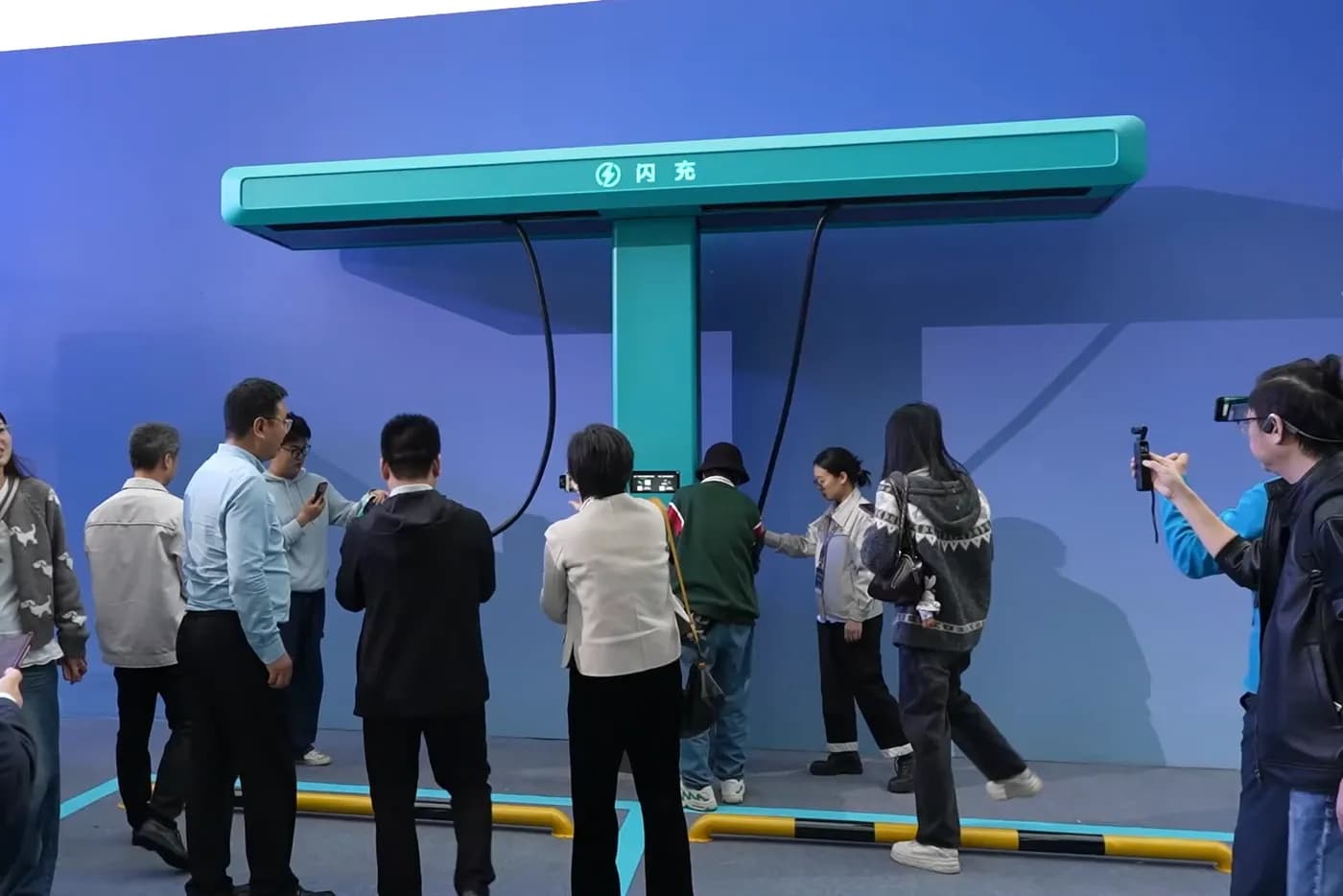
Spending about as long at the charger as at the petrol pump: that is the goal Chinese electric carmakers have set themselves, and they are closing in on it fast. On 23 September 2026, in Ningbo, the Geely group unveiled a charging system that takes a car’s battery from 10 to 70% in 4 minutes and 30 seconds, and from 10 to 97% in 8 minutes and 40 seconds. That beats BYD, which until now held the benchmark with 5 minutes for 10 to 70% and 9 minutes for 10 to 97%.
This is no laboratory exercise: the performance was measured on two production models, the Lynk & Co 10 and the Zeekr 001, two of the group’s brands. It rests on three building blocks: a much more powerful charger, a battery able to take such power, and an artificial intelligence tasked with preventing overheating.
2,250 kW, an extraordinary power level
Geely’s fifth generation of smart chargers delivers peak power of 2,250 kW, against 1,500 kW for the “Flash Chargers” BYD unveiled in March. To put the gap in perspective, the most common fast chargers in Europe deliver between 150 and 350 kW, and the best European cars pride themselves on going from 10 to 80% in just under a quarter of an hour.
At such power levels, a charger usually cannot draw all its energy directly from the grid. Systems of this type rely on storage batteries installed in the station, which fill up slowly and then empty in one go into the car. Geely also describes five-point liquid cooling, from the station’s battery all the way to the vehicle’s.
A battery that charges at 12C
The second building block is the Shendun Golden (“golden shield”) battery, developed by Geely for ultra-fast charging. It accepts a charge rate of up to 12C. In battery terms, a 1C rate means a full charge in one hour; 12C means that, in theory, the battery could absorb the equivalent of its capacity in five minutes. Few cells can handle such currents without degrading quickly: the heat released and parasitic chemical reactions speed up wear.
- Geely: 10 to 70% in 4 min 30 s, 10 to 97% in 8 min 40 s (Lynk & Co 10, Zeekr 001).
- BYD: 10 to 70% in 5 min, 10 to 97% in 9 min (1,500 kW Flash chargers).
- Hongqi: 10 to 70% in 3 min 41 s announced, on a prototype with no production date.
- Geely fifth-generation charger: 2,250 kW peak power.
AI to keep the battery cool
The third building block is software. Called Xingrui PowerMind and developed with the Chinese AI start-up StepFun, a model coordinates the car, the battery, the charger, the cloud, the power grid and energy storage to set a charging strategy specific to each vehicle. The system predicts battery temperature up to 30 seconds ahead and adjusts the power accordingly.
The stated goal: keep the battery’s average temperature below 55 °C during charging and its peak below 65 °C. That is the key to durability: a battery that gets too hot loses capacity with every cycle. Geely also claims that a “pulse restoration” technique would extend cell life by 20%, a promise that will need to be verified over time.
A bidding war between Chinese carmakers
The announcement is part of a fierce battle. BYD made a splash in March with its Blade 2.0 battery and 1,500 kW chargers, and has no intention of giving ground. According to the specialist site CnEVPost, the carmaker claimed 10,000 flash charging stations in China at the end of August, with the goal of reaching 20,000 by the end of the year. Battery maker Sunwoda, for its part, plans 10,000 megawatt-class stations by the end of 2027. And Hongqi, a brand of the state-owned FAW group, has already announced 3 minutes 41 seconds for 10 to 70% on a prototype, with no production timetable.
For carmakers, the stakes go beyond the record. Charging time remains, along with price, one of the main obstacles to buying an electric car. Cutting the stop at the charger to a few minutes takes a major argument away from defenders of the combustion engine, especially for people who cannot charge at home.
There is also an industrial logic. Geely owns many brands, from Volvo to Zeekr by way of Lynk & Co, Polestar and Smart, and a charging technology mastered in-house can be rolled out across the whole group. The carmaker is also announcing a new generation of its “ultra-short Blade” battery, which accepts a 6C rate: less spectacular, but enough to bring a fast charge under a quarter of an hour. The record is a showcase; most sales will probably be won with these intermediate versions.
The limits: grid, cost and lifespan
These performances do raise questions, though. First, the power grid: a station fitted with several 2,250 kW chargers needs power comparable to that of a small neighbourhood. Even with buffer batteries, installing them requires costly grid connections, which only China is rolling out on a large scale today. Then there is cost: buffer batteries, power electronics and cooling make every station more expensive.
Finally, there is wear. Carmakers insist their systems protect the batteries, but there is little hindsight on repeated charging at such rates. It will take several years of real-world use to know whether these batteries age as well as those charged more slowly.
When in Europe?
Geely has not announced any rollout of these chargers outside China. In Europe, BYD has made its Denza Z9 GT the showcase for its flash charging, but the infrastructure able to deliver such power has yet to be built. European carmakers, which are aiming for 10-to-80% charges in 15 to 20 minutes, are watching the technology gap widen.
The race for flash charging thus illustrates the lead the Chinese industry has taken across the whole electric car chain, from battery cells to chargers and software. Geely’s record may only stand for a few months. But the direction is clear: in electric cars, charging speed has become a selling point on a par with range, and the race is being run in China.
- 4 min 30 pour passer de 10 à 70 % : Geely pulvérise BYD et signe la recharge la plus rapide du monde, 01net.
- Geely takes on BYD with system charging EVs to 70% in 4.5 minutes, CnEVPost.
- Geely counters BYD with 2.25 MW charging system, electrive.com.
Spotted an error? Write to infos@novotech.blog. Corrections are flagged at the end of the article.