Solar on credit: how SunCulture, Sun King and Complete Farmer finance rural Africa
Irrigation pumps, solar kits, loans to smallholders: three companies closed funding deals in September. All rely on the same idea, getting customers to pay for equipment as they use it, and face the same challenge: finding money in local currency.
- SunCulture (Kenya) securitises $10 million of solar pump repayments with the Mirova Gigaton fund.
- Sun King receives $5 million from Acumen for Zambia, where it has delivered a million kits.
- Complete Farmer (Ghana) obtains a $2.4 million convertible loan from IFC to finance smallholders.
- The common challenge: refinancing in local currency to avoid currency risk.
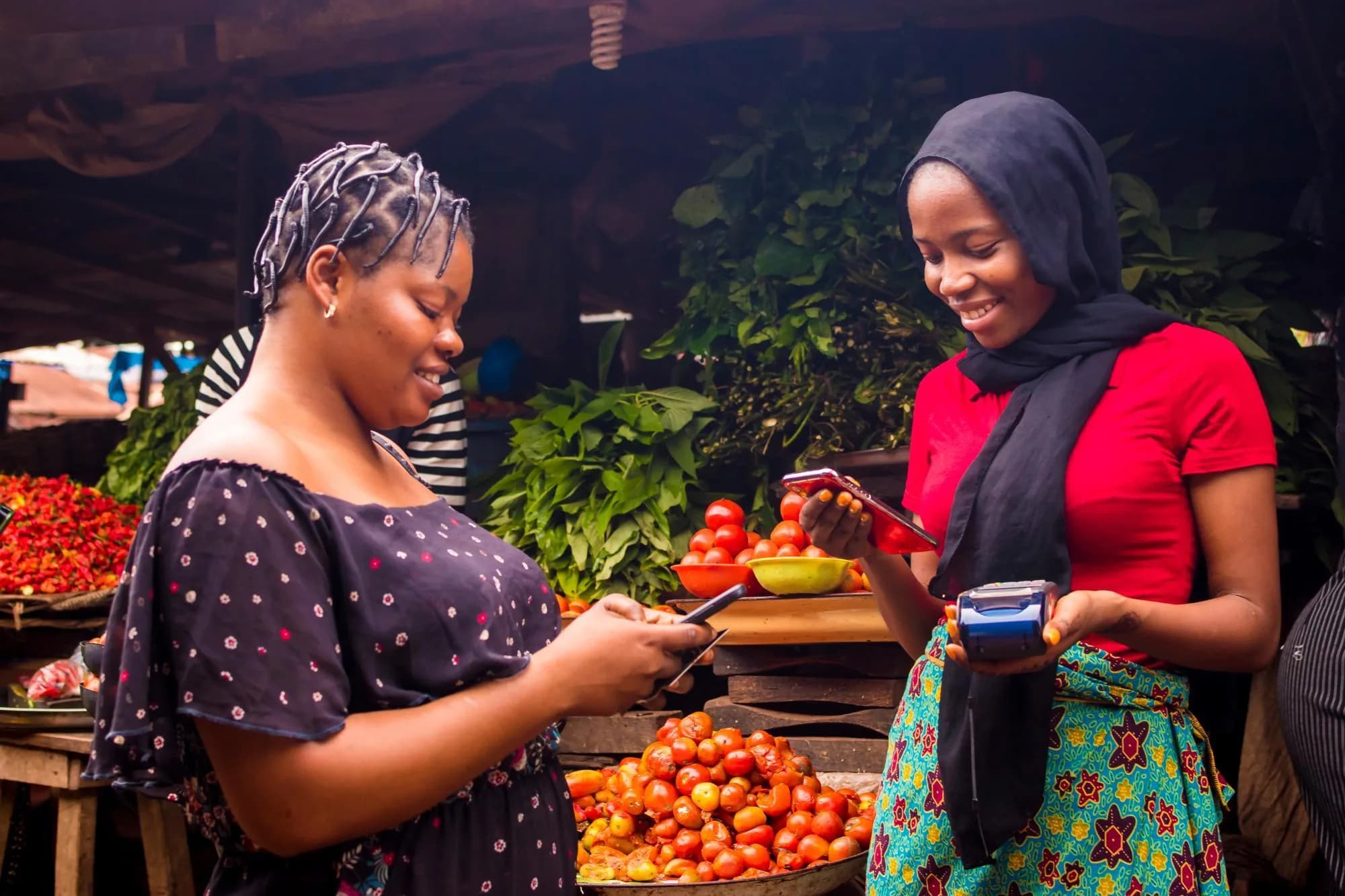
In rural Africa, solar energy is no longer a promise. It lights homes, charges phones, runs pumps. But a panel and a battery are expensive to buy outright, and most rural households have neither savings nor access to bank credit. The sector’s answer has a name: pay-as-you-go. The customer pays a small sum upfront, then repays in small instalments, often by mobile money, until they own the equipment.
This model has a consequence that is rarely seen: the companies that use it must advance the price of thousands of pieces of equipment, and wait months, even years, to be repaid. Their growth therefore depends less on their ability to sell than on their ability to refinance. Three deals announced in September 2026 illustrate the solutions they are finding.
SunCulture: securitising farmers’ repayments
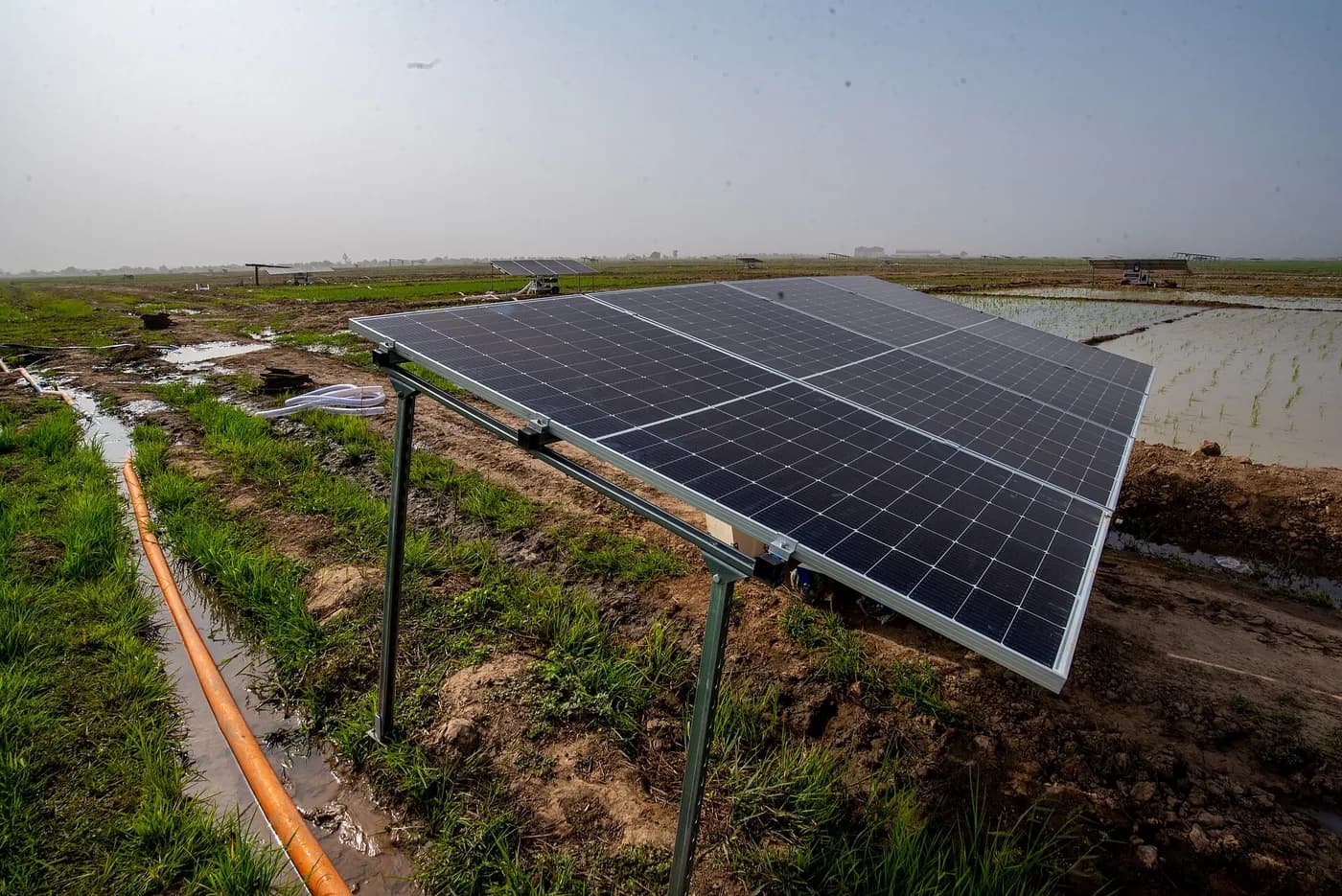
SunCulture, founded in Nairobi in 2012 by Samir Ibrahim and Charles Nichols, sells solar-powered irrigation systems to smallholder farmers. Its model, called “Pay-As-You-Grow”, combines the equipment, insurance and a warranty, all repaid gradually. The company claims more than 85,000 systems sold since its creation.
In September, it secured a $10 million securitisation. In practice, the sums its Kenyan customers still owe were pooled in a dedicated company, which received senior secured financing from the Mirova Gigaton fund. The fintech platform Kaleidofin helped structure the deal and monitors the quality of the portfolio. For SunCulture, it is a way to immediately recover the money tied up in its customers’ receivables and reinvest it in new sales.
Securitisation is a common technique in rich-country finance, much rarer in African tech. Its value is to turn a stream of small repayments into available capital. Its condition is transparency: investors must be able to measure customers’ repayment rates precisely, hence the role of a partner that monitors the portfolio.
Sun King: equity for Zambia
Sun King, founded in 2007 by T. Patrick Walsh and Anish Thakkar and based in Nairobi, is one of the largest distributors of pay-as-you-go solar kits and appliances for households and small businesses without reliable grid access. In Zambia, where it has operated since 2021 as Greenlight Planet Zambia, it has already delivered a million solar kits.
The company received a $5 million equity investment from Acumen, under its Hardest-to-Reach Catalyze initiative, dedicated to the hardest-to-reach populations. The goal: expand operations in Zambia and attract more local-currency financing. According to the projections released, nearly 5.6 million people could gain access to energy within five years, including up to 4.5 million Zambians getting electricity for the first time.
Three funding deals announced in September 2026
Source: WeeTracker, Tech Labari
Complete Farmer: credit for smallholders
In Ghana, Complete Farmer does not sell solar panels, but its problem is the same: financing people banks do not finance. Founded in 2017 by Desmond Koney, the platform connects farmers with buyers, banks, input suppliers and agricultural service providers. It claims more than 72,000 farmers in eight regions of Ghana, and eight logistics hubs in Ghana and Togo.
On 18 September, the International Finance Corporation (IFC), the World Bank Group’s private sector arm, granted it a $2.4 million convertible loan, along with $660,000 in grants and advisory services from a blended finance window of the Global Agriculture and Food Security Program. The goal is to strengthen its internal systems and its capacity to finance farmers, reaching 240,000 producers by 2030.
« Many farmers who could produce commercially still struggle to access the financing they need. »
Desmond Koney, CEO of Complete Farmer (paraphrased)
Complete Farmer is also a success story for its early investors: the Five35 Ventures fund, which came in in April 2022, sold its stake in March 2026 at a 3.5x multiple, with the company’s valuation having risen from $6 million to $49 million.
The crux of the matter: local currency
These three deals reveal the sector’s real challenge. Customers pay in shillings, kwacha or cedis. But much of the available financing is in dollars. When the local currency depreciates, and several have done so sharply in recent years, customers’ repayments are worth fewer and fewer dollars, while the company’s debt stays in dollars. Promising solar companies have been weakened by this mechanism alone.
Hence the importance of local-currency financing, which Acumen’s investment in Sun King explicitly seeks to attract, and of structures such as securitisation, which can be adapted to local investors, pension funds or banks, able to lend in their customers’ currency. This is an area where development banks and African financial regulators have a role to play.
Mobile payments made this model possible. Without them, collecting a few hundred shillings every week from tens of thousands of customers scattered across the countryside would be impossible at a reasonable cost. With them, repayment takes seconds, and the equipment can be locked remotely in case of non-payment, then unlocked as soon as the next payment arrives. This mechanism, which may seem harsh, is also what allows companies to lend to customers with no banking history.
What the customer should know
- The total price paid on credit is always higher than the cash price: ask for the total amount before signing.
- Check what happens if you pay late: remote locking of the equipment, penalties, repossession.
- Ask how long the warranty lasts and who handles repairs near you.
- For an irrigation pump, work out the expected gain on the harvest: that is what has to pay the instalments.
A maturing model
Ten years ago, off-grid solar in Africa was mostly about lamps and small kits. Today, it finances production tools: pumps, mills, refrigerators, agro-processing equipment. Companies in the sector are, in effect, becoming rural credit institutions, with millions of customers and valuable repayment histories. September’s deals show that they are learning to speak the language of finance, securitisation, equity, convertible loans, to keep growing. The next test will be to convince African investors themselves to take over, in local currency and at scale.
- SunCulture Secures USD 10 M Financing To Expand Solar Irrigation In Africa, WeeTracker.
- Sun King Secures USD 5 M Acumen Investment To Expand Solar Access In Zambia, WeeTracker.
- Ghana Farming Start-Up Complete Farmer Secures $2.4 Million Loan From World Bank Arm, Tech Labari.
Spotted an error? Write to infos@novotech.blog. Corrections are flagged at the end of the article.