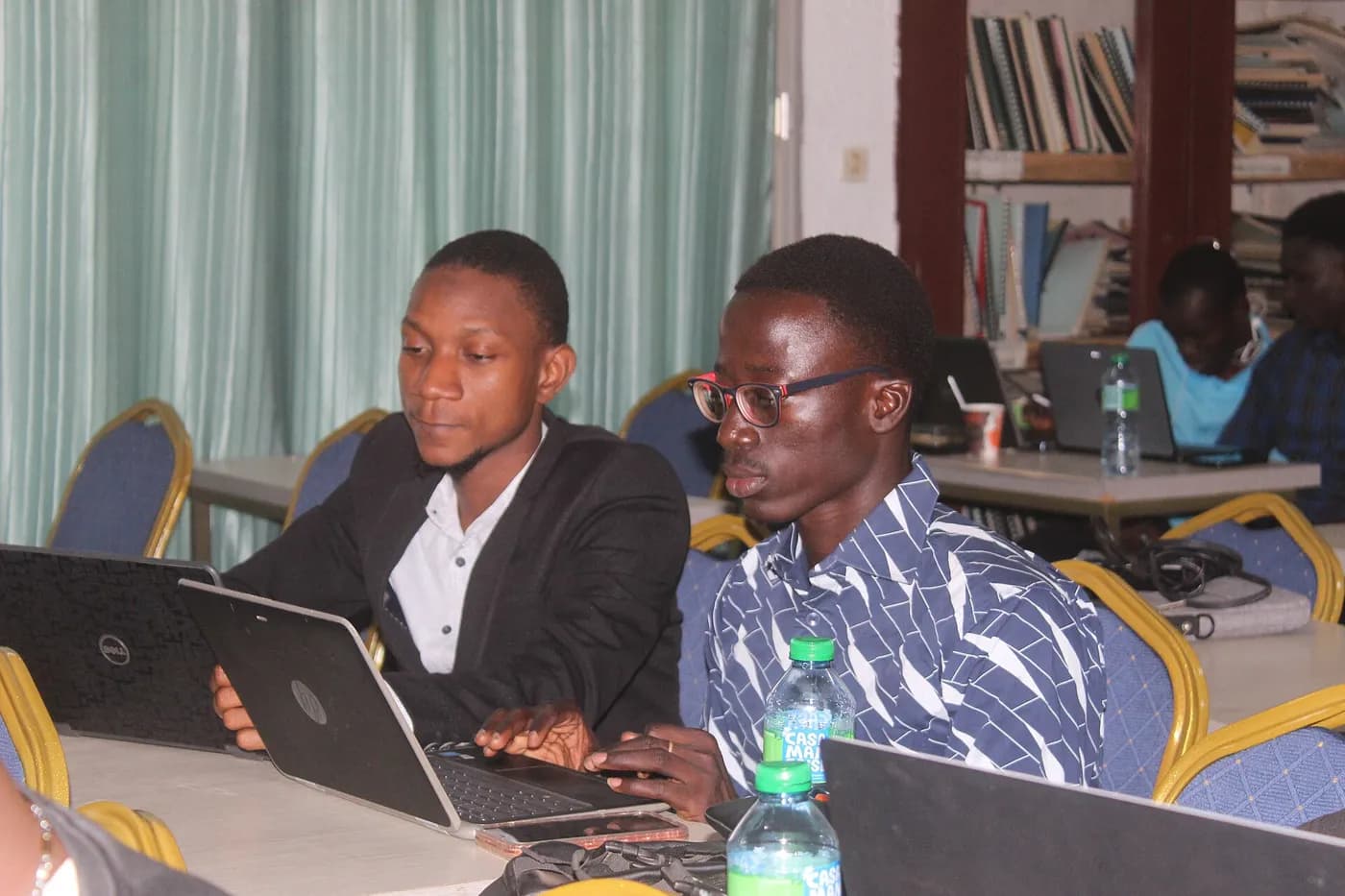
How artificial intelligence is transforming African businesses
Banking, agriculture, customer service, local languages: AI is already at work in the continent’s companies. But between the announcements and the results, the gap remains wide. Figures, concrete examples and obstacles: our Dossier-Tek on what is really changing, and what is still holding things back.
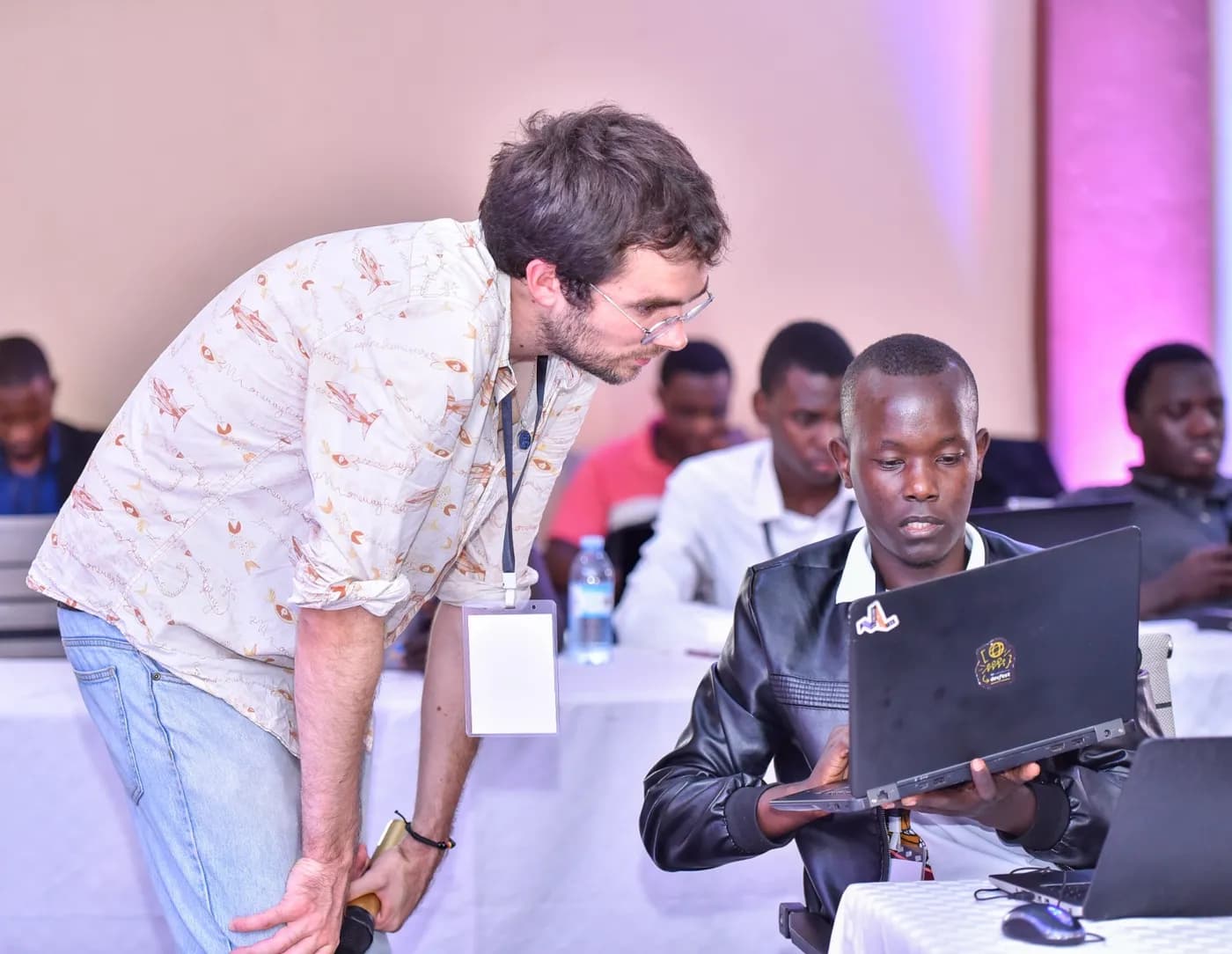
- 75% of African companies have adopted AI, but only 26% of leaders consider their investment sufficient (PwC, 2026).
- Banking leads: fraud, alternative credit, assistants; 86.9% of bankers are positive, but legacy systems hold them back.
- In agriculture, Apollo Agriculture lends using satellite data and Darli advises in 27 languages.
- Small models in African languages, champions such as InstaDeep, governments getting organised: the ecosystem is taking shape.
- Obstacles: skills, data, infrastructure, data protection and bias.
In Nairobi, a farmer receives seeds and fertiliser on credit because a model assessed his risk from satellite images of his plot. In Accra, a cocoa grower asks a voice assistant a question in Twi and gets advice on crop rotation. In Lagos, a bank blocks a suspicious transfer within milliseconds. None of these scenes is futuristic: they describe services that are already running, at scale, in African companies.
Artificial intelligence has entered the continent’s businesses through very concrete doors: credit, fraud, customer service, farming advice, translation. It is advancing fast, driven by convinced leaders, inventive start-ups and governments that are starting to organise. But it also runs into very African obstacles: legacy IT systems, scarce data, missing skills, sometimes unstable power. This Dossier-Tek takes stock, with figures and examples.
Convinced leaders, hesitant budgets
First finding: bosses’ interest is massive. According to PwC’s 29th Global CEO Survey, published in February 2026, which polled more than 150 African leaders among 4,454 worldwide, 75% of African companies have adopted AI in one form or another. The continent’s leaders are also more optimistic than their peers: 81% are confident about the economic outlook, against a global average of 65%.
Second finding, less flattering: adoption often remains superficial. Only 26% of the African leaders surveyed believe they are investing enough to meet their AI goals. Among those who have invested, 23% have seen revenue rise and 25% have seen costs fall over the past year. In other words, only a minority is converting the attempt. Many companies are still experimenting: a tool here, a pilot project there, without scaling up.
The same figures reveal the nature of the bottleneck. Only 37% of leaders say they manage to recruit and retain the talent they need, and 41% have a defined AI roadmap. The problem, sums up Vikas Sharma, a partner at PwC in Mauritius, is less a lack of ambition than a governance deficit: knowing who decides, what to measure, and how to go from a successful test to a tool used across the company.
- 75% of African companies have adopted AI in one form or another (PwC, February 2026).
- Only 26% of leaders consider their investment sufficient.
- 23% of those who invested have seen revenue rise, 25% have seen costs fall.
- 37% manage to recruit and retain the talent they need; 41% have an AI roadmap.
Who is really using AI?
On individual use, Microsoft’s data gives a precise snapshot. Its AI diffusion report for the first quarter of 2026 measures the share of 15-to-64-year-olds who have used a generative AI tool such as ChatGPT, Gemini, Claude or Copilot. South Africa clearly leads the continent with 23.1%, above the global average of 17.8%. It is followed by Namibia (15.1%), Libya and Gabon (15%), Egypt and Botswana (14.8%), then Senegal (13.9%).
Generative AI users among 15-to-64-year-olds, first quarter of 2026
Source: Microsoft, Global AI Diffusion report Q1 2026 (via Agence Ecofin)
These figures are a reminder of an often forgotten reality: countries that are very active on the tech scene, such as Nigeria (10.1%) or Kenya (8.7%), remain below the global average. The gap between rich and developing countries is widening: 27.5% of users on average in the former, 15.4% in the latter. For businesses, this is both a brake, since their customers and employees are less familiar with these tools, and an opportunity, since the field remains largely open.
Banking, the first field of application
If one sector has taken the lead, it is banking. A study published in August 2026 by banking software vendor Backbase and African Banker magazine, covering 277 bank executives in 37 African countries, shows almost unanimous enthusiasm: 86.9% view AI’s role in their institution positively for the next two years, and 83.2% want to increase their investment.
The uses are specific. Fraud detection comes first: a model spots an unusual transaction, an unknown device or a series of small suspicious transfers in real time. Next comes alternative credit scoring, decisive on a continent where much of the population has no banking history: the algorithm estimates repayment capacity from other signals, such as mobile money use. Nearly half of banks (49%) start with conversational AI, assistants that answer customers around the clock.
The results are there for those that measure: 85.1% of banks with formal return-on-investment indicators say they meet or exceed their forecasts. But the study also points to the main obstacle: existing IT. On average, 55.7% of IT budgets go on maintaining legacy systems, and 50.2% of banks cite integration with these systems as their top obstacle. African banks do not have an AI problem, they have an architecture problem, sums up Aymen Daoud, Backbase’s regional vice-president (paraphrased).
In the fields: credit and advice
Agriculture, which supports a large share of Africans, is AI’s other laboratory. In Kenya, Apollo Agriculture, created in 2016, provides smallholders with seeds, fertiliser and insurance on credit. To decide whom to lend to and how much, the company combines satellite data, soil information, farmer behaviour and yield models. Each offer is tailored to the plot. The company says it has served more than 300,000 smallholders, with a network of more than 5,000 agents and nearly 1,000 independent retailers.
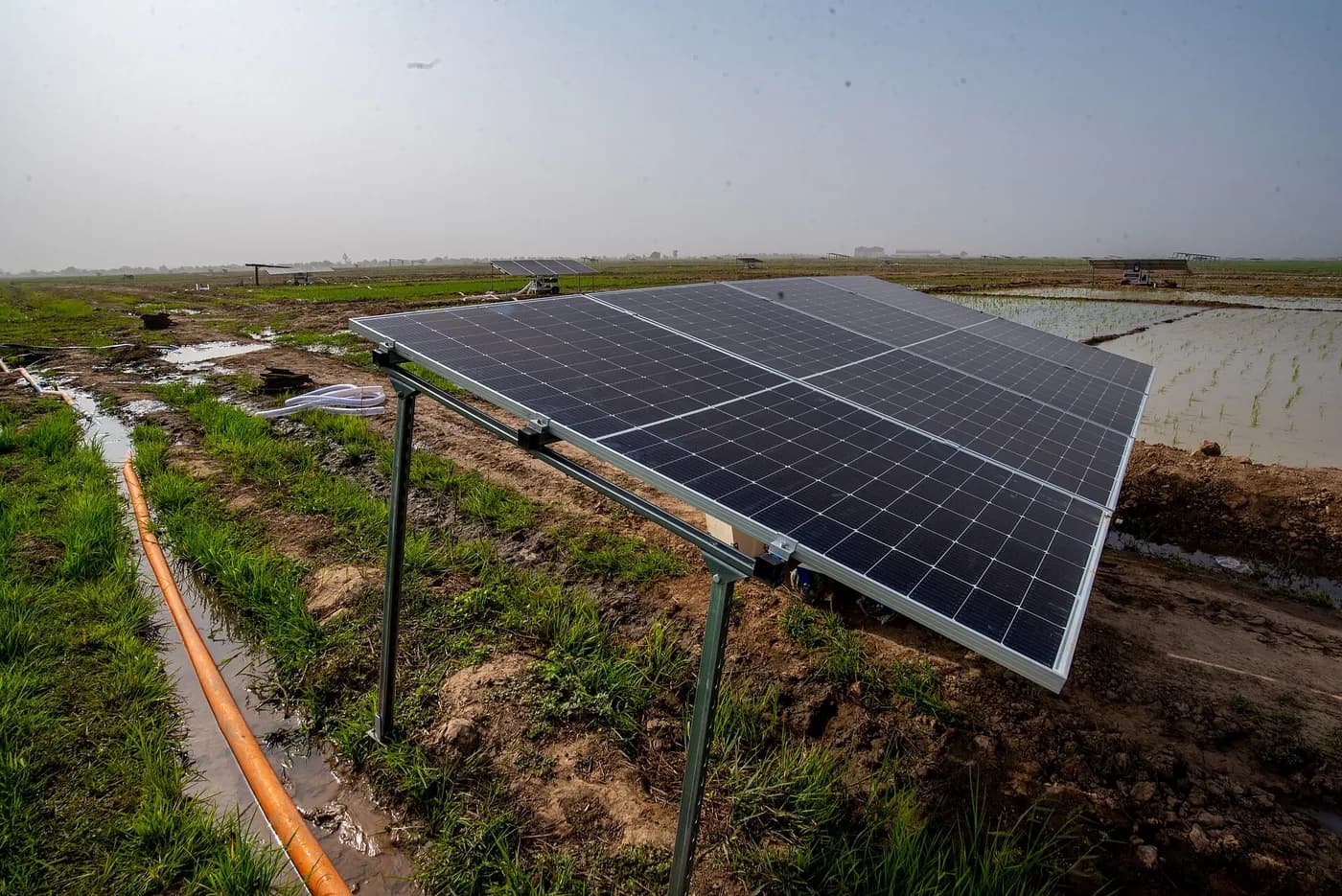
In Ghana, Farmerline has developed Darli, an AI-based farming assistant named one of the best inventions of 2024 by the American magazine Time. Its strength: it speaks the farmers’ language. Darli answers in more than 27 languages, including Twi, Swahili and Yoruba, via WhatsApp or by phone, through an interactive voice response system for those who cannot read or have no smartphone. According to the company, a million people listen to its advice line, which answers questions about fertiliser, crop rotation or market access.
These two examples illustrate a general rule: in Africa, AI succeeds when it adapts to users’ real conditions, a basic phone, a local language, no banking history, rather than assuming a recent smartphone and a good connection.
Speaking customers’ language
Language is precisely one of the big challenges. The best-known AI models were trained mainly in English and a few major languages; they understand Wolof, Hausa or Zulu poorly. For a company that wants to serve its customers in their language, this is a very concrete problem. South African start-up Lelapa AI launched InkubaLM in 2024, a small 400-million-parameter language model trained for Swahili, Yoruba, isiXhosa, Hausa and isiZulu, as well as English and French.
The choice of a small model is deliberate. A compact model is much cheaper to run, can operate on modest servers, or even on local devices, and remains usable where computing power and bandwidth are scarce. For African companies, this is a serious option: rather than depending on a giant model hosted abroad and billed in dollars, they can adapt lighter models to their specific needs, such as translation, transcription or sorting customer messages.
Champions that attract the giants
The continent also has first-rate successes. InstaDeep, founded in Tunis in 2014, has established itself as a global reference in AI applied to decision-making and biology. In 2023, the German lab BioNTech, known for its Covid-19 vaccine, bought it for about $550 million to strengthen its AI-assisted drug research. Beyond the sum, the deal sent a signal: teams trained and based in Africa can produce world-class AI.

Such champions remain rare, however, and the ecosystem concentrated. AI start-ups cluster in a few hubs, Lagos, Nairobi, Cape Town, Johannesburg, Cairo, Tunis, Casablanca, and often struggle to raise funds against their American or European competitors. For the continent’s big companies, though, they are a valuable resource: solutions designed for African markets, by teams that know them.
Three typical examples, to picture AI day to day
Beyond large companies, what does AI actually look like in an ordinary organisation? Here are three typical scenarios, built from common uses observed on the continent. They do not describe specific companies, but situations many managers will recognise.
First example: a chain of pharmacies in Abidjan. Every week, it loses sales for lack of stock on some medicines and throws away expired products on others. A forecasting model, fed with sales history, seasons and past epidemics, suggests the quantities to order for each pharmacy. The pharmacist keeps the final decision, but starts from a figure rather than a hunch. The gain is simple to measure: fewer stock-outs, fewer losses.
Second example: a freight transport company in Dakar. Its drivers lose hours in traffic jams and run poorly optimised rounds. A route optimisation tool, combined with traffic data, reorganises deliveries every morning. A chatbot answers customers asking where their parcel is, in French and Wolof, and only passes complicated cases on to a human.
Third example: an insurer in Nairobi. Claims arrive as photos, messages and scanned documents. An AI system reads the documents, checks that they are complete, spots inconsistencies that may signal fraud and sorts files by urgency. Claims handlers focus on assessment and the relationship with the policyholder. In all three cases, the recipe is the same: a specific problem, available data, a before-and-after measurement. None of these projects requires a research lab: existing tools, well chosen and well configured, are often enough to start.
Governments are starting to organise
Public authorities are not standing aside. In July 2024, the African Union adopted a continental artificial intelligence strategy that sets common priorities: developing skills, infrastructure and data, managing risks and promoting AI that serves development. Several countries have followed with their own national strategies.
Côte d’Ivoire illustrates the move to action. From 9 to 11 September 2026, its second national AI conference, IMPACT IA, brought together about 200 public and private sector leaders in Abidjan. They selected 77 priority use cases in government, agriculture, health and education, and signed a public-private pact. The government is working with the French company Mistral AI and the consultancy Artefact, while claiming “technological sovereignty”. A follow-up meeting is to set a roadmap and budget for each project.
The obstacles still to overcome
Beyond the successes, the obstacles are well identified. Skills first: training AI engineers takes years, and the best are courted by foreign companies able to pay in hard currency. Data next: to train or adapt a model, you need clean, organised data in the right languages, and many companies discover that their customer files are incomplete or scattered. Infrastructure finally: unstable electricity, expensive or slow connections, few data centres on the continent, which often means hosting services abroad.
On skills, communities have organised to fill the gap. The Deep Learning Indaba, a pan-African gathering on machine learning created in 2017, brings together researchers, students and engineers from across the continent every year, and its national spin-offs, the IndabaX events, are spreading to many countries. Data science competition platforms and training programmes backed by companies and governments complete the picture. But business demand is growing faster than the pool of specialists.
On top of this come questions of trust and regulation. Many African countries have adopted personal data protection laws, and companies that entrust customer information to AI tools hosted abroad must make sure they are compliant. Bias is another risk: a credit scoring model trained on partial data can unfairly exclude certain groups and reproduce existing inequalities at scale.
The takeaway
- AI is already profitable in specific uses: fraud, credit, customer service, farming advice.
- The main obstacle is not technology but organisation: data, legacy systems, skills, governance.
- The solutions that succeed adapt to the ground: local languages, basic phones, slow connections.
- Smaller, cheaper models open a realistic path for African companies.
- Governments are starting to move from strategy to projects, like Côte d’Ivoire with its 77 use cases.
Artificial intelligence will not transform African businesses all at once, nor all at the same pace. It is already transforming those that have applied it to a specific problem, measured its effects and adapted it to their customers’ realities. The challenge for the coming years is to move from a few remarkable successes to broad adoption, particularly among the small and medium-sized businesses that make up most of the continent’s economy. That requires investment, skills and clear rules; it also requires seeing AI for what it is: a powerful tool, not a miracle solution. The companies that will get the most out of it will be those that start small, measure honestly and invest in people as much as in software.
- PwC survey: African CEOs optimistic but lag on AI adoption, Tech Africa.
- PwC’s 29th Global CEO Survey: Africa perspective, PwC.
- South Africa Tops African Generative AI Adoption Rankings in 2026 Microsoft Report, Agence Ecofin.
- IA bancaire en Afrique : 86,9 % des banquiers prêts à investir davantage en 2026, Notre Afrik.
- AI-driven smallholder farmer lending in Africa: Insights from Apollo Agriculture, GSMA.
- Farmerline Darli AI: the 200 Best Inventions of 2024, Time.
- InkubaLM: A Small Language Model for Low-Resource African Languages, Lelapa AI.
- BioNTech Completes Acquisition of InstaDeep, BioNTech.
- IMPACT IA 2026 : la Côte d’Ivoire fixe le cap vers la souveraineté technologique, Afrik Soir.
- Stratégie continentale sur l’intelligence artificielle, Union africaine.
Spotted an error? Write to infos@novotech.blog. Corrections are flagged at the end of the article.