Mobile Money: what’s changing in Senegal from 2 November
From this Monday, 2 November, new BCEAO rules come into force for electronic money transfers within the WAEMU. In Senegal, Mobile Money users will be able to benefit from free domestic transfers under certain conditions, whilst wallet limits are being increased
- The BCEAO is updating the rules governing mobile money in the WAEMU. Domestic transfers between individuals are free of charge provided their combined value does not exceed 8,000 CFA francs per day per user with the same provider. Above this limit, charges may apply. The maximum balance of a
A reform that directly affects users
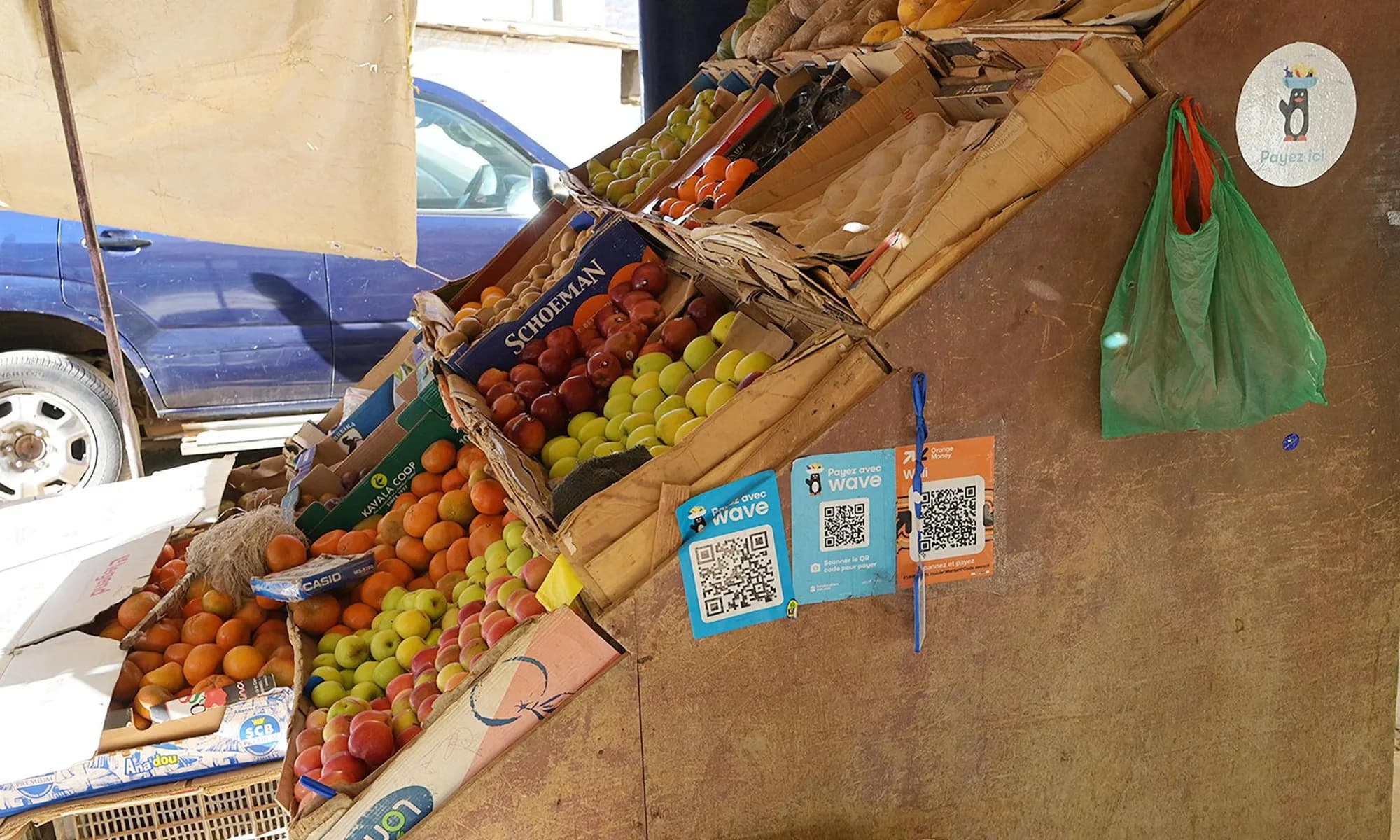
Mobile Money has become an everyday tool in Senegal. It is used to send money to a relative, pay a bill, pay a shopkeeper or receive income. However, transfer fees and wallet limits remain a constraint for some users. The Central Bank of West African States (BCEAO) intends to change the way this system operates. Two recent decisions will amend the terms and conditions governing the use of electronic money from 2 November 2026: one concerns portfolio limits, the other the fees for interoperable transfers via the Interoperable Platform for the Instant Payment System, known as PI-SPI. The stated aim is to make digital payments more accessible, to promote interoperability between institutions and to reduce barriers to financial inclusion.
Free domestic transfers up to 8,000 FCFA
The most visible measure concerns money transfers between individuals. From 2 November, interoperable domestic electronic money transfers will be free of charge where the total amount sent by a user in a single day to the same participant does not exceed 8,000 CFA francs. The limit applies to the daily total, not to each individual transaction. A user may therefore make several small transfers, provided that the total amount does not exceed the specified limit. Above this amount, businesses may charge a fee of between 0 and 0.8 per cent of the pre-tax amount. This means that exceeding the threshold does not automatically trigger a 0.8 per cent commission: each service provider may set its own rate within the authorised limit. There is no charge for receiving transfers, regardless of the amount received. However, it is important to avoid any confusion: this measure does not mean that all Mobile Money services will become free of charge. Cash withdrawals, certain payments and other transactions are not automatically covered by this exemption from charges. Transfers between UEMOA countries will be subject to the same conditions from 1 June 2027, according to the timetable announced by the BCEAO.
The limit on e-wallets has been raised to 4 million CFA francs
The reform also affects the amount that users can hold in their e-wallets. The limit on the balance held with a single issuer has been raised from 2 to 4 million CFA francs. The cumulative amount of monthly top-ups has also been increased, from 10 to 15 million CFA francs. These limits are calculated at the issuer’s level: they should therefore not be interpreted as authorising the automatic holding of 4 million FCFA in each account held with the same provider. An overshoot remains possible only under the conditions laid down by the regulations, in particular with the prior authorisation of the Central Bank. The BCEAO is also tightening the rules on the coverage of client funds. Issuers must hold at least 65 per cent of their underlying assets in the form of demand deposits, in order to ensure the availability of funds and the ability to meet withdrawal requests.
PI-SPI: the end of siloed payment networks?
Behind the issue of costs lies a more profound change: interoperability. The PI-SPI is an instant payment infrastructure developed by the BCEAO to facilitate transactions between different institutions. It aims to connect banks, electronic money institutions and payment institutions which, previously, sometimes operated on separate networks. In practical terms, interoperability should enable a user to send money to a recipient using a different institution, without the two customers necessarily being on the same network. This development may reduce the barriers to choosing a provider. It could also improve competition, as users would no longer be under such strong pressure to choose a service simply because their friends, family or local businesses use it. But interoperability is not simply a matter of connecting applications. It requires systems that are capable of communicating effectively, reliable transactions, rapid incident handling and rigorous fraud management.
Operators facing new competition
For those involved in the mobile money sector, this reform represents a significant economic change. Money transfers are a core business for many operators. Making small transfers free of charge could reduce some of the revenue generated from fees, but it may also encourage users to make more transactions. The challenge will be to turn this potential reduction in costs into an increase in usage. Operators will also need to focus on the customer experience: ease of transfers, availability of services, speed of processing and transparency of charges. An app that clearly displays charges before confirmation could become a competitive advantage. The reform could also benefit fintech companies and new payment services. In theory, a shared infrastructure makes it easier for new players to enter the market, provided that the technical and regulatory requirements remain achievable.
Before making a transfer, customers should, in particular, check:
- The total amount already transferred to their bank earlier today.
- The charges applicable when the total exceeds 8,000 FCFA.
- The difference between a transfer, a merchant payment and a cash withdrawal.
- The tariff terms provided by their operator.
- The transaction must be confirmed before the money is considered to have been sent.
It is still important to check the official communications from your service provider. The BCEAO’s rules set out the framework for charges, but the interfaces and specific arrangements may vary from one operator to another.
A step forward, but not an automatic revolution
The reform of the BCEAO represents a step forward for digital payments in the WAEMU. It has the potential to make small transfers more accessible, strengthen inter-network exchanges and encourage the use of mobile money. But success will not be measured solely by the number of free transactions. It will depend on the quality of interoperability, price transparency, consumer protection and the ability of operators to maintain reliable services. For Senegalese people, the promise is simple: to send money more easily and at lower cost. It remains to be seen whether this promise will translate, in everyday use, into a genuinely smoother experience.
Spotted an error? Write to infos@novotech.blog. Corrections are flagged at the end of the article.