Tech jobs in Senegal: 230 places for 60,000 applicants, employers who can’t fill posts, and pay nobody measures
Job ads call for developers, systems administrators and cybersecurity specialists. Yet close to one in four young Senegalese is unemployed on the broad measure, and no official statistic says what a developer earns in Dakar. Who is hiring, which courses lead to jobs, and what working for foreign clients is really worth.
Why it mattersIf you are studying or starting out in tech, here is where the jobs are, which programmes lead to work, and why the salary grids doing the rounds deserve a healthy dose of scepticism.
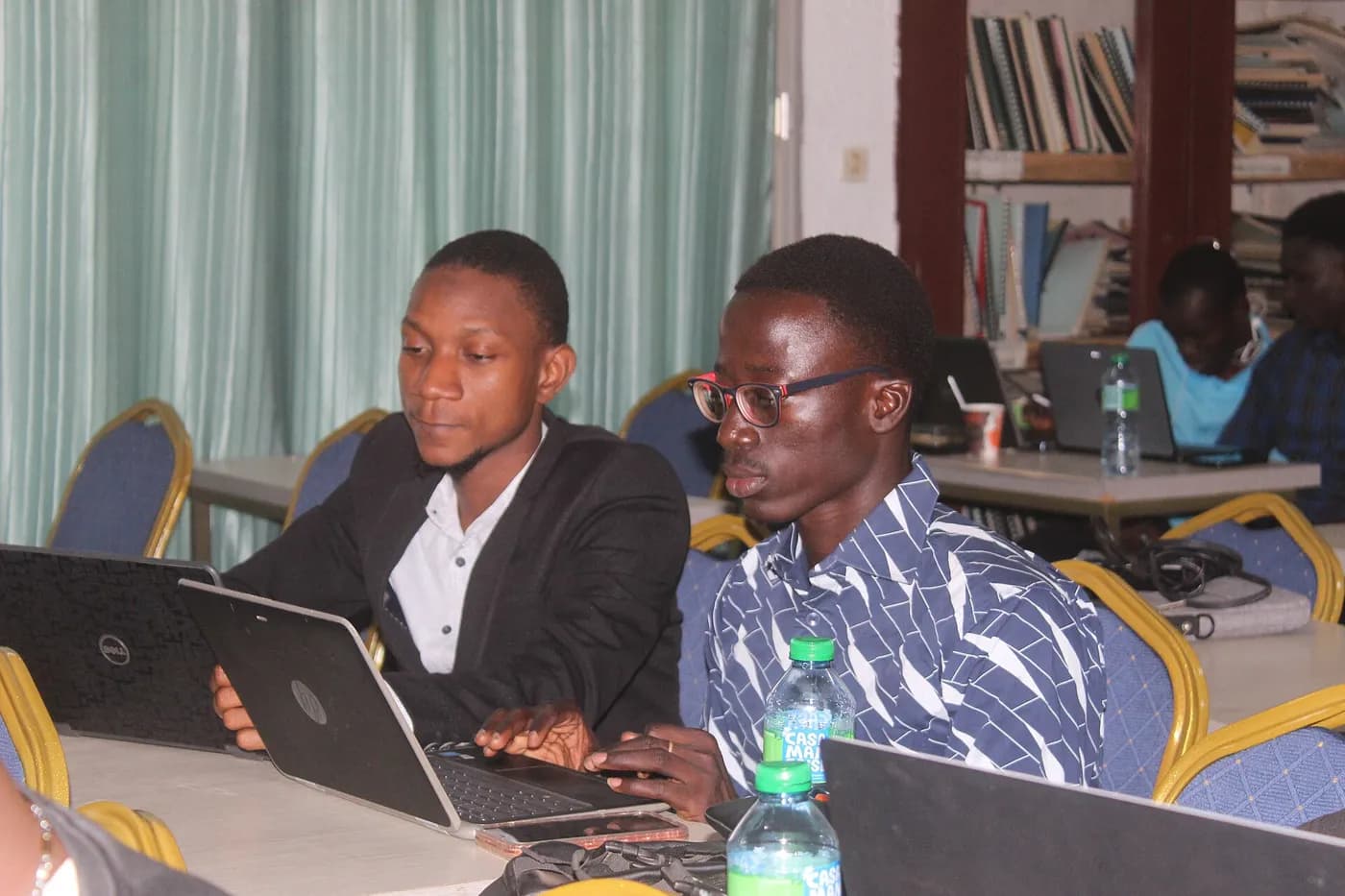
- Sonatel Academy’s 2025 cohort has 230 graduates, picked from nearly 60,000 applications; Sonatel says all of them are “in work or in activity”.
- Employers are looking for developers, cybersecurity specialists, systems administrators and network engineers, according to a study by the employment ministry and the International Labour Organization (January 2026).
- Broad unemployment stood at 19.1% in the second quarter of 2026, and 23.5% among young people, according to the national statistics agency ANSD.
- No public survey measures tech salaries; the only detailed pay grid, from an EU co-funded report, rests on references that cannot be verified.
- AI skills appear in only 1.7% of job ads in Senegal, according to the World Bank; freelancing for foreign clients runs into payment problems and the lack of a legal status.
Nearly 60,000 people applied; 230 walked away with a diploma. On June 29, at the conference centre in Diamniadio, Sonatel Academy celebrated its 2025 cohort, trained in computing, cybersecurity, software development and data. Brelotte Ba, chief executive of Sonatel, offered a figure any school would love to advertise: “100% of graduates are in work or in activity,” he said, according to Senego. Fewer than one application in two hundred succeeded, an admission rate below 0.4%.
That brutal selection says a lot about Senegal’s tech labour market. On one side, huge demand from young people who see coding as a way out. On the other, employers who struggle to find qualified candidates: the employment ministry and ILO study discussed below refers to “shortage occupations”. In between, unemployment remains high. In the second quarter of 2026, the National Agency for Statistics and Demography (ANSD) put it at 19.1% on the broad measure, and at 23.5% among young people, against 14.7% for adults.
The government has set its course in its New Technology Deal: 150,000 direct digital jobs by 2034. For a young graduate, the question is more down to earth: who is hiring today, to do what, at what pay, after which training?
Broad unemployment in Senegal, second quarter of 2026
Source: ANSD, National Employment Survey (ENES), Q2 2026
Who is hiring, and for what
The most recent snapshot comes from a study by the Ministry of Employment and Vocational Training, carried out with the International Labour Organization (ILO), whose final report is dated January 2026. Combing through job ads posted online, its authors found growing demand for technicians and engineers, from two-year diplomas to master’s degrees, who can build applications, secure systems, run servers or handle digital marketing. The recruiters are mostly in services, e-commerce and .
The same report contains a detail that calls for caution. In a 2025 survey of 300 companies, the “ICT, communication and broadcasting” sector was the largest employer in the sample, with 2,120 of 10,742 workers, or 19.7%. But much of that weight comes from two call centres, which alone employ 1,380 people, nearly two-thirds of the total. In the statistics, a “digital” job is often a call-centre seat, not a developer’s desk.
The public sector is hiring too, and not always the profiles people expect. In November 2025, Sénégal Numérique SA (SENUM SA), the state company that runs the government’s digital infrastructure, posted a batch of openings on its portal senum-jobs.sec.gouv.sn: senior IP network engineer, DWDM transmission engineer, radio engineer, geomatics engineer, head of network architecture. These are fibre and radio jobs, closer to telecoms than to web development.
Among fintechs, Wave is a telling case. In mid-November, the careers page of the company, ubiquitous in Senegalese payments, listed no engineering role in Dakar. Its technical openings were in Canada, Spain, the United Kingdom, Ghana and Kenya, or remote, such as a position for a researcher in AI applied to and voice. For a Senegalese engineer, that is both an opening, since he or she can apply from home, and head-to-head competition with candidates from around the world.
IT services firms offer another outlet, working from Dakar for large international accounts or West African clients. Atos’s centre had more than 250 engineers when it opened in 2016 and aimed for 2,000 staff, according to Financial Afrik; the group does not publish a recent headcount for the site.

Pay, the market’s blind spot
How much does a junior developer earn in Dakar? It sounds like a simple question, and it has no official answer. ANSD publishes unemployment and participation rates, but no accessible public survey breaks down tech salaries job by job. Job ads are little help: SENUM SA’s did not mention pay, and Wave merely says its offers are generated from a “transparent formula”, without spelling it out on its careers page.
The only detailed pay grid in circulation appears in a report produced for Africantech, an EU co-funded cooperation project between the Canary Islands and Africa, written by the Spanish consultancy IBC Spain, whose French version dates from October 2025. It puts a software engineer with one to three years’ experience at 350,000 to 400,000 CFA francs a month (roughly 535 to 610 euros), 500,000 to 800,000 with four to seven years, then 1.5 million to 3 million beyond that. Data roles would start at 400,000 to 500,000 CFA francs, cybersecurity at 300,000 to 700,000, rising to 2 million to 5 million after seven years.
The same fog surrounds graduate outcomes. Sonatel Academy’s “100%” lumps together salaried jobs and “activities”, without publishing a breakdown or having it audited. And when ANAQ-Sup, the public quality-assurance agency for higher education, assessed the master’s in artificial intelligence at the Dakar Institute of Technology, a private school, in 2025, it noted that data on what graduates go on to do remained “fragmentary”, with no official employment rate at six or twelve months. The programme was accredited all the same.

University, coding schools, certificates: where to train
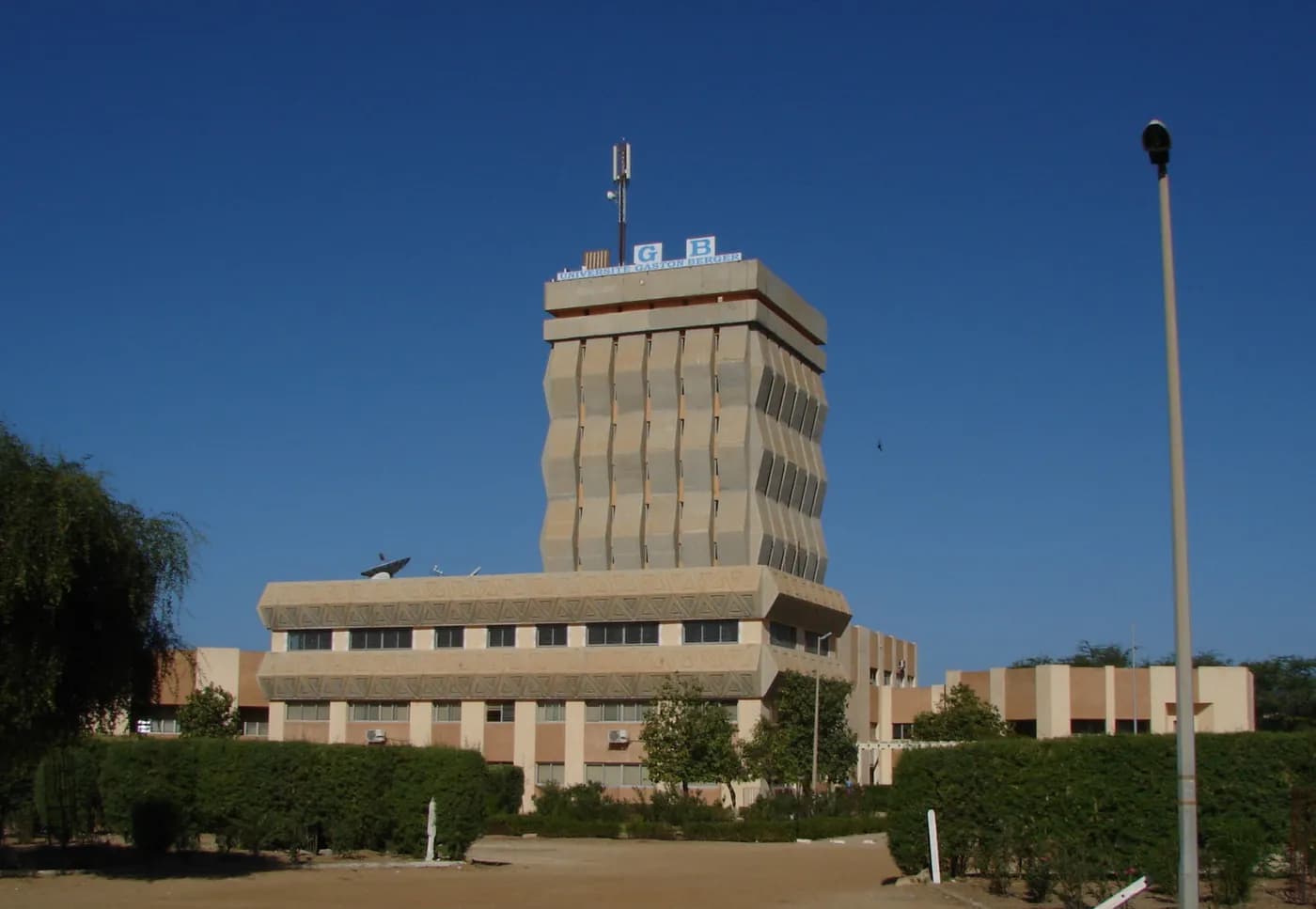
University remains the classic route, and it is specialising. In Saint-Louis, Gaston Berger University opened applications for the 2026-27 academic year to two master’s specialisations in computer science, one in artificial intelligence and big data, the other in connected systems and cybersecurity, with a 10,000 CFA franc application fee payable via Wave or Orange Money. The Dakar Institute of Technology’s AI master’s grew from 55 to 106 students between 2021 and 2024, but women still made up only 18.9% of enrolment.
Students enrolled in the Dakar Institute of Technology’s master’s in artificial intelligence
In students. Source: ANAQ-Sup, external evaluation report (2025)
Cheikh Hamidou Kane Digital University (UN-CHK), which has more than 60,000 students learning remotely, is in crisis. In May, the local branch of the Autonomous Union of Higher Education (SAES) said that “no programme has actually started the 2025-2026 year” and warned that the risk of a lost academic year was real, blaming the governance of the rector, Samuel Ouya. The university nonetheless runs, with the Mastercard Foundation, the FORCE-N programme, which in June claimed “more than 100,000 young people” trained over five years for digital certificates, according to its director, Seydina Moussa Ndiaye, quoted by the APS news agency. It also says it has supported more than 91,000 young people in their move into work, which does not mean they all found a job.
Alongside, coding schools have established a different model: short, intensive courses, free or nearly so, designed with employers. Sonatel Academy, which took in 50 young people in 2017, now trains more than 200 per cohort. Zone01 Dakar, launched in 2022 by 01Talent Africa with Atos, relies on peer learning. Paid bootcamps and online courses round out the offer. The ILO report notes that, with training centres judged “still well below” current technological requirements by some of those interviewed, young technicians increasingly adapt by using online resources.
Vocational training, for its part, is concentrated and mostly private. According to an ANSD mapping cited in the ILO report, the country had 1,063 technical and vocational training institutions in 2024, 78.9% of them private and 60.9% located in the Dakar region. Employers, meanwhile, are not primarily asking for master’s degrees: in ANSD’s survey of vacancies at the end of 2023, the two-year BTS technical diploma topped the list of qualifications sought (25% of posts), well ahead of the master’s (15%).
Working for foreign clients without leaving Dakar
For many young developers, designers and data specialists, the first client is in Paris, Montreal or New York. The World Bank estimated in 2023 that online gig work could account for up to 12% of the global labour market, and that job postings for sub-Saharan Africa on the sector’s largest platform had jumped 130%. “Online gig work could provide people in low- and middle-income countries an additional path out of poverty,” said Mamta Murthi, the institution’s vice president for human development, at the time.
The first hurdle is getting paid. PayPal, the default for many foreign clients, is described by specialist guides as expensive and hard to withdraw to a Senegalese account. According to those guides, most freelancers use Payoneer, which accepts Senegalese residents: the Focusmillions site says a withdrawal to a local bank costs 1.5% (with a 2-dollar minimum), takes two to five business days, and conversion runs about 2% above the market rate. The guides contradict each other even on the basics: one says Wise does not open accounts for residents of the monetary zone, another that personal accounts have been accepted since 2022. It is best to check with the provider before giving payment details to a client.
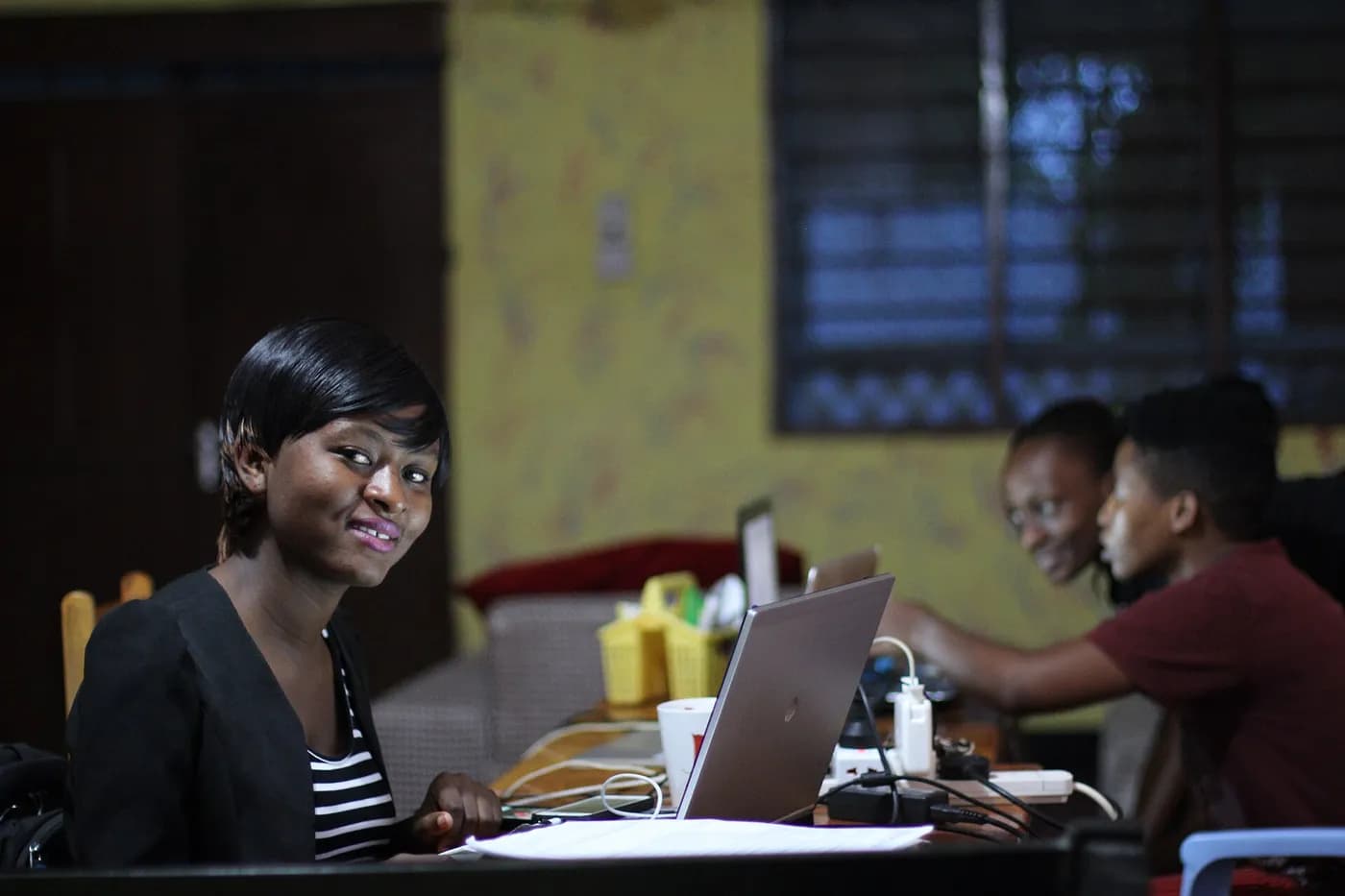
The second hurdle is administrative. A freelancer billing a foreign company has no status designed for them: their income remains taxable in Senegal, and to invoice properly they must in principle register as a sole proprietorship and obtain a tax identification number (NINEA). The new Labour Code, in force since September, regulates remote work for employees of companies based in Senegal, not for the self-employed. Social protection is missing too: the World Bank noted in its 2023 report that in low-income countries most workers fall outside labour regulations and have no access to social insurance.
Remote work also muddies the brain-drain debate. No statistic measures how many Senegalese IT professionals have left to work in Europe or North America. The employment ministry and ILO report lists brain drain among the consequences of the mismatch between training and jobs, without putting a number on it. An engineer paid in dollars from the Almadies district does not show up in any emigration figure, but does not work for a Senegalese company either.

Artificial intelligence, still a rare skill in job ads
AI is everywhere in speeches, far less so in job ads. Using postings compiled by the data company Lightcast, the World Bank found AI skills in 1.7% of job ads published in Senegal, against 1.4% in Nigeria, according to the presentation of its report on digital progress in Western and Central Africa given in November 2025 by Sangbu Kim, its vice president for digital and AI. Demand for AI skills remains nascent in the region, the document concluded.
The most visible positions, such as the remote AI researcher role advertised by Wave, require research-level expertise. Training providers have followed the trend: Sonatel Academy teaches data, FORCE-N offers AI certificates, and Gaston Berger University and the Dakar Institute of Technology have their specialised master’s degrees. The risk for a student is to bet on the label rather than the fundamentals. The jobs that do exist ask first for software development, networking, systems administration and security.
One big unknown remains: how many of these young people find stable work, in which sector and at what pay. ANAQ-Sup’s experts recommended that the Dakar Institute of Technology track its graduates’ employment six and twelve months after they leave and run regular surveys. That is precisely the information a school-leaver lacks when choosing a course.
- Sonatel Academy : 230 jeunes diplômés pour bâtir l’avenir numérique du Sénégal, Dakaractu.
- Brelotte Ba, DG de Sonatel : 100 % d’insertion professionnelle pour la promotion 2025 de l’Orange Digital Center, Senego.
- Enquête nationale sur l’emploi au Sénégal (ENES), deuxième trimestre 2026, ANSD.
- Étude diagnostique de l’emploi et du marché du travail au Sénégal, rapport final, Ministère de l’Emploi et de la Formation professionnelle et technique / BIT.
- FORCE-N : plus de 100 mille jeunes formés dans les métiers du numérique en cinq ans, Osiris (APS).
- Université numérique Cheikh Hamidou Kane : « le risque d’une année blanche est réel », Osiris (Pressafrik).
- Identification des compétences numériques et des besoins en matière d’employabilité au Sénégal dans le secteur technologique, Africantech / Casa África.
- Rapport définitif d’évaluation externe du master en informatique, option intelligence artificielle, de Dakar Institute of Technology, ANAQ-Sup.
- Master informatique UGB 2026-2027 : appel à candidatures, spécialités IA/Big Data et cybersécurité, Guindima.
- Ingénieur Senior Réseaux IP (Sénégal Numérique SA), GoAfrica.
- Careers, Wave.
- Digital Progress and Trends Report 2025 in Western and Central Africa, Banque mondiale.
- Demand for Online Gig Work Rapidly Rising in Developing Countries, Banque mondiale.
- Wise vs Payoneer depuis l’Afrique de l’Ouest : lequel choisir ?, Focusmillions.
- Sénégal : inauguration du centre Atos de services numériques pour l’Afrique de l’Ouest, Financial Afrik.
Spotted an error? Write to infos@novotech.blog. Corrections are flagged at the end of the article.