Senegal’s digital budget was due for a vote on Friday. The session is stuck, and 65 billion CFA francs of projects with it
The 2027 budget of Senegal’s Ministry of Telecommunications and Digital Affairs was scheduled for debate on Friday, November 27, at 7 p.m. Since lawmakers threw out the first part of the finance bill on November 18, the National Assembly says it can no longer take up ministry budgets. Rural coverage, the government cloud, the Startup Act and La Poste are all on hold. Here is what is at stake and how it could end.
Why it mattersWithout a voted budget, the new items for 2027, from rural coverage to digital ID and La Poste’s redundancy plan, are in limbo. The outcome now hinges on a decree, a confidence vote or a compromise.
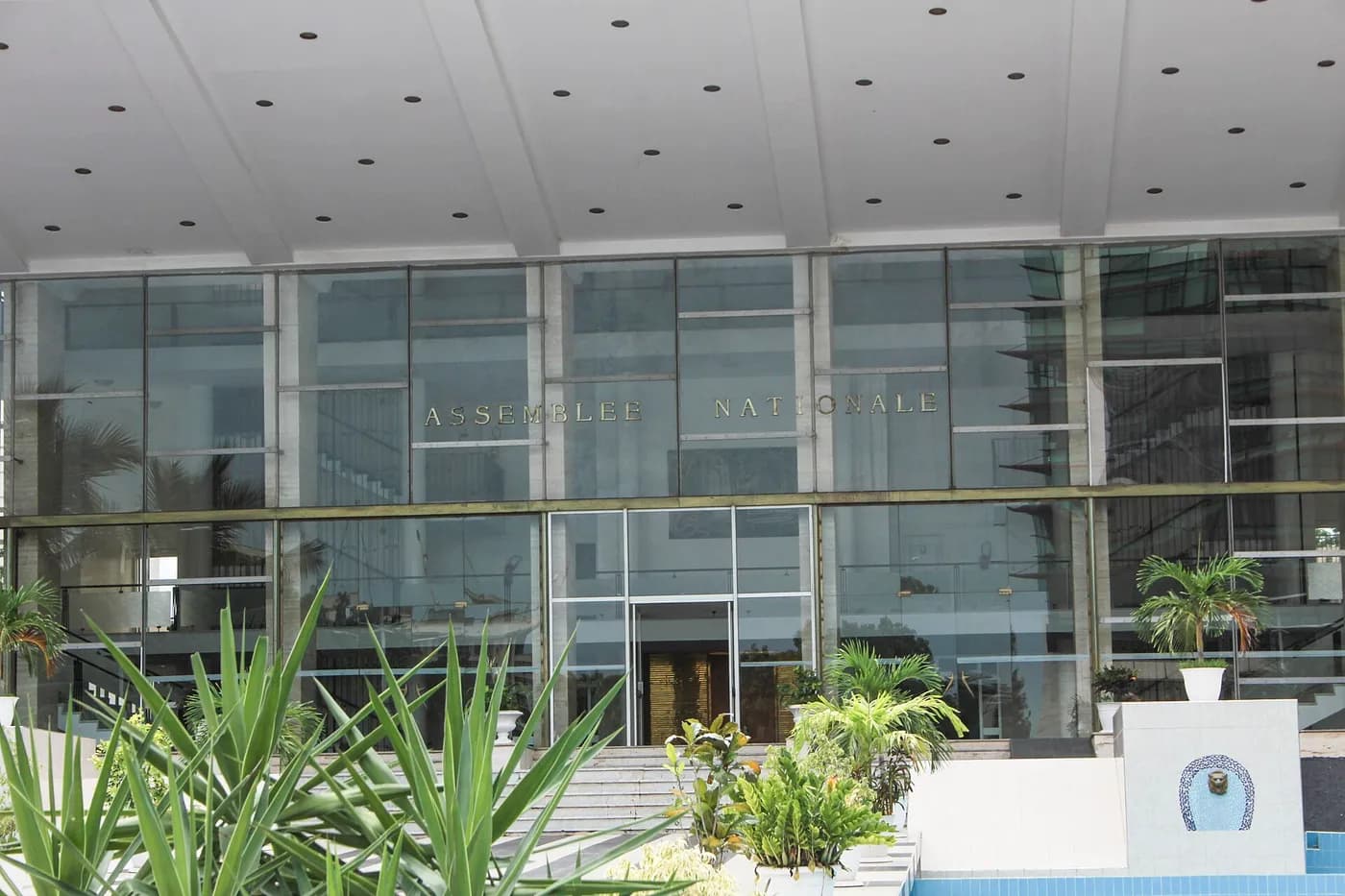
- The 2027 budget of Senegal’s Ministry of Telecommunications and Digital Affairs (64.97 billion CFA francs) was due to be debated in plenary on Friday, November 27, at 7 p.m.
- Since the first part of the finance bill was rejected on November 18, Article 59 of the organic budget law bars debate on ministry spending, according to Assembly speaker Ousmane Sonko.
- Minister Samba Diouf’s budget report lists what is at stake: 14 billion for rural coverage (PAENS), 13.7 billion (13.6 billion of it a KfW grant) to digitize government, 5.3 billion for state IT company Sénégal Numérique SA and 16.8 billion for La Poste.
- It also shows that none of the more than 400 startups registered under the Startup Act has been certified yet, and that PAENS spent less than 10% of its funds in 2026.
- Possible outcomes: a decree once the 60-day deadline expires around December 11, as with the 2026 supplementary budget; the government staking its survival on the bill; a dissolution, possible from December 2; or a revised text.
The slot is still on the timetable the National Assembly published on November 17: Friday, November 27, 7 p.m., Ministry of Telecommunications and Digital Affairs, right after Water and Fisheries. It is unlikely to be used. On Wednesday, November 18, after a sitting of almost twelve hours, lawmakers rejected the first part of the 2027 finance bill, which sets revenue, the spending ceiling and borrowing, by 126 votes to 18 according to the most detailed tally (the state news agency APS counted 128).
Senegal’s 2020 organic law on finance laws leaves no doubt about the order of business. Its Article 59 says the second part of the bill, which allocates money ministry by ministry, “cannot be put to debate” before the first part is adopted. Assembly speaker Ousmane Sonko made the point that same evening: the second part “cannot be submitted to the National Assembly before the first part is adopted,” he said, according to APS. As of November 24, no new timetable had been made public.
The budget defended by minister Samba Diouf, 64.97 billion CFA francs in payment appropriations (about €99 million), had already been rejected on November 13 by three joint committees (Finance, Culture and Communication, Economic Affairs), which questioned the soundness and consistency of its forecasts. On Friday it is therefore unlikely to be put to a vote at all. Like every other ministry’s budget, it is simply waiting.
What the money pays for, line by line
The eight-page report Diouf submitted to lawmakers, dated November 6 and posted on the government site vie-publique.sn, is more detailed than press accounts. It splits the budget into four programmes, and it is candid about what went wrong in 2026.
Senegal Ministry of Telecommunications and Digital Affairs, 2027 payment appropriations by programme
In billion CFA francs. Source: Ministry budget report for 2027 (November 6, 2026), annex 1
The first programme, “digital governance and sovereignty,” covers connectivity. Its payment appropriations fall 19.5% to 27.2 billion because the annual tranche for the Diamniadio Digital Technology Park is shrinking: the site was 95% built at the end of October, but only 69% of its funding had been disbursed. It would still receive 9.4 billion from the West African Development Bank (BOAD) in 2027, and the ministry says it has opened talks with Moroccan company Ewan Asset about running it. The Digital Economy Acceleration Project (PAENS), funded by the World Bank, keeps 14 billion to extend mobile broadband to unserved areas, roll out community Wi-Fi and connect schools. Its financial execution in 2026 was “below 10%,” the minister concedes. A tender for nearly 300 sites in uncovered areas is “being finalized.”
The second programme, the digital economy, pays for e-government and innovation, at 20 billion. The biggest item is the Public Administration Digitization Project (PRODAP): 13.7 billion, 13.6 billion of it a grant from Germany’s state-owned development bank KfW, to upgrade the government network, its data center and its . Eleven contracts worth more than 10 billion in total were signed in 2026, but most of the payments have slipped into 2027. Sénégal Numérique SA, the state company that runs the public , would get 5.3 billion to operate the one-stop service portal and maintain infrastructure. The minister writes that “lower transfers to SENUM SA are weighing on the maintenance of infrastructure that has become critical for the State.”
The Startup Act gets 475 million CFA francs and the Digital Factory 200 million. The report contains a figure that had not been published before: more than 400 startups had registered on the platform by June 30, yet not one has been certified, because the steering committee has not been set up, even though more than 120 applications are ready. Certification brings tax benefits. The ministry promises a first batch as soon as the committee is in place.
The postal programme is the only large item that grows: La Poste goes from 12.6 billion to 16.8 billion (+32.9%). Most of it, 13.3 billion, pays for the universal postal service. On top of that come 3 billion for the second phase of voluntary redundancies and about 485 million for the sorting center and the national digital addressing system. The minister ties the company’s financial self-sufficiency, targeted for December 2027, to the redundancies actually being funded.
A plenary that could not have rewritten the bill anyway
Even if the session went ahead, lawmakers would have little room. Article 58 of the organic law bans any amendment from a member that does not cut spending or raise revenue, and the Assembly can neither create nor abolish a programme. Article 60 provides for a vote programme by programme. Members can trim or refuse appropriations; they cannot redirect money to other digital priorities.
The dispute goes well beyond digital policy. The Pastef majority, which holds 130 of the 165 seats according to AFP, challenges the credibility of the entire finance bill: documents sent late, assumptions it sees as shaky, and references to a 2026 supplementary budget it rejected on November 3. Finance minister Cheikh Diba defended his numbers on November 18, blaming some of the discrepancies on the change of the national accounts base year, and told lawmakers that “a forecast is not a prophecy.” The chair of the finance committee, Alphonse Mané Sambou, said the vote was “neither a whim nor a posture.” The same week, Pastef formally expelled President Bassirou Diomaye Faye from its ranks.
Decree, confidence vote or dissolution: how it could end
The first route has already been taken once. On November 19, the president used decree No. 2026-2416 to put into force the 2026 supplementary budget that lawmakers had rejected, citing Article 68 of the Constitution, which gives the Assembly 60 days to vote. Article 57 of the organic law says a finance bill not finally voted within that period is “put into force by decree.” For the 2027 budget, filed on October 12, the deadline falls around December 11, by the press’s count. With no amendments voted, a decree would enact the government’s text, including the 64.97 billion for the digital ministry as submitted. But that reading is disputed: Assembly vice-president Amadou Ba called the November 19 decree “non-existent,” and lawmaker Alioune Ndao called it “manifestly illegal and unconstitutional.” The finance and law committees were summoned on Tuesday, November 24, to examine a draft resolution on it.
The second route is political. On November 18, Sonko raised “putting the government’s responsibility on the line before the people’s representatives,” adding: “But we cannot commit the Senegalese lightly.” It is the tool he used himself as prime minister on December 28, 2024, when the 2025 budget was adopted without debate because no censure motion was filed. With 130 seats, today’s majority would have the votes to pass a censure motion and bring down the government, which the president can nonetheless reappoint the same day, AFP notes.
Other scenarios remain. Rolling over the 2026 appropriations, which the organic law allows if no finance law is enacted by January 1, has been ruled out by the junior budget minister, Bassirou Sarr, according to Sonko’s account of his remarks. And the president will be able to dissolve the Assembly from December 2, according to AFP. Sonko says the Assembly’s doors remain open to any initiative that leads to an adopted budget, which also leaves room for a revised text.
What it means for citizens and businesses
For citizens, the rejection does not immediately interrupt public services, news site Xalima notes. The risk is delay. Diba has warned that continuity mechanisms cover day-to-day operations, not new measures or payments owed to companies. For an equipment supplier or systems integrator waiting to be paid on a public contract, that is the line that matters.
The second risk concerns donors. More than half of the digital ministry’s money, nearly 37 billion, comes from the World Bank, KfW and BOAD, and those loans and grants require a national contribution the ministry already struggled to raise in 2026. The finance minister has warned that prolonged uncertainty could complicate a planned IMF programme of about $2.2 billion and push up borrowing costs. Two dates are worth watching: December 2, when dissolution becomes possible, and December 11, when the 60-day window closes. Friday’s session, for its part, will very likely stay an empty slot.
- Rapport de présentation du projet de budget 2027 du ministère des Télécommunications et du Numérique, vie-publique.sn.
- Loi organique n° 2020-07 du 26 février 2020 relative aux lois de finances, vie-publique.sn.
- Marathon budgétaire 2027 : les dates clés des débats et l’ordre de passage des ministères en plénière, PressAfrik.
- Budget 2027 : les députés rejettent en commission le projet du ministère des Télécommunications et du Numérique, Socialnetlink.
- Sénégal : l’Assemblée rejette la première partie du budget 2027 par 126 voix contre 18, Madar.
- Le président de la République décrète l’entrée en vigueur de la loi de finances rectificative 2026, APS (AllAfrica).
- Crise budgétaire : Ousmane Sonko renvoie l’exécutif à ses responsabilités et fustige le parti-pris du FMI, Seneweb.
- Sonko recadre l’exécutif et le FMI, SenePlus.
- Les députés rejettent la première partie du budget 2027, bloquant l’examen des budgets ministériels, Senego.
- Sénégal : l’Assemblée convoquée contre le décret budgétaire de Diomaye Faye, 24heureinfo.
- Au Sénégal, une impasse budgétaire inédite, AFP (La Gazette France).
- Budget 2027 : 128 députés rejettent la première partie du texte, l’examen parlementaire suspendu, Xalima.
- Adoption de la loi de finance initiale 2025, vie-publique.sn.
Spotted an error? Write to infos@novotech.blog. Corrections are flagged at the end of the article.